"Should we turn back? We even considered Plan B and Plan C."
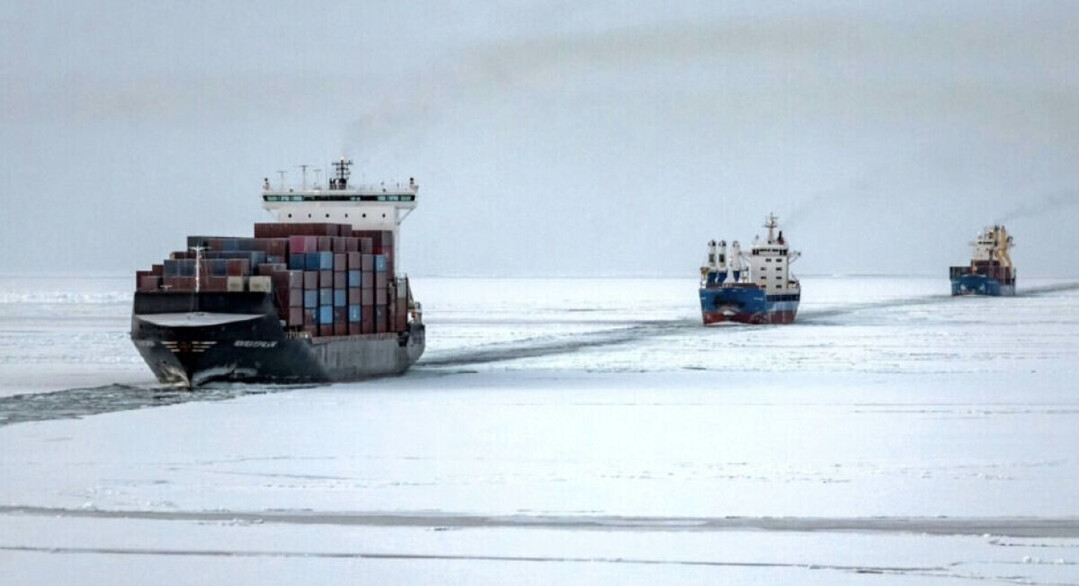
In the Arctic Ocean, transitioning from the night of August 31 to September 1, floating ice blocked the path of the Panstar Acro, which had departed from Busan and was heading toward Europe. As the sun set, it became difficult to gauge the size of the ice with the naked eye. There was no way of knowing how large a mass was hidden beneath the ice visible above the water surface. Instead of pushing forward recklessly, the crew waited for dawn to break.
Park Ji-jung, a Panstar general manager who boarded the ship as chief mate and voyage director, recalled that moment: "As a seaman, I worried that we might no longer be able to continue the voyage, and as a voyage director, I worried about what measures we would have to devise afterward."
Around 2 a.m., as the sun rose, the sea route hidden in the darkness was revealed. After the captain, mates, and chief engineer put their heads together, the ship, which had been waiting, reduced its speed and slowly squeezed its way between the ice floes. For Manager Park, it was the moment that left the deepest impression during the 50-day trial voyage on the Northern Sea Route.
At a briefing prepared by the Ministry of Oceans and Fisheries on the 22nd, stories of experiences shared by those who directly traveled the Northern Sea Route continued. Behind the achievements of shortened distances and operation periods lay hesitation in front of floating ice, machinery sensitive to the cold, and sleepless nights for the crew.
The 2,758 TEU container ship Panstar Acro departed Busan on August 22, passed through the United Kingdom, the Netherlands, and Poland, and returned on October 11. The round-trip journey took 49 days and 10 hours. For those who built the rare experience of a round-trip on the Northern Sea Route in South Korea, it was also a time that could not be solved by familiar maritime common sense alone.
When they first departed, there was anticipation. It was the excitement of taking pictures if they saw the aurora in the Arctic. However, once they encountered floating ice, their thoughts changed. Detours continued, bypassing the planned route to avoid the ice. In the Vilkitsky Strait, although the concentration was not high, they encountered floating ice large enough to be dangerous upon collision.
Manager Park also monitored the movements of Chinese ships ahead of them. Through Automatic Identification System information, he checked where they were diverting and shared it with the captain and onshore support team. In unfamiliar seas, the tracks of ships that had passed first served as a guide.
It was not only humans who were tense. In low-temperature environments, the ship's machinery reacted differently than usual. Abnormal signs appeared in the systems where fuel and lubricating oil circulate, prompting the crew to check their status and take insulation and heating measures. Some communication and location information reception were temporarily cut off. Thanks to having prepared multiple satellite communication means, emergency contact could be maintained.
Manager Park stated, "In polar environments, I learned that not only humans are sensitive, but machinery also reacts sensitively." Opinions also emerged that the engine department should establish a watch system to check conditions in real time.
On the way back from Europe, another difficulty awaited. The burden of floating ice was relatively minor, but snowstorms and rough seas shook the ship. As rain turned to snow and temperatures dropped, the outer deck froze. For safety, the captain restricted access to the outer deck and minimized outside work. Even after leaving the Arctic Ocean, they had to change routes to avoid a low-pressure system that had turned from a typhoon.
An unexpected hidden obstacle was jet lag. At high latitudes, even moving a short distance causes a large change in longitude. Although the ship's clock was advanced by about an hour almost every day, the body could not easily keep up. In an environment where the sun set at 3 p.m. and rose again at 2 a.m., the crew's daily rhythms were disrupted.
Manager Park conveyed, "I thought it was only me, but everyone on board voiced their difficulties." Sleep did not come when it was time to sleep, and fatigue rushed in when it was time to work. Even for seamen accustomed to ocean-going voyages, Arctic jet lag was an unfamiliar experience.
The mind of a researcher looking at the same sea was slightly different. Kwon Young-tae, a professor at the Korea Institute of Maritime and Fisheries Technology who boarded the return leg, examined the records of waiting and detouring due to floating ice during the voyage to Europe and prepared for what kind of situation they might encounter on the way back. For a crew member, a situation to be avoided was, for a researcher, field data to be utilized for education.
Professor Kwon explained that although the training institute had been preparing for polar navigation education since 2012, it was difficult to secure practical data on actual Northern Sea Route navigation. Even when encountering foreign operating experiences, it was not easy to share detailed data. This boarding was an opportunity to fill the blank spaces of long-standing education and research.
He thought, "I can finally put the final period on this." However, on the way back, they encountered fewer floating ice blocks than expected. Thanks to analyzing ice distribution charts and weather information in advance and adjusting the route, it was a smooth return. Professor Kwon reflected that while it was fortunate for the people on board, there was also some regret from a research standpoint.
Pre-departure decisions also contributed to a safe return. Inside Panstar, there were opinions to delay departure to August 29 to load more export cargo at the end of the month. The thoughts of the operation managers were different. While going meant a time when ice melts, returning meant a time when it freezes again, raising concerns that delaying departure could make the return journey more difficult.
In the end, they departed on August 22, and in Europe, they started their return journey a day earlier than the September 20 deadline they had set as the limit. Panstar explained that floating ice in the affected waters increased significantly just a week after the ship passed through. It was a decision made between loading more cargo and securing time to return safely.
Manager Park, having returned from the 50-day journey, emphasized crew training above all for the next voyage. Beyond equipping hardware, the experience of the person who handles that equipment and makes judgments in unfamiliar situations was crucial. What the markings on sea ice distribution maps look like in the actual sea, and when to wait and where to detour in front of floating ice, were kinds of knowledge accumulated through direct experience.
He mentioned that the phrase "I've been to the five oceans and six continents," which seamen use when talking about their experiences, can now have one more place added to it.
[Copyright (c) Global Economic Times. All Rights Reserved.]