![[등록] 2026-09-01 15:48:31](/support/_updata/banner2/tl181982910_6749.png)


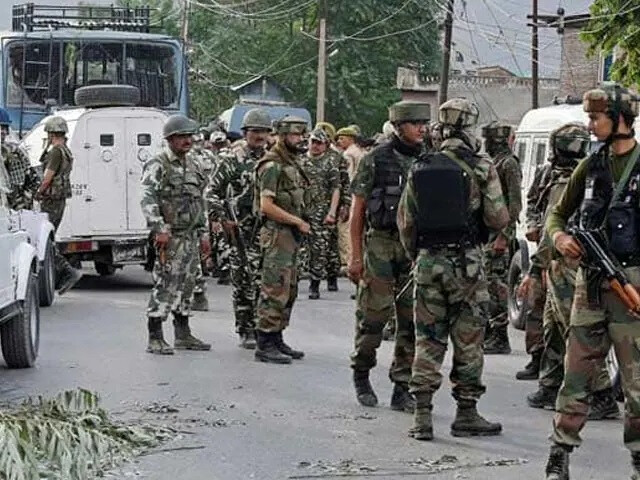
Tensions between India and Pakistan have sharply escalated following a deadly gun attack in the disputed Kashmir region. The attack, which occurred in Indian-administered Kashmir, has prompted a series of retaliatory diplomatic and economic measures from New Delhi targeting Islamabad.
According to reports from Reuters and other international news outlets, the Indian government, under the leadership of Prime Minister Narendra Modi, convened a high-level security meeting on April 23rd. Following the meeting of the Cabinet Committee on Security (CCS), India announced a raft of punitive actions against Pakistan, including border closures, suspension of water-sharing agreements, and expulsion of Pakistani nationals residing in India. These measures are a direct response to the recent terrorist attack in Kashmir.
In a significant move, India declared its intention to suspend the Indus Waters Treaty (IWT) of 1960, stating that the treaty's effectiveness would remain suspended "until Pakistan demonstrably ceases its support for cross-border terrorism." The IWT, brokered by the World Bank, governs the allocation of water from the Indus River and its tributaries between the two nations. For Pakistan, which relies heavily on these waters for irrigation and hydropower, accounting for approximately 80% of its total water resources, the suspension of the treaty could have devastating consequences. Despite the long-standing territorial disputes between the two countries, the IWT has been considered a rare example of successful diplomatic cooperation, even surviving the Indo-Pakistani War of 1965.
Further escalating the situation, India announced the immediate closure of the Wagah-Attari border crossing, the sole land route between the two countries. Additionally, all special visas issued to Pakistani citizens for entry into India under the South Asian Association for Regional Cooperation (SAARC) framework have been revoked, and Pakistanis currently in India on these visas have been given 48 hours to leave the country.
Pakistan swiftly responded to India's actions. Prime Minister Shehbaz Sharif issued a statement declaring the defense, naval, and air attachés at the Indian High Commission in Islamabad as persona non grata, ordering their immediate departure from Pakistan. Similarly, India announced that all Pakistani defense officials stationed at their embassy in New Delhi would be expelled within a week, also designated as persona non grata. Furthermore, both nations have decided to reduce the number of diplomatic staff in their respective high commissions to 30, effective from May 1st. Currently, India has 55 officials stationed in Pakistan.
The catalyst for this dramatic escalation was the horrific terrorist attack on April 22nd in Pahalgam, a popular tourist destination in Jammu and Kashmir. Gunmen targeted tourists, resulting in the deaths of 26 people. This marks the deadliest terrorist incident in the region since the 2008 Mumbai attacks.
Following the attack, a relatively unknown militant group calling itself The Resistance Front (TRF) claimed responsibility on social media. However, Indian police suspect the involvement of Pakistan-based militants, identifying two of the three alleged attackers as Pakistani nationals. India believes the TRF is a front organization for Lashkar-e-Taiba (LeT), a designated terrorist group based in Pakistan.
In retaliation to India's strong measures, Pakistan announced the cancellation of visas for Indian citizens and the closure of its airspace to Indian-owned or operated airlines. Islamabad also declared an immediate halt to all trade with India, including trade conducted through third countries, and banned the screening of Indian films.
Pakistan vehemently denied any involvement in the terror attack, asserting that an obscure militant group from Kashmir was responsible. Foreign Minister Ishaq Dar criticized India's "irresponsible actions based on mere allegations." He warned that while Pakistan's initial response was measured, it would become "dynamic" if India's actions turned similarly aggressive.
The recent surge in tensions underscores the fragility of the relationship between the two nuclear-armed neighbors and raises serious concerns about the potential for further conflict in the already volatile region. The international community is closely monitoring the situation, urging both sides to exercise restraint and engage in dialogue to de-escalate the crisis. The suspension of the Indus Waters Treaty, in particular, has raised alarms due to its potential to exacerbate existing water scarcity issues in Pakistan and further destabilize the region. Analysts fear that the current standoff could have long-lasting implications for bilateral relations and regional security.
[Copyright (c) Global Economic Times. All Rights Reserved.]