![[등록] 2026-09-01 15:48:31](/support/_updata/banner2/tl181982910_6749.png)


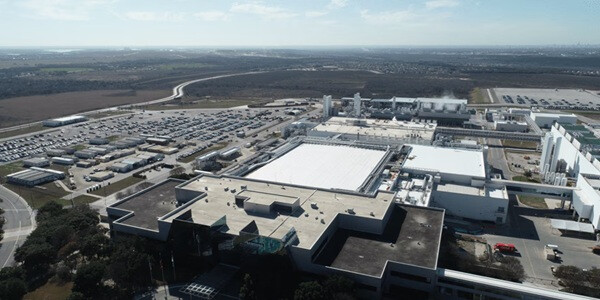
HOLLAND, Mich. – LG Energy Solution has begun large-scale mass production of lithium iron phosphate (LFP) batteries for energy storage systems (ESS) at its Holland, Michigan plant, marking the first instance of LFP battery production in the United States. This is seen as a significant turning point for the US ESS market, which has heavily relied on Chinese-made LFP batteries.
Jaehong Park, President of LG Energy Solution Vertech, stated on the 25th local time, "This is the first time ESS-exclusive LFP batteries are being mass-produced on a large scale in the US," expressing strong confidence in this achievement. According to a report by Michigan local media outlet WWMT, LG Energy Solution began LFP battery mass production at the Holland plant on June 1st and plans to start ESS battery module production in August. The annual maximum production capacity will reach 16.5 gigawatt-hours (GWh), making it the largest LFP production facility in the US. LG Energy Solution has already secured initial orders by signing supply contracts with major clients such as Terra-Gen and Delta.
LG Energy Solution's move holds strategic significance beyond just expanding its production base. LFP batteries have been gaining traction in the ESS market due to their high cost competitiveness, excellent thermal stability, and long lifespan. However, until now, there were no production facilities in the US, leading to a reliance on imports, mostly from China. With LG Energy Solution starting local production, the US can establish a stable battery supply chain and enhance the self-sufficiency of its ESS industry, a critical infrastructure for renewable energy transition.
LG Energy Solution's Michigan Holland plant, established by its parent company LG Chem in 2010, has primarily produced batteries for electric vehicles. However, in response to the recent slowdown in EV demand growth and the explosive increase in ESS demand from AI data centers and renewable energy sectors, the company invested a total of 1.4 billion dollars (approximately 1.9 trillion Korean won) to convert some existing production lines for ESS use and expand capacity.
Originally, there were plans to build an ESS battery production line in Arizona, but by utilizing the existing Michigan plant, the production timeline was reportedly moved up by one year. The Holland plant currently covers an area equivalent to 42 soccer fields, and when fully operational, it is expected to create over 1,700 jobs. The plant will also continue to produce ternary (NCM) batteries for electric vehicles, which will be supplied to the Ford Mustang Mach-E.
The US government's Inflation Reduction Act (IRA) also positively influenced LG Energy Solution's investment. The IRA provides tax credit benefits of $35 per kWh for battery cells and $10 per kWh for modules produced in the US, allowing for a production cost reduction of over 30%. This enhances the price competitiveness of US-produced batteries, helping to narrow the gap with Chinese products.
Attilia Gilliard, Chief Communications Officer (CCO) of the American Clean Power Association (ACP), welcomed LG Energy Solution's investment, stating, "The US does not have the production capacity to meet ESS demand." Indeed, market research firm SNE Research forecasts that the global lithium-ion battery ESS market will grow more than sixfold from approximately 185 GWh in 2023 to 1,232 GWh in 2035. Particularly, the North American market is expected to almost double from approximately 97 GWh in 2025 to 178 GWh in 2030.
LG Energy Solution's mass production of LFP ESS batteries at its Michigan plant is expected to be a significant milestone in accelerating the US's clean energy transition and establishing a stable energy supply chain. Local production of LFP batteries, combining low cost and high stability, will greatly contribute to achieving the US's energy self-reliance goals.
[Copyright (c) Global Economic Times. All Rights Reserved.]