![[등록] 2026-09-01 15:48:31](/support/_updata/banner2/tl181982910_6749.png)


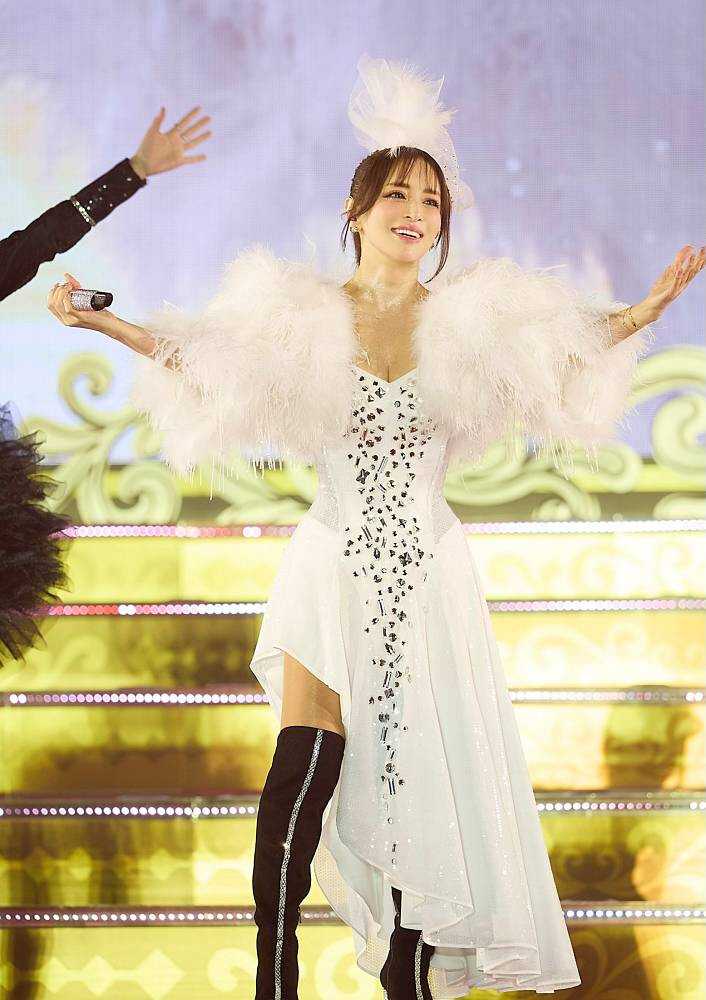
(C) MusicVoice
Japanese superstar Ayumi Hamasaki's scheduled concert in Shanghai, part of her Asia tour, was abruptly cancelled just one day before the performance, sending shockwaves through her fanbase and raising significant concerns about the escalating diplomatic friction between Japan and China. While the official reason remains elusive, the circumstances surrounding the cancellation strongly suggest a direct link to the growing anti-Japanese sentiment within China, reportedly triggered by recent political actions and rhetoric from Japan.
Hamasaki's Heartfelt Apology and Abrupt Notification
On November 28, Ayumi Hamasaki took to her social media channels to deliver the "extremely painful news." Her statement revealed that a joint team of approximately 200 Japanese and Chinese staff had worked tirelessly for five days to complete the Shanghai stage, only to receive a sudden "request for the suspension of the performance" on the morning of the 28th.
"I have no intention of commenting carelessly on matters outside my knowledge," Hamasaki stated, expressing deep regret to the nearly 100 Chinese staff members, as well as the 100 staff, dancers, and band members who had traveled from Japan. Her anguish was palpable as she addressed the 14,000 "TA" (Hamasaki's fandom name) who had gathered from across China, Japan, and other countries, lamenting the impossibility of meeting them or even offering a direct apology before the stage had to be dismantled.
Hamasaki's Shanghai concert was slated for November 29. The timing and abruptness of the cancellation, following weeks of heightened political animosity, have led many observers to interpret the move as a consequence of the widening bilateral rift.
The Political Backlash: From Taiwan to Cultural Curbs
The current wave of anti-Japanese sentiment in China was notably ignited by a statement from Japanese Prime Minister Sanae Takaichi on November 7. Takaichi became the first sitting Japanese Prime Minister to suggest that a "Taiwan contingency" could be deemed a "situation posing an existential threat" to Japan, potentially enabling Japan to exercise its right to collective self-defense (military force).
China reacted with fury, launching days of high-intensity condemnation, while Takaichi remained steadfast, refusing to retract her remarks. In response, Chinese authorities have systematically implemented control measures. The government has cautioned its citizens against non-essential travel to Japan, citing "security concerns," and advised students to carefully reconsider plans to study in Japan.
This tightening grip has extended into the cultural sphere. On November 18, China Central Television (CCTV) reported that the screening of several imported Japanese films, including Crayon Shin-chan the Movie: Intense Battle! The Flamboyant Kasukabe Dancer and Cells at Work!, would be "suspended." The report claimed the decision was a "prudent one" based on an assessment of the films' comprehensive market performance and "the sentiments of our country's audience." This highly unusual, coordinated cultural pullback further fueled speculation regarding the cancellation of live performances.
Precedents: Other Japanese Acts Affected
Hamasaki is not the only Japanese artist to face this sudden cultural barrier.
Just prior to Hamasaki's ordeal, female singer-songwriter KOKIA's Beijing concert was abruptly cancelled on November 19, a mere 30 minutes before the show was due to begin. The ticket vendor attributed the cancellation to a "venue equipment malfunction." However, reports on Chinese social media, noting that KOKIA had successfully conducted a rehearsal that afternoon, cast serious doubt on the official explanation.
Similarly, the Japanese male idol group JO1 was forced to cancel a fan event scheduled for November 28 in Guangzhou, citing the reason as the "impact of force majeure." The event was to feature members Keisuke Sato, Kaimi Kaneshira, and Shoya Gizen.
The pattern of last-minute cancellations—affecting prominent Japanese artists from pop icons like Hamasaki to idol groups like JO1 and singer-songwriters like KOKIA—demonstrates a clear and possibly state-sanctioned policy of limiting Japanese cultural exposure within China. The lack of transparent, consistent official explanations for these cancellations points to a deepening politicization of cultural exchange, with artists and fans bearing the collateral damage of rising Sino-Japanese political and diplomatic tensions. These cultural actions serve as a visible, tangible proxy for the geopolitical friction, reflecting a growing willingness by Beijing to use cultural exchange as a tool for political expression.
[Copyright (c) Global Economic Times. All Rights Reserved.]