![[등록] 2026-09-01 15:48:31](/support/_updata/banner2/tl181982910_6749.png)


(C) SBS
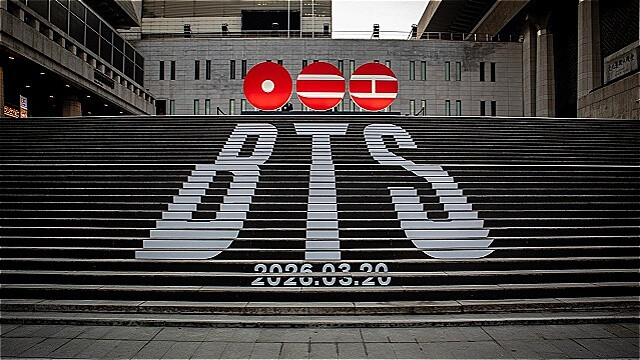
SEOUL – In a move that mirrors the evolving landscape of South Korea’s cultural identity, the Seoul Metropolitan Government has granted conditional approval for a massive comeback performance by global icons BTS at Gwanghwamun Square on March 21. This performance marks the group's first full-member appearance in three years and nine months, following the completion of their mandatory military service.
Prior to the city’s decision, HYBE, the agency representing BTS, secured permission from the Cultural Heritage Committee under the National Heritage Administration to utilize iconic landmarks such as Gyeongbokgung Palace and Sungnyemun Gate. These historic sites will serve as the backdrop for a return that fans—known globally as ARMY—have awaited with bated breath.
From Elite Stages to Public Squares
The journey of K-pop to the center of Seoul’s historic heart has not been without its hurdles. For the "4050 generation" (those in their 40s and 50s), the high barriers of public venues remain a vivid memory. In 1989, the Sejong Center for the Performing Arts attempted to host legends like Patti Kim and Lee Mi-ja but was forced to retreat due to heavy opposition from those who viewed popular music as "unfit" for prestigious stages.
It wasn't until the 1990s that the doors began to crack open, with Ha Choon-hwa performing in 1992 and Cho Yong-pil famously gracing the Seoul Arts Center’s Opera House in 1999. These milestones served as early indicators of a "closed society" transforming into an "open" one, providing the fertile soil in which K-culture could eventually take root and flourish globally.
Navigating Safety and Logistics
While the return of BTS is a celebrated milestone for K-culture, it presents significant logistical challenges. HYBE initially proposed a capacity of 18,000 at Gwanghwamun Square and an additional 30,000 at Seoul Plaza. However, city officials anticipate that crowds could swell to over 100,000 fans, including international travelers.
"The conditional approval is a necessary measure to ensure public safety, manage traffic congestion, and oversee accommodation services," a representative noted. Given that Gwanghwamun, Gyeongbokgung, and Sungnyemun are public spaces, the authorities are tasked with balancing the excitement of a global event with the rights of everyday citizens.
A New Chapter for K-Culture
The significance of this concert transcends mere entertainment. Despite recent corporate controversies surrounding HYBE Chairman Bang Si-hyuk, the artistic integrity and global impact of BTS remain untarnished. International outlets, including the AP, have hailed the group's reunion as a "monumental moment" for the music industry.
Gwanghwamun Square has long been a site of national collective memory—from World Cup street cheering to pivotal political rallies. Now, it stands as the birthplace of a new era of K-culture. As the city prepares for the influx of global visitors, the consensus is growing: a few inconveniences are a small price to pay for a "spring gift" that will showcase the resilience and vibrancy of South Korean culture to the world.
As BTS prepares to stand before the statues of Admiral Yi Sun-sin and King Sejong the Great, their performance will likely be remembered not just as a concert, but as a symbolic homecoming to the heart of the nation.
[Copyright (c) Global Economic Times. All Rights Reserved.]