
![[등록] 2026-09-01 15:48:31](/support/_updata/banner2/tl181982910_6749.png)


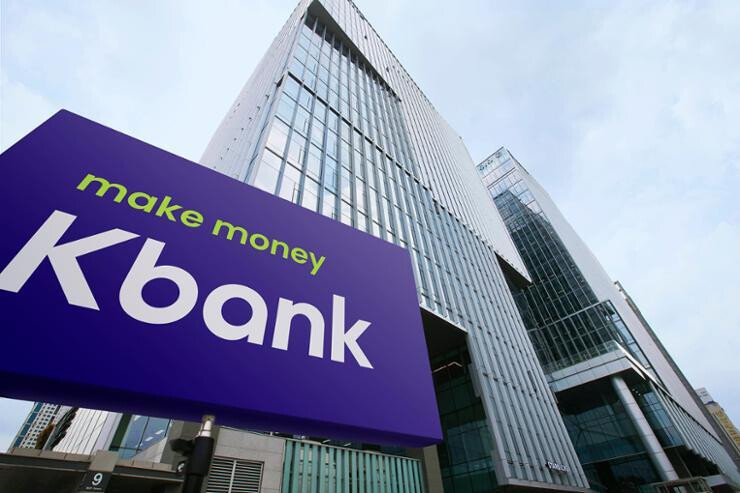
K-bank, a leading South Korean internet-only bank, announced on May 18 that its outstanding loan balance for sole proprietors and small businesses has officially breached the KRW 3 trillion mark. Industry analysts evaluate that the bank has successfully solved its financial soundness puzzle by strategically shifting its loan portfolio toward collateralized and guaranteed lending.
The bank's corporate banking sector is currently on a steep upward trajectory. The KRW 3 trillion milestone comes just six months after K-bank hit the KRW 2 trillion mark in November last year, translating to a rapid growth of KRW 1 trillion in a short span.
The core drivers behind this robust growth are the bank's "Guaranteed Loans" and "SOHO Real Estate Collateral Loans." Notably, the balance of guaranteed loans surged by 76% this year alone, climbing from KRW 330 billion at the end of last year to KRW 580 billion this month. K-bank has aggressively expanded its partnerships beyond metropolitan regional credit guarantee foundations to local municipalities, such as Pohang and Gumi. In an industry first for internet banks, K-bank teamed up with the Seoul Metropolitan Government to introduce a negative-growth (minus account) guaranteed loan, significantly improving capital liquidity for small business owners.
The "SOHO Real Estate Collateral Loan"—which initially made headlines for being 100% non-face-to-face—also proved to be a major revenue driver, increasing by 40% from KRW 560 billion at the end of last year to KRW 780 billion.
What stands out most, however, is the qualitative evolution of K-bank’s loan portfolio. While aggressive loan expansion typically heightens default risks, K-bank has defied conventional trends.
The proportion of guaranteed and collateralized loans within its SOHO portfolio expanded dramatically from 26% in the first quarter of last year to 43% in the first quarter of this year. Thanks to this risk-mitigating, stable portfolio mix, K-bank's delinquency rate plummeted from 1.38% to 0.55% during the same period. This marks the lowest delinquency rate among all internet-only banks in the nation, reflecting remarkably healthy financial metrics.
Leveraging this financial stability, K-bank is also accelerating its "win-win financial" initiatives for small businesses. According to disclosures from the Korea Federation of Banks, K-bank's average interest rate for outstanding SOHO secured loans stood at 3.44% per annum as of the end of the first quarter of this year—the lowest in the entire banking sector. Armed with these competitive rates, the bank has served as a financial lifeline for self-employed individuals, helping them refinance high-interest loans from secondary financial institutions such as mutual finance, savings banks, card companies, and capital firms.
At the same time, K-bank remained committed to inclusive finance. By upgrading its Credit Scoring System (CSS) and actively utilizing alternative data—including telecommunications, platform, and card merchant data—the bank successfully extended 34% of its Q1 SOHO credit loans to mid-to-low credit borrowers.
Riding on this momentum, K-bank plans to further aggressively expand its corporate banking footprint in the second half of the year. The bank is preparing to launch dedicated credit loan products tied to major tech platforms. It also aims to boost its B2B financial competitiveness by expanding eligible properties for real estate collateral loans and introducing new facility capital loan products.
"Since becoming the first internet-only bank to establish a full lineup spanning credit, collateralized, and guaranteed loans, we have maintained steady growth across all sectors," a K-bank official stated. "Moving forward, we will boldly extend our business territory beyond sole proprietors to small and medium enterprises (SMEs) to further solidify our corporate customer base."
[Copyright (c) Global Economic Times. All Rights Reserved.]














