• 2026.06.27 (Sat)
  • All articles
  • LOGIN
  • JOIN
Global Economic Times
fashionrunwayshow2026
  • Synthesis
  • World
  • Business
  • Industry
  • ICT
  • Distribution Economy
  • Well+Being
  • Travel
  • Eco-News
  • Education
  • Korean Wave News
  • Opinion
  • Arts&Culture
  • Sports
  • People & Life
    • International Student Report
    • With Ambassador
  • Column
    • Cho Kijo Column
    • Cherry Garden Story
    • Ko Yong-chul Column
    • Kim Seul-Ong Column
    • Lee Yeon-sil Column
  • Photo News
  • New Book Guide
MENU
 
Home > World

Iran Imposes Transit Fees on Strait of Hormuz Amid Escalating Maritime Tensions

Global Economic Times Reporter / Updated : 2026-04-28 08:41:47
  • -
  • +
  • Print


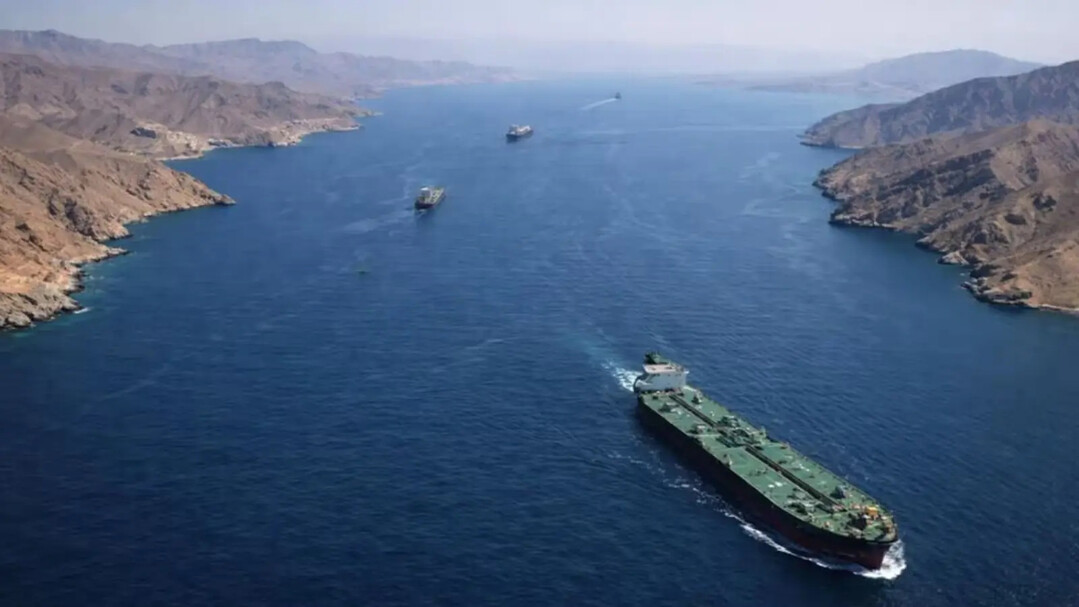
TEHRAN — In a move that threatens to upend global energy logistics and maritime security, Iran has officially begun collecting transit fees from vessels navigating the Strait of Hormuz. By asserting "maritime sovereignty" over one of the world’s most critical chokepoints, Tehran is effectively leveraging its geographical position to counter international pressure and maritime blockades.

Strategic Toll Collection and Financial Infrastructure
Alaeddin Boroujerdi, a member of the Iranian Parliament’s National Security and Foreign Policy Committee, announced on April 27, 2026, that the Central Bank of Iran (CBI) has established dedicated accounts to facilitate these payments. To bypass potential sanctions hurdles and accommodate various international stakeholders, the accounts support four major currencies:

Iranian Rial (IRR)
Chinese Yuan (CNY)
US Dollar (USD)
Euro (EUR)

According to official directives, the Islamic Revolutionary Guard Corps Navy (IRGCN) has been tasked with the direct collection of these fees. Local media reported that the first cash payment was successfully processed on April 23, deposited into a unified account under the Ministry of Economic Affairs and Finance. Notably, the authorities have prioritized physical currency over digital assets for these initial transactions.

Legislative Grounding and Military Enforcement
The imposition of the "transit tax" follows the passage of the "Law on Establishing Iran's Sovereignty over the Strait of Hormuz" by the Iranian Parliament on April 21. This legislation provides the legal framework for Tehran to treat the strait—through which approximately 20% of the world’s petroleum passes—as a sovereign toll zone rather than international waters subject to transit passage.

This escalation is the latest chapter in a volatile conflict that began on February 28, 2026, following preemptive strikes by the U.S. and Israel. In response to those hostilities, Iran initiated a blockade of the strait, which was met by a counter-blockade of Iranian ports by U.S. naval forces.

 
Global Economic and Security Implications
The international shipping community has reacted with alarm, as the Strait of Hormuz is the primary artery for oil exports from Saudi Arabia, the UAE, Kuwait, and Iraq. Analysts warn that this move could lead to:

Increased Energy Costs: Transitioning from free passage to a toll system will inevitably spike global oil prices and insurance premiums for tankers.
Heightened Naval Friction: With the IRGCN directly enforcing collection, the risk of armed confrontations with foreign navies escorting commercial vessels has reached a critical high.
Legal Challenges: The U.S. and its allies are expected to challenge the legality of the fees under the United Nations Convention on the Law of the Sea (UNCLOS), which generally protects the right of transit passage through international straits.
As Tehran solidifies its grip on this maritime gateway, the global community faces a daunting challenge: navigating a new era where the free flow of energy is subject to the geopolitical tolls of a nation under siege.

[Copyright (c) Global Economic Times. All Rights Reserved.]

Global Economic Times Reporter
Reporter Page

Popular articles

  • [Interview] From Radiant Actor to Warm Companion… Actor Han Ji-il’s Great Second Act of Life

  • Asking about the Future of ‘Hangeul City Ulsan’… Special Lecture by Novelist Kim Jin-myung to be Held

  • Vancouver KTV's Insight Captivates Prestigious U.S. University: Two Korean-Led Documentaries Permanently Archived at the University of Michigan

I like it
Share
  • Facebook
  • X
  • Kakaotalk
  • LINE
  • BAND
  • NAVER
  • https://www.globaleconomictimes.kr/article/1065569860916041 Copy URL copied.
Comments >

Comments 0

Weekly Hot Issue

  • BYD Unveils First Plug-in Hybrid ‘Sealion 6’ in Korea, Targeting Eco-Friendly Market at 37.5 Million Won 
  • Kia’s Strategic Pivot: Accelerating Electrification Through SDV, PBV, and EREV Innovation
  • Devastating Twin Earthquakes Strike Venezuela: Death Toll Rises Amid Humanitarian Crisis
  • Hyundai Motor Prioritizes "Customer Experience" Over Pricing: Aiming for Lifelong Loyalty with the New Avante
  • South Korea's Path to Round of 32 Grows Perilous Following Australia-Paraguay Draw
  • The True Face of Our Politics After Stripping Away the Mask of Fairness

Most Viewed

1
[In-depth Report] The Islamic ‘Halal Barrier’ Just Around the Corner… The Silent Screams of K-Beauty SMEs
2
Asking about the Future of ‘Hangeul City Ulsan’… Special Lecture by Novelist Kim Jin-myung to be Held
3
Embassy of Pakistan in Seoul Hosts Commemorative Event for the 150th Birth Anniversary of Muhammad Ali Jinnah
4
KOSPI Hits Historic 9,300 Milestone as Market Cap Surpasses 8,000 Trillion Won
5
'K-Medicine' Sweep Drives Foreign Medical Spending in Korea to Record High of 250 Billion Won
광고문의
임시1
임시3
임시2

Hot Issue

Devastating Twin Earthquakes Strike Venezuela: Death Toll Rises Amid Humanitarian Crisis

Political Debates Spark Over Semiconductor "Windfall" Redistribution

Google Play Hosts 'ChangGoo Alumni Day' to Accelerate Global Expansion for 760 Korean Startups

Government Slashes Petroleum Price Caps by 150 Won per Liter amid Easing Middle East Tensions

Fashion Runway Show 2026

Global Economic Times
korocamia@naver.com
CEO : LEE YEON-SIL
Publisher : KO YONG-CHUL
Registration number : Seoul, A55681
Registration Date : 2024-10-24
Youth Protection Manager: KO YONG-CHUL
Singapore Headquarters
5A Woodlands Road #11-34 The Tennery. S'677728
Korean Branch
Phone : +82(0)10 4724 5264
#304, 6 Nonhyeon-ro 111-gil, Gangnam-gu, Seoul
Copyright © Global Economic Times All Rights Reserved
  • 향기네무료급식
  • BCB부천방송
  • 반달곰 프로젝트
Search
Category
  • All articles
  • Synthesis
  • World
  • Business
  • Industry
  • ICT
  • Distribution Economy
  • Well+Being
  • Travel
  • Eco-News
  • Education
  • Korean Wave News
  • Opinion
  • Arts&Culture
  • Sports
  • People & Life 
    • 전체
    • International Student Report
    • With Ambassador
  • Column 
    • 전체
    • Cho Kijo Column
    • Cherry Garden Story
    • Ko Yong-chul Column
    • Kim Seul-Ong Column
    • Lee Yeon-sil Column
  • Photo News
  • New Book Guide
  • Multicultural News
  • Jobs & Workers