![[등록] 2026-09-01 15:48:31](/support/_updata/banner2/tl181982910_6749.png)


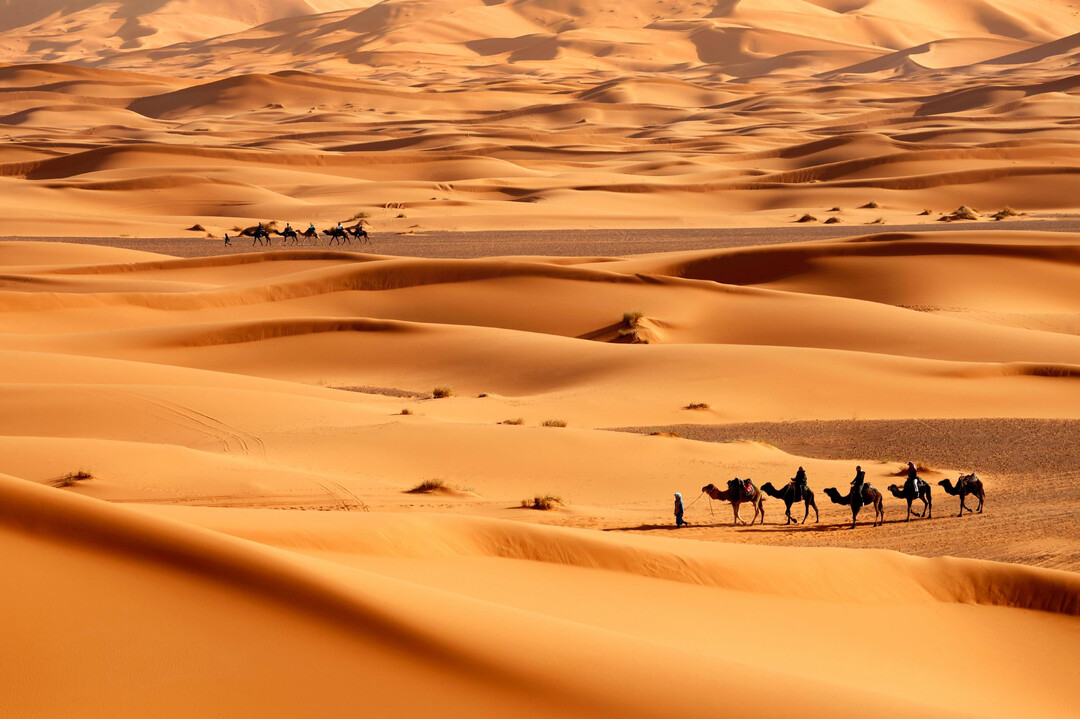
A groundbreaking study has revealed that the Sahara-Arabian Desert, often perceived as an insurmountable barrier, has periodically served as a humid pathway over the past 8 million years. This overturns the conventional wisdom that it acted as a blockade to the exchange of flora and fauna between the African and Eurasian continents. The findings are particularly anticipated to provide crucial clues for understanding the migration routes of mammals, including early humans.
Unveiling the Desert's Secrets: Climate Information Hidden in Cave Formations
On June 9 (local time), an international research team, including Germany's Max Planck Institute for Chemistry, announced in the international journal Nature that they had uncovered this truth by analyzing speleothems (cave formations like stalactites and stalagmites) found in seven caves in Saudi Arabia.
The Sahara-Arabian Desert is known to have formed approximately 11 million years ago and is considered one of the largest barriers separating biological ecosystems. However, the discovery of fossils of water-dependent animals such as crocodiles, hippos, and elephants within the desert has consistently suggested that the desert's past climate might have differed from its present state.
The research team focused on speleothems located within caves in the middle of the desert. Speleothems are formed when rainwater passes through soil, dissolves bedrock, and then the dissolved calcium carbonate drips from the cave ceiling or accumulates on the floor, layering over time. This formation process ensures that detailed climate information, such as precipitation and temperature at the time, is meticulously recorded within the speleothems. Critically, speleothems require sufficient rainfall of approximately 300 mm per year to grow, making their very existence powerful evidence that parts of the Sahara were humid in the past.
8-Million-Year Climate Timeline: The Periodic Return of Humid Periods
Using radiometric dating methods (uranium-thorium and uranium-lead dating), the research team analyzed the age of the speleothems, tracing them back up to 8 million years. Their findings confirmed that the central Arabian region of Saudi Arabia experienced several periods of greater humidity than today over the past 8 million years.
Specifically, the research team concluded that multiple humid periods existed during the Late Miocene (approx. 7.44 to 6.25 million years ago), Early Pliocene (approx. 4.10 to 3.16 million years ago), and Pleistocene (approx. 2.29 to 2.01 million years ago, and 1.37 to 0.86 million years ago, among others). This indicates that the Sahara-Arabian Desert was never a permanently arid zone but rather periodically transformed into an environment where life could flourish on a geological timescale.
Monsoon Influence and Climate Change: Causes of Desertification
The research team also analyzed the oxygen and hydrogen isotope ratios of ancient rainwater trapped within the speleothems to trace changes in past precipitation and its origin. The analysis revealed that during past humid periods, significantly more rain fell, primarily influenced by summer monsoons (seasonal winds) blowing from the south. These summer monsoons played a crucial role in supplying vast amounts of water vapor to Africa and the Arabian Peninsula, transforming desert regions into lush grasslands.
However, over time, the precipitation during humid periods gradually decreased, and its variability increased. A distinct trend of aridification emerged after the Mid-Pleistocene Transition, approximately 1 million years ago. The research team explained that these changes are related to the overall cooling of the Northern Hemisphere. As the Northern Hemisphere cooled, the monsoon belt gradually shifted southward, weakening the monsoon's influence on the Arabian Peninsula and intensifying aridification. Notably, the cessation of speleothem growth at the end of the Late Miocene (approx. 6.30 to 4.10 million years ago) precisely coincides with global climate changes and aridification periods, such as the 'Messinian Salinity Crisis' when the Mediterranean Sea dried up, suggesting that desertification was not a localized phenomenon but part of global climate fluctuations.
A New Horizon for Research on Human Migration Routes
These research findings offer revolutionary insights into understanding the migration routes of mammals, including early humans. Dr. Monica Markowska, who led the research, emphasized, "During past humid periods, the Arabian Desert would have transformed into grasslands, serving as a vital corridor connecting Africa and Eurasia." She added, "This provides crucial clues for understanding the migration routes of mammals, including early humans."
Hubert von Hof, a co-author of the paper and researcher at the Max Planck Institute, also stated, "The repeated occurrence of humid periods is not only climatically important but also a key factor that enabled mammalian exchange, including the migration of our ancestors."
This study proves that the Sahara-Arabian Desert was not a barrier to the movement of life but rather an "oasis corridor" that helped life traverse continents. This is expected to open new avenues for research in various fields, including archaeology, anthropology, and biology. Moving forward, this research is anticipated to enable a deeper understanding of the process by which early humans expanded out of Africa and into Eurasia.
[Copyright (c) Global Economic Times. All Rights Reserved.]