![[등록] 2026-09-01 15:48:31](/support/_updata/banner2/tl181982910_6749.png)



(C) PUBLY
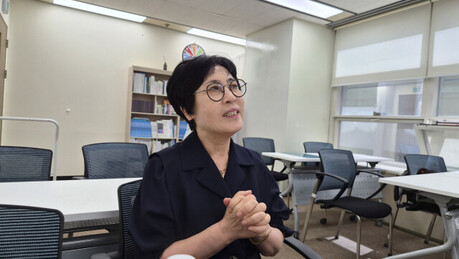
The traditional view of plastic production, heavily reliant on petroleum, is being fundamentally challenged by a groundbreaking technology that captures carbon dioxide (CO2) directly from the air and transforms it into essential chemical feedstocks, including the precursors for plastic and fuel. At the forefront of this carbon neutrality revolution is Dr. Hyunju Lee, Principal Researcher at the Korea Institute of Science and Technology (KIST), who was recently honored with the prestigious 25th Woman Scientist and Engineer of the Year Award (Industrial Sector).
Dr. Lee's recognition stems from her successful development and commercialization of a low-energy CO2 absorption agent. Her innovation is seen as a pivotal step towards realizing a circular economy, where what was once considered a pollutant is now repurposed as a valuable resource.
DACU: Turning Pollution into Prosperity
The core of Dr. Lee's research lies in the Direct Air Capture and Utilization (DACU) project. This initiative mimics nature's photosynthesis, utilizing advanced scientific methods to convert atmospheric CO2 into a variety of useful chemicals and fuels.
In conventional Carbon Capture and Storage (CCS) technologies, the process of concentrating captured CO2 (desorption) is highly energy-intensive and costly. Dr. Lee's breakthrough bypasses this energy bottleneck. She and her team have developed a specialized solvent that efficiently absorbs CO2. Crucially, this captured CO2 is then immediately converted into valuable compounds without the need for a high-energy concentration stage.
“If we discard it, it's an environmental pollutant, but if we utilize it well, it's a 'resource.' The key is how economically we can reuse resources and how well we can link this to renewable energy.”
— Dr. Hyunju Lee, KIST Principal Researcher
Over the past two and a half years, the DACU project has yielded significant results, including the development of catalysts and systems for producing Syn-gas (syngas), a fundamental component for synthetic fuels, and Formic Acid, a crucial chemical in various industrial applications.
The Path to Economic Viability
While the scientific success is evident, scaling up the technology for widespread industrial adoption requires overcoming economic hurdles. The entire process—from capturing CO2 and converting it into fuels and chemicals to separating the final products—must maintain a net negative carbon footprint and be more cost-effective than existing methods.
Dr. Lee emphasizes that future success hinges on continuous innovation and strategic integration: "To achieve this, it is vital to develop better catalysts and process technologies and to link them with renewable energy sources like solar and wind power."
Her expertise extends beyond CO2 to tackling other major air pollutants. Dr. Lee has also pioneered technologies to process sulfur dioxide (SO2) and nitrogen oxides (NOx)—prime contributors to smog and acid rain—into usable products such as sulfuric acid and fertilizers. This approach offers a double benefit: environmental remediation coupled with economic value creation.
Leading the Next Generation
A dedicated researcher who has spent 30 years at KIST focusing on carbon-neutral technologies, Dr. Lee credits her sustained success to simple factors: "Curiosity and fun." She expresses deep gratitude for the honor, recognizing it as the most prestigious award for a female scientist, and thanks her colleagues, post-docs, and students for their collaborative efforts, especially in successful technology transfers.
Beyond her research lab, Dr. Lee is embracing a new leadership role. She will dual-function as the President of the KU-KIST Graduate School of Converging Science and Technology starting in the new year. Established in 2012 by KIST and Korea University, the school aims to nurture talent in the NBIT (Nano, Bio, Information, and Cognitive) fields.
Dr. Lee sees her mandate as elevating the school's global reputation while bringing her accumulated technologies to fruition through commercialization over the next two years.
Advice for Future Scientists
Dr. Lee offers an encouraging and straightforward piece of advice to younger scientists, particularly those struggling with the decision to pursue a Ph.D. or balance it with family life: "Just go for it." She warns that allowing hesitation to prevent a challenge is tantamount to forfeiting a potential gift the future holds.
Addressing her female colleagues, Dr. Lee touches upon the internal and external challenges they face:
“Many women scientists possess the dilemma of being perfectionists while also feeling the need to be humble. This is a part we must overcome ourselves. We need to be more confident in expressing our voices, even if we feel slightly inadequate, and encourage each other to move forward.”
She concludes by advocating for a societal shift away from overly competitive environments and policies that adequately support the work-life balance for all scientists, ultimately ensuring that groundbreaking talent like hers can continue to drive innovation for a sustainable future.
[Copyright (c) Global Economic Times. All Rights Reserved.]