![[등록] 2026-09-01 15:48:31](/support/_updata/banner2/tl181982910_6749.png)


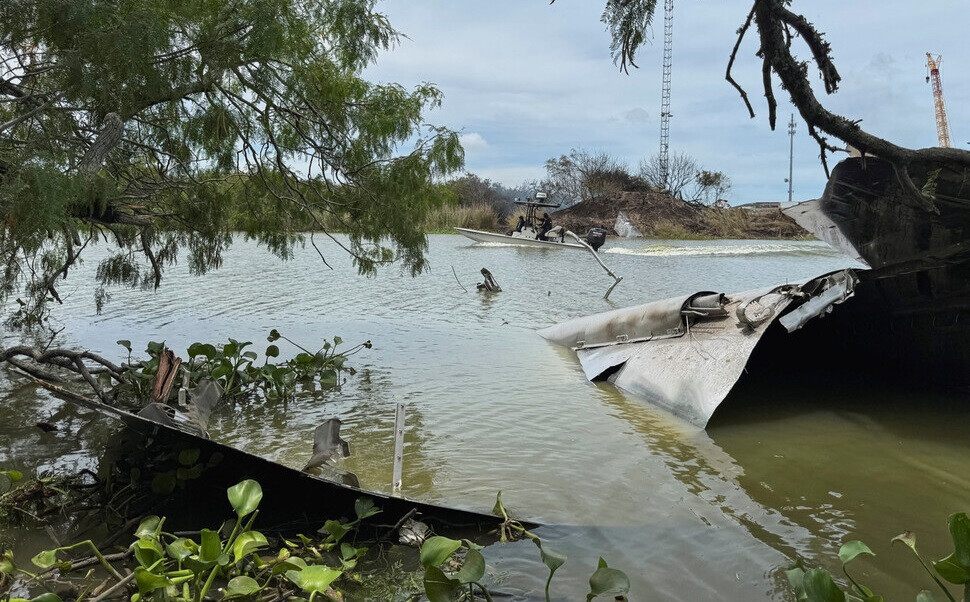
On June 19 (local time), a large reusable rocket, Starship, led by Elon Musk's SpaceX, crashed during an engine test launch. Debris from this accident was found in large quantities on the beaches of Tamaulipas, Mexico, sparking environmental pollution concerns. The Mexican government's announcement of an international legal suit against SpaceX has caused the situation to escalate significantly.
Mexican Government: "Severe Environmental Damage, Considering International Legal Action"
Mexican President Claudia Sheinbaum stated firmly at a regular press conference on June 25 (local time), "We have received reports that special waste from the United States has polluted parts of Tamaulipas." She added, "We are considering suing SpaceX within the framework of international law."
Following the accident, severe environmental damage was confirmed on the beaches of Tamaulipas, with numerous marine creatures such as fish, dolphins, and sea turtles dying due to Starship explosion debris. Mexican environmental authorities immediately launched an on-site investigation and are even considering the possibility of detecting harmful substances in the debris. President Sheinbaum is using this incident as an opportunity to comprehensively review safety issues and environmental impacts of rocket launches in the border area between the two countries. Currently, a related alert has been issued for some parts of Tamaulipas, instructing residents to avoid approaching the debris.
This accident shows signs of escalating beyond a simple environmental pollution issue into an international legal dispute. International space law clearly stipulates a state's responsibility for damage caused by space activities. In particular, the Convention on International Liability for Damage Caused by Space Objects (Liability Convention), adopted in 1972, states that a launching state of a space object is absolutely liable for damage caused by that object on the surface of the Earth or to aircraft in flight. Accordingly, the Mexican government may pursue SpaceX's liability through the U.S. government or directly seek compensation from SpaceX.
Elon Musk: "No Danger, Will Cooperate on Debris Recovery"
In response, Elon Musk claimed on his social media platform X (Twitter), "There is no danger to the surrounding area. Starship materials pose no chemical, biological, or toxicological hazards." He also stated, "We have asked for local and federal support from the Mexican government for debris recovery and have offered resources and assistance for cleanup and requested confirmation of authority to perform recovery operations," indicating his willingness to cooperate with Mexican authorities.
Despite Musk's statements, the Mexican government is emphasizing the severity of the environmental damage and pursuing legal action, leading to a sharp conflict between the two sides. SpaceX has experienced multiple Starship test launch failures to date, and this particular accident, having affected the environment of another country across borders, is causing an even greater stir.
Future Outlook and Implications
This Starship crash accident raises an important question: the balance between space development activities and environmental protection. As the space industry grows rapidly, there is increasing global concern about debris and environmental pollution generated during rocket launches and re-entries. Especially accidents like this, which cross international borders, are expected to trigger discussions on each country's environmental regulations and international legal responsibilities.
The Mexican government's international legal response could affect not only SpaceX but also the future launch activities of other space companies. For the sustainable development of the space industry, there is a growing call for both companies' autonomous environmental protection efforts and robust international cooperation, along with the urgent establishment of clear regulations. International attention is focused on what conclusion this incident will lead to.
[Copyright (c) Global Economic Times. All Rights Reserved.]