
• 2025.12.10 (Wed)
  • All articles
  • LOGIN
  • JOIN
Global Economic Times
APEC2025KOREA가이드북
  • Synthesis
  • World
  • Business
  • Industry
  • ICT
  • Distribution Economy
  • Well+Being
  • Travel
  • Eco-News
  • Education
  • Korean Wave News
  • Opinion
  • Arts&Culture
  • Sports
  • People & Life
  • Column
    • Cho Kijo Column
    • Lee Yeon-sil Column
    • Ko Yong-chul Column
    • Cherry Garden Story
  • Photo News
  • New Book Guide
MENU
 
Home > APEC 2025 KOREA GUIDE

Soju: Korea's Beloved Spirit

Global Economic Times Reporter / Updated : 2025-07-28 09:55:41
  • -
  • +
  • Print

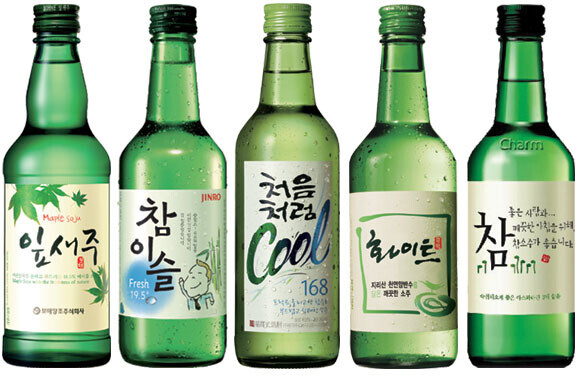
Soju, a distilled spirit originating from Korea, has gained significant global popularity in recent years, especially among younger generations. This clear, colorless liquor, often compared to vodka, is a staple of Korean culture and is typically enjoyed neat or mixed with various beverages.

History and Production

Soju's history can be traced back centuries. Traditionally made from rice, it has evolved over time to include other starches such as sweet potato, wheat, or barley. The distillation process involves fermenting grains to produce alcohol, which is then purified and diluted to the desired proof.

Taste and Serving

Soju is known for its smooth and slightly sweet taste, with a lower alcohol content compared to many Western spirits. Its versatility makes it a popular choice for a wide range of occasions. Soju is often consumed chilled and served in small glasses, and it can be enjoyed on its own or as a mixer in cocktails. Popular soju cocktails include soju bombs, soju mixed with fruit juices, and soju mixed with beer.

Cultural Significance

Soju plays a central role in Korean culture and is often associated with social gatherings and celebrations. It is commonly consumed with Korean barbecue, fried chicken, and other traditional dishes. Soju has also become a symbol of Korean identity and has helped to promote Korean culture around the world.

Global Popularity

The global popularity of soju can be attributed to several factors, including its affordability, versatility, and association with Korean pop culture. Soju has become a trendy drink in many countries, particularly among young people. As Korean cuisine and culture continue to gain traction worldwide, soju is expected to become even more popular in the years to come.

Conclusion

Soju is more than just a spirit; it is a cultural icon that has captured the hearts of people around the world. With its smooth taste, affordability, and versatility, soju is poised to continue its global ascent.

source : Global Economic Times(https://www.globaleconomictimes.kr)

[Copyright (c) Global Economic Times. All Rights Reserved.]

  • #APEC2025KOREA
  • #APEC2025GYEONGJU
  • #KOREA
  • #SEOUL
  • #K-FOOD
  • #K-CULTURE
  • #K-TOUR.
Global Economic Times Reporter
Reporter Page

Popular articles

  • Kioxia Plunges to Daily Limit on Disappointing Earnings, Rattling Global Chip Stocks

  • Primera Edición de los 'MYKOREA Awards in Bangkok' Concluye con Éxito... Confirmando el Potencial de la Plataforma de Intercambio Global para Expandirse a Países de Todo el Mundo

  • Farewell to a Legend: South Korea Mourns the Passing of Esteemed Actor Lee Soon-jae

I like it
Share
  • Facebook
  • X
  • Kakaotalk
  • LINE
  • BAND
  • NAVER
  • https://www.globaleconomictimes.kr/article/1065574506361259 Copy URL copied.
Comments >

Comments 0

Weekly Hot Issue

  • The Tragedy on the High Seas: Royal Caribbean Sued Over Passenger Death After 33 Drinks and Fatal Restraint
  • Australia's Digital Iron Curtain: The Global Aftershocks of a World-First Social Media Ban
  • A Golden Noel: The Vance Family's First Christmas at the Naval Observatory
  • A New Era of Transparency: Federal Judges Order Release of Voluminous Epstein Case Files
  • Monopoly or Media Evolution? Netflix-Warner Bros. Deal Triggers Bipartisan Antitrust Fury
  • Jay-Z's Marcy Venture Partners Bets $500M on the Global Growth of K-Culture

Most Viewed

1
Korean War Ally, Reborn as an 'Economic Alliance' Across 70 Years: Chuncheon's 'Path of Reciprocity,' a Strategic
2
A Garden Where the City's Rhythm Stops: Dongdaemun's 'Cherry Garden', Cooking Consideration and Diversity
3
The Sudden Halt of Ayumi Hamasaki's Shanghai Concert: Unpacking the Rising Sino-Japanese Tensions
4
Apple Poised to Overtake Samsung as World’s Largest Smartphone Maker After 14 Years, Driven by iPhone 17 Success
5
Travel Light, Fly Warm: Korean Air and Asiana Launch Coatroom Service for Winter Travelers
광고문의
임시1
임시3
임시2

Hot Issue

Monopoly or Media Evolution? Netflix-Warner Bros. Deal Triggers Bipartisan Antitrust Fury

Australia's Digital Iron Curtain: The Global Aftershocks of a World-First Social Media Ban

Forging the Drone Warfighter: USAREUR-AF Launches Inaugural Competition in Germany, Stressing Integrated Lethality

Europe at the Crossroads: Environmental Safeguards Under Threat from 'Simplification' Drive

Let’s recycle the old blankets in Jeju Island’s closet instead of incinerating them.

Global Economic Times
korocamia@naver.com
CEO : LEE YEON-SIL
Publisher : KO YONG-CHUL
Registration number : Seoul, A55681
Registration Date : 2024-10-24
Youth Protection Manager: KO YONG-CHUL
Singapore Headquarters
5A Woodlands Road #11-34 The Tennery. S'677728
Korean Branch
Phone : +82(0)10 4724 5264
#304, 6 Nonhyeon-ro 111-gil, Gangnam-gu, Seoul
Copyright © Global Economic Times All Rights Reserved
  • 에이펙2025
  • APEC2025가이드북TV
  • 독도는우리땅
Search
Category
  • All articles
  • Synthesis
  • World
  • Business
  • Industry
  • ICT
  • Distribution Economy
  • Well+Being
  • Travel
  • Eco-News
  • Education
  • Korean Wave News
  • Opinion
  • Arts&Culture
  • Sports
  • People & Life
  • Column 
    • 전체
    • Cho Kijo Column
    • Lee Yeon-sil Column
    • Ko Yong-chul Column
    • Cherry Garden Story
  • Photo News
  • New Book Guide
  • Multicultural News
  • Jobs & Workers