![[등록] 2026-09-01 15:48:31](/support/_updata/banner2/tl181982910_6749.png)


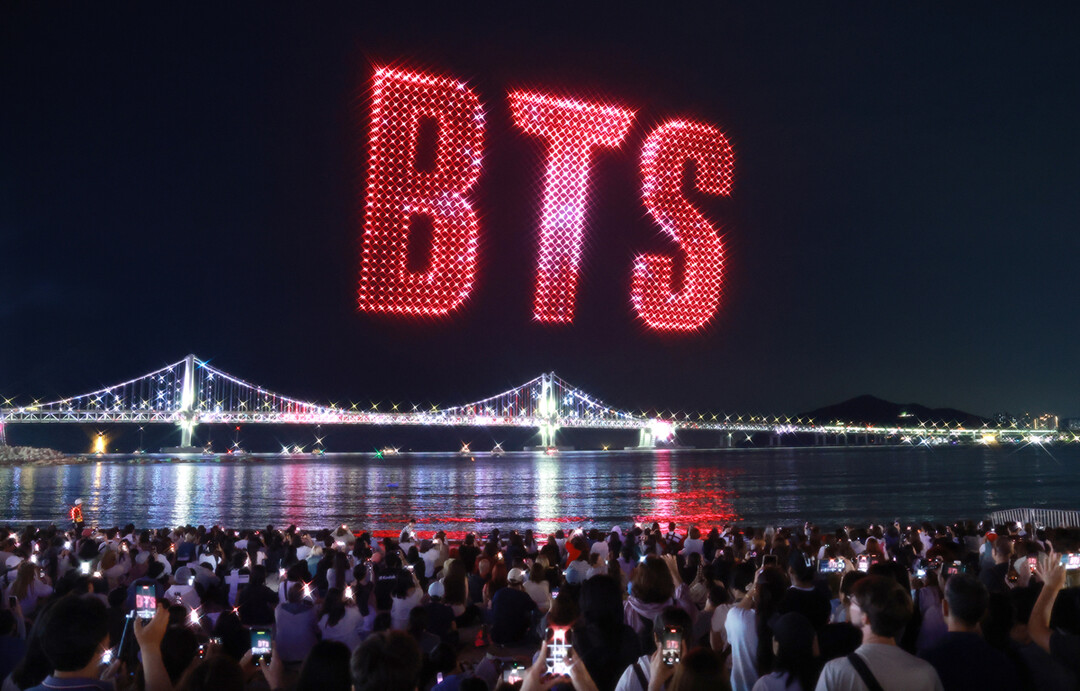
The recent solo concert series by global icons BTS in Busan has proven that K-pop is not just a cultural phenomenon, but a potent engine for local economic revitalization. According to data from Orange Square, the operator of the foreign-visitor payment platform "WOWPASS," the concert week (June 7–13) triggered a massive surge in consumer spending across the port city, demonstrating a significant "trickle-down effect" that extended far beyond the concert venue.
Record-Breaking Economic Surge
During the week of the "ARIRANG" concert series, payment volumes in Busan recorded a staggering 117% increase compared to the previous week, and a 242% jump compared to the same period last year. This surge was driven by approximately 40,000 to 50,000 concert-goers per night, whose presence revitalized local businesses across various districts.
The most dramatic impact was felt in Yeonje-gu, the district housing the Asiad Main Stadium, where payment volumes skyrocketed by 1,495%—roughly 16 times higher than the previous week. Neighboring districts such as Dongnae-gu (414%), Nam-gu (358%), and Dong-gu (266%), along with major transportation hubs like Busan Station, also saw significant growth.
Beyond the Concert: Tourism Dispersion
The data suggests that concert-goers were not confined to the vicinity of the stadium. Spending patterns indicated that visitors actively explored Busan’s core tourist hubs. The highest total payment volumes were recorded in Haeundae-gu, Busanjin-gu (Seomyeon), and Jung-gu (Nampo-dong). This indicates that the event acted as a catalyst for overall tourism, encouraging visitors to explore diverse parts of the city.
The Japanese Connection and Consumer Trends
The surge was heavily bolstered by Japanese tourists. June 13th, which coincided with the BTS "FESTA" (the group's debut anniversary), served as a peak day for spending, with payment volume reaching 4.7 times the daily average. Japanese tourist spending alone rose by 448% compared to the previous year.
Hourly data revealed that consumption peaked between 1:00 PM and 3:00 PM, with sustained activity in nightlife and late-night markets until midnight. Interestingly, the average transaction value per person saw a 13% decrease compared to the previous week. Analysts attribute this to a high frequency of small-ticket transactions—such as street food, snacks, and beverages—suggesting that fans were actively engaged in local cultural experiences rather than singular, high-cost purchases.
Revitalizing Traditional Markets and Local Business
The economic ripple effect reached deep into the heart of Busan’s local culture. Traditional commerce areas, including Jagalchi Market and Gukje Market in the Nampo-dong area, saw a 33% increase in spending. Foreign visitors were frequently seen patronizing local pharmacies and long-standing "nopo" (venerable old-fashioned) restaurants, providing a welcome boost to small-business owners.
The scale of this influx is also evidenced by the infrastructure usage; WOWPASS kiosk top-ups in Busan increased by 108%, and new card issuances grew by 38% during the event week.
Implications for Regional Tourism
An official from Orange Square noted, "The data confirms that large-scale K-pop concerts act as a significant driver for economic activation across entire regions, transcending their role as mere cultural events."
This event highlights the strategic importance of hosting mega-events to bridge the gap between regional tourism and local business vitality. As the demand for localized travel continues to rise, there is a growing consensus that investing in regional payment infrastructure and specialized services for international tourists will be crucial for maintaining the momentum generated by global cultural phenomena.
By leveraging the "BTS Effect," Busan has successfully showcased itself as a premier destination that can seamlessly integrate mega-events with the authentic local experience, providing a sustainable model for future regional economic growth.
[Copyright (c) Global Economic Times. All Rights Reserved.]