• 2026.08.03 (Mon)
  • All articles
  • LOGIN
  • JOIN
Global Economic Times
fashionrunwayshow2026
  • Synthesis
  • World
  • Business
  • Industry
  • ICT
  • Distribution Economy
  • Well+Being
  • Travel
  • Eco-News
  • Education
  • Korean Wave News
  • Opinion
  • Arts&Culture
  • Sports
  • People & Life
    • International Student Report
    • With Ambassador
  • Column
    • Cho Kijo Column
    • Cherry Garden Story
    • Ko Yong-chul Column
    • Kim Seul-Ong Column
    • Lee Yeon-sil Column
  • Photo News
  • New Book Guide
MENU
 
Home > Synthesis

Why There Is No High-Speed Rail Between Gwangju and Busan: How Seoul-Centric Tracks Are Draining South Korea’s Regions

Min Gyu Mi Reporter / Updated : 2026-08-01 08:15:15
  • -
  • +
  • Print


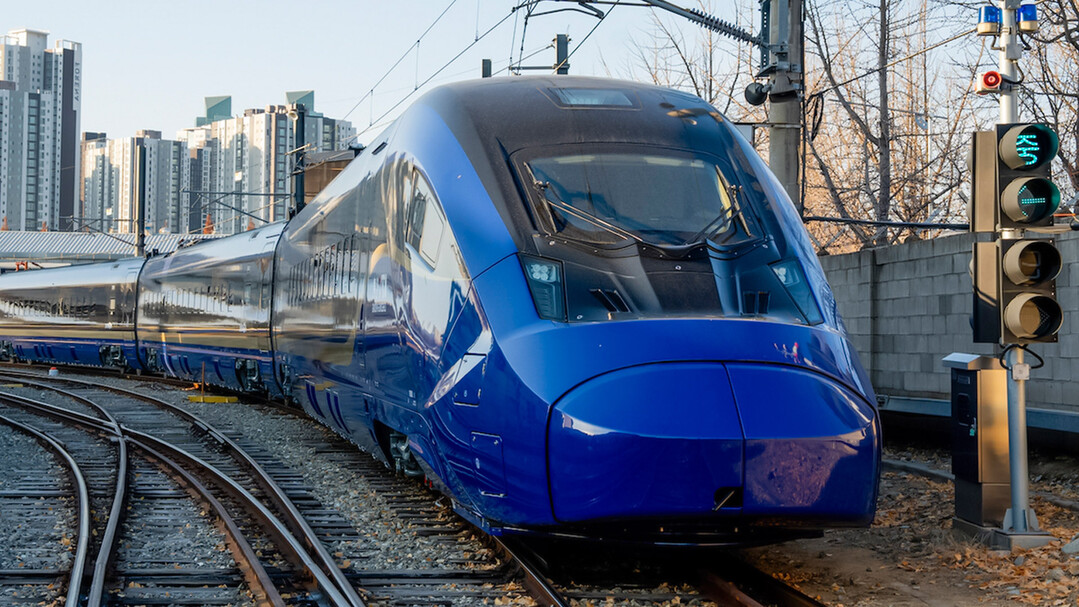
SEOUL — In South Korea’s world-renowned high-speed rail network, almost every track points in one direction: Seoul. Yet traveling directly between major regional metros like Gwangju in the southwest and Busan in the southeast on a KTX bullet train remains an impossible journey.

According to transport philosopher Jeon Hyun-woo, author of the newly published book Leaving the Lonely Stations, this missing connection is not a mere oversight. It is the symptom of a deeply flawed "tree-shaped" transit architecture that funneling social and economic energy straight into the capital while allowing peripheral provinces to dry up.

The Myth of the "Lonely Station"

Jeon’s critique begins at what he calls "lonely stations"—high-speed rail stops built far outside traditional city centers. Stations in historic or industrial hubs like Gyeongju, Gunsan, and Pohang were constructed miles away from downtown districts, often to avoid historic sites or to capitalize on cheaper peripheral land.

The consequences, however, have been severe. Passengers arriving at these remote outposts are greeted by vast parking lots rather than vibrant urban spaces, forcing them into taxis or private cars. This setup destroys the traditional "station-front" atmosphere where diverse demographics naturally cross paths—a phenomenon sociologists call "social mix"—and severs the continuous memory of urban life.

From Tree Structure to Mesh Network

The root cause of these disconnected hubs lies in South Korea’s radial rail layout. Designed like a tree trunk with branches, the network draws resources from regional roots and channels them directly into the Seoul metropolitan area.

To combat regional extinction and restore balance, Jeon proposes transforming this tree structure into a "mesh network." Instead of routing every high-speed line through the capital, a grid-like system would directly link mega-regions across the country. A direct KTX corridor between Gwangju and Busan would serve as a primary artery for cross-regional vitality, allowing southern provinces to trade and commute independently of Seoul.

A Climate-Driven Imperative

Beyond regional development, Jeon emphasizes that reshaping the railway grid is crucial for survival in an era of climate crisis. Trains are 5 to 10 times more energy- and carbon-efficient than private automobiles. Shifting just 10 percent of car commutes to rail can yield an 8 percent drop in national carbon emissions.

Currently, South Korea’s transportation split heavily favors private vehicles over public transit at a 2-to-1 ratio. Jeon argues that to meet carbon neutrality targets by 2050, the nation must aggressively reverse this balance to 1-to-2 by curbing private car usage and expanding synchronized rail timetables.

"Decisions made thirty years ago should not dictate the next millennium," Jeon asserts, calling for a historical critique of Korea’s transit infrastructure. To build a sustainable future, South Korea must bridge the gap between economic affordability and environmental necessity—starting with the tracks beneath its feet.

[Copyright (c) Global Economic Times. All Rights Reserved.]

  • #ormuz Impasse
  • #globaleconomictimes
  • #micorea
  • #mykorea
  • #nammidonganews
  • #singaporenewsk
  • #Samsung
  • #Daewoo
  • #Hyosu
Min Gyu Mi Reporter
Min Gyu Mi Reporter

Popular articles

  • Breaking Down Cultural Barriers, One Seed at a Time: Incheon’s 'Dajeong-Dagam' Garden Blossoms

I like it
Share
  • Facebook
  • X
  • Kakaotalk
  • LINE
  • BAND
  • NAVER
  • https://www.globaleconomictimes.kr/article/1065568450506731 Copy URL copied.
Comments >

Comments 0

Weekly Hot Issue

  • DOE, Regulators, and Meralco Move to Revamp EPIRA and Eliminate System Loss Charges for Lower Power Rates
  • Philippine External Goods Trade Jumps 21% in June on Record Exports
  • Lifting of Metro Manila IT Park Moratorium to Bolster Philippines’ Global BPM Edge
  • BSP Honors Northern Luzon Partners for Driving Financial Inclusion and Digital Growth
  • Philippine Bank Lending and Money Supply Growth Moderated in June
  • Philippines Powers Up Electric Vehicle Industry with Executive Order 121

Most Viewed

1
Japan Estimated to Have Spent ¥6–7 Trillion in Fresh Yen-Buying Intervention as US Joint Action Hints Emerge
2
South Korea’s Top Three Mobile Carriers Launch Pre-Orders for Samsung’s Galaxy Z Series with Aggressive Subsidies and Service Bundles
3
Saudi Arabia Launches Naval Protection Measures as Houthi Blockade Threat Escalates in Bab-el-Mandeb Strait
4
OpenAI Rebounds in Secondary Market as Valuation Surges 20% in Three Months
5
S. Korea Accelerates Leveraged ETF Rules: ₩30M Cash Deposit Required Starting July 31
광고문의
임시1
임시3
임시2

Hot Issue

Hyundai and Kia to Offer Free Annual EV Inspections Beyond Warranty Period Amid Government Fire Safety Push

Thumbnail-Sized Turtles Become Gen Z's Ultimate Good Luck Charms Amid Economic Downturn

Former Samsung Executive and Senior Researcher Arrested Over Massive DRAM Semiconductor Tech Leak to China

AI Technology Tackles Pedal Misapplication: SkyAutoNet's 'DrSafe' Designated as Official Public Procurement Innovation Product

Fashion Runway Show 2026

Global Economic Times
korocamia@naver.com
CEO : LEE YEON-SIL
Publisher : KO YONG-CHUL
Registration number : Seoul, A55681
Registration Date : 2024-10-24
Youth Protection Manager: KO YONG-CHUL
Singapore Headquarters
5A Woodlands Road #11-34 The Tennery. S'677728
Korean Branch
Phone : +82(0)10 4724 5264
#304, 6 Nonhyeon-ro 111-gil, Gangnam-gu, Seoul
Copyright © Global Economic Times All Rights Reserved
  • 향기네무료급식
  • BCB부천방송
  • 반달곰 프로젝트
Search
Category
  • All articles
  • Synthesis
  • World
  • Business
  • Industry
  • ICT
  • Distribution Economy
  • Well+Being
  • Travel
  • Eco-News
  • Education
  • Korean Wave News
  • Opinion
  • Arts&Culture
  • Sports
  • People & Life 
    • 전체
    • International Student Report
    • With Ambassador
  • Column 
    • 전체
    • Cho Kijo Column
    • Cherry Garden Story
    • Ko Yong-chul Column
    • Kim Seul-Ong Column
    • Lee Yeon-sil Column
  • Photo News
  • New Book Guide
  • Multicultural News
  • Jobs & Workers