
![[등록] 2026-09-01 15:48:31](/support/_updata/banner2/tl181982910_6749.png)


The discourse surrounding energy and climate change over the past year has become inextricably linked with the burgeoning advancements in artificial intelligence (AI) technology and its profound impact on energy demand. The rush by tech behemoths to establish new data centers has introduced an unforeseen variable into the United States' efforts to curb greenhouse gas emissions. The voracious energy consumption inherent in the AI industry's growth poses a significant strain on existing power systems, raising concerns about a potential surge in carbon emissions.
Amidst this evolving landscape, Brazil has astutely identified and begun to capitalize on a novel opportunity. While the demand for AI-related data centers has historically gravitated towards the United States, the Brazilian government is aggressively positioning itself as an attractive alternative.
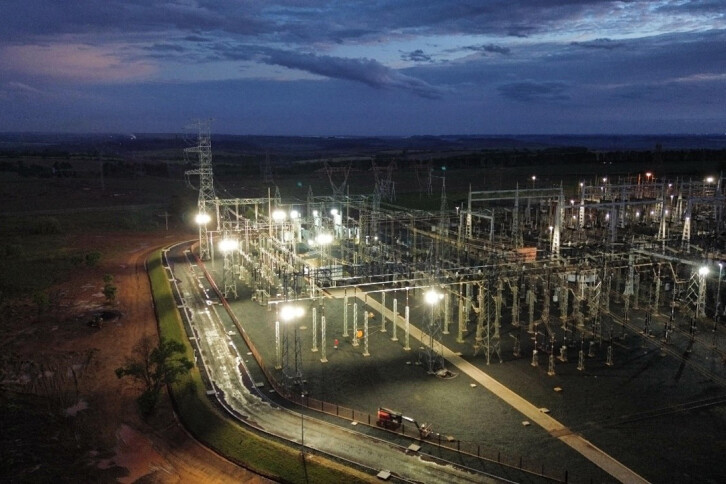
Brazil’s appeal rests on a confluence of factors: its strategic geographical location within South America, a supportive policy environment cultivated by the government, and, most crucially, a power grid overwhelmingly powered by renewable energy sources. The nation boasts a remarkable statistic, generating approximately 90% of its electricity from hydroelectric, wind, and solar power, underpinned by a well-established national power transmission infrastructure.
Recent interactions with stakeholders within Brazil underscore the nation's keen awareness of the nexus between AI and energy. During a panel discussion at the Web Summit in Rio de Janeiro, Luiz Manuel Rebelo Fernandes, Brazil's Vice Minister of Science, Technology, and Innovation, emphatically stated, "Our plan is to send a message to the world that the energy demand of AI can be fully met through renewable sources."
The fruits of Brazil's proactive approach are beginning to materialize. Tech giants such as Amazon and Microsoft have committed billions of dollars to Brazil's burgeoning data center industry, with numerous construction projects currently underway across the country.
This development holds significant implications for both Brazil and the broader Latin American market, while simultaneously serving as a compelling testament to the competitive edge of clean energy. As renewable energy sources, particularly solar power, gain traction in various emerging economies, these nations are poised to attract investment not only in AI but also from foreign entities seeking to manufacture products in an environmentally sustainable manner.
Brazil's commitment to clean energy predates the global urgency surrounding climate change by decades. Beginning in the late 19th century, the nation embarked on an ambitious dam-building program to fuel its industrial growth, harnessing its extensive network of rivers, stretching over 37,000 miles.
The 1960s witnessed the construction of large-scale dams capable of independently supplying significant portions of the national electricity demand. Often situated far from urban centers, these projects necessitated the development of a comprehensive and integrated power grid – a stark contrast to the often fragmented regulatory landscape and divided authority between state and federal entities in the United States.
In essence, Brazil's clean energy grid was not conceived as a marketing tool for environmentalism. However, in an era where major corporations are increasingly pursuing (albeit sometimes quietly) carbon neutrality goals, Brazil’s robust clean energy infrastructure provides a critical competitive advantage.
Luciana Aparecida da Costa, Director of Infrastructure, Energy Transition, and Climate Change at Brazil's National Development Bank (BNDES), acknowledged this advantageous position while speaking in São Paulo. "Brazil is well-positioned," she stated, "but we are aware that we need to compete with other countries to attract these investments."
Despite the undeniable allure of Brazil's power grid, challenges remain. Fluctuations in water levels due to climate change pose a potential threat to the reliability of hydroelectric power generation. Furthermore, the rapid escalation in electricity demand driven by the proliferation of data centers could strain Brazil's grid, mirroring concerns in the United States.
To mitigate these risks, the Brazilian government is prioritizing the expansion of renewable energy generation alongside the development of new data centers. Funding for this dual strategy is a cornerstone of the $4 billion AI plan unveiled last year. Vice Minister Fernandes clarified, "Any expansion of high-performance computing is planned in conjunction with the development of dedicated renewable energy sources."
Private sector entities are also aligning with this vision. In April, Reuters reported that ByteDance, the parent company of TikTok, was considering a substantial data center investment in Brazil, potentially linked to a new wind power facility to offset its energy consumption.
Undeniably, the United States and China currently occupy the epicenter of the AI race, with the lion's share of AI model development and capital investment concentrated within their borders. However, Brazil's proactive courting of the data center industry and its early successes serve as a potent reminder of the competitive allure of clean energy in the global marketplace. As the world grapples with the energy demands of the AI revolution, nations with established and expanding renewable energy capacity are poised to become unlikely, yet crucial, players in shaping the future of technology and sustainability. Brazil's strategic foresight and abundant natural resources position it not only to capitalize on the AI boom but also to champion a more sustainable path for technological advancement globally.
[Copyright (c) Global Economic Times. All Rights Reserved.]














