• 2026.05.08 (Fri)
  • All articles
  • LOGIN
  • JOIN
Global Economic Times
fashionrunwayshow2026
  • Synthesis
  • World
  • Business
  • Industry
  • ICT
  • Distribution Economy
  • Well+Being
  • Travel
  • Eco-News
  • Education
  • Korean Wave News
  • Opinion
  • Arts&Culture
  • Sports
  • People & Life
    • International Student Report
    • With Ambassador
  • Column
    • Cho Kijo Column
    • Cherry Garden Story
    • Ko Yong-chul Column
    • Kim Seul-Ong Column
    • Lee Yeon-sil Column
  • Photo News
  • New Book Guide
MENU
 
Home > Business

Xiaomi Challenges Giants in Japan's Smartphone Market with Offline Expansion

Eugenio Rodolfo Sanabria Reporter / Updated : 2025-03-25 11:20:36
  • -
  • +
  • Print

Xiaomi has made significant strides in the Japanese smartphone market, traditionally a challenging territory for Chinese brands, by emphasizing cost-effective devices. The company's recent strategy to open offline stores signals an aggressive push to further expand its market share, challenging established giants like Samsung Electronics and Sony.

According to Xiaomi Korea, the company inaugurated its first physical store in Japan on May 22nd at AEON MALL in Saitama City, with plans to open a second location at AEON MALL in Kawaguchi City on June 5th. Industry analysts view this offline expansion as a strategic move to capitalize on the burgeoning Japanese smartphone market.

Market research firm Counterpoint Research reports that Xiaomi achieved a 6% market share in Japan last year, matching Samsung Electronics and Sony. This marks a significant leap from previous years, where Xiaomi's market share was negligible.

The Japanese smartphone market is dominated by Apple, which holds approximately 49% of the market share, followed by Samsung, Sony, Sharp, and Google. Notably, while other major manufacturers experienced a decline in market share, Xiaomi witnessed unique growth. Specifically, Apple’s share decreased from 53% to 49%, Google’s from 9% to 8%, Samsung’s from 7% to 6%, and Sony’s from 8% to 6%.

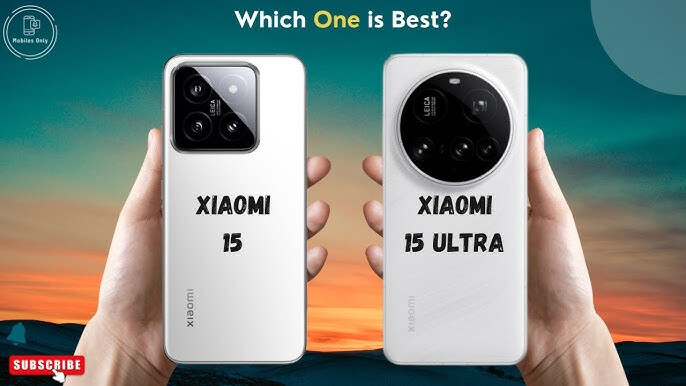
Xiaomi's success is attributed to its strategy of offering competitively priced mid-range products, such as the Redmi 14 series (around 100,000 won) and the Poco series (200,000 to 300,000 won). The introduction of high-end devices like the Xiaomi 14 Ultra, equipped with the Qualcomm Snapdragon 8 Gen 3 processor, has also contributed to its market share growth.

Unlike South Korea, where telecom-centric device sales dominate, Japan's robust self-supply market has allowed Xiaomi to thrive with its online sales strategy. This approach has proven effective in Japan, where consumers are accustomed to purchasing devices independently rather than through telecom agents.

Anjeong Sang, an adjunct professor at Chung-Ang University's Graduate School of Communication, explained, “Japan has a self-supply-centered market, which allows various manufacturers to compete, and products can be purchased cheaply online instead of through offline agents. This is why Xiaomi, which has strengthened its online sales strategy, was able to rise rapidly in Japan.” He contrasted this with the South Korean market, where close ties between telecom companies and manufacturers favor domestic brands like Samsung.

In South Korea, Samsung Electronics holds approximately 73% of the smartphone market, while Apple accounts for about 25%. Foreign brands, excluding Samsung and Apple, hold a mere 1% of the market.

Xiaomi’s strategic expansion into offline retail in Japan reflects its confidence in capturing a larger share of the market, building on its success in providing cost-effective and high-performance smartphones to Japanese consumers.

[Copyright (c) Global Economic Times. All Rights Reserved.]

  • #globaleconomictimes
  • #글로벌이코노믹타임즈
  • #한국
  • #중기청
  • #재외동포청
  • #외교부
  • #micorea
  • #mykorea
  • #newsk
  • #nammidonganews
  • #singaporenewsk
Eugenio Rodolfo Sanabria Reporter

Popular articles

  • South Korean OTAs Pivot to Inbound and Domestic Tourism Amid Middle East Conflict Despite Record 2025 Earnings

  • Trump Warns Iran Against Hormuz Tolls as "Joint Venture" Talk Recedes

  • Vance Leaves Islamabad Talks, Citing Iranian Negotiators' Lack of Authority: "The Ball is in Their Court"

I like it
Share
  • Facebook
  • X
  • Kakaotalk
  • LINE
  • BAND
  • NAVER
  • https://www.globaleconomictimes.kr/article/1065579575532324 Copy URL copied.
Comments >

Comments 0

Weekly Hot Issue

  • Hyundai Mobis Completes Independent EV 'Heart' Lineup: A Major Leap Toward Global Leadership in Power Electric Systems
  • OpenAI Redefines Human-AI Interaction with ‘GPT-Realtime-2’ and New Suite of Live Voice Models
  • Tensions Flare in Strait of Hormuz: U.S.-Iran Clashes Threaten Fragile Truce
  • UAE Sovereign Wealth Giants Descend on Seoul to Forge Strategic AI Alliance
  • U.S. Trade Court Strikes Down Trump’s ‘Global 10% Tariff,’ Citing Executive Overreach
  • POSTECH Researchers Double Metal-Polymer Adhesion via 3D Printing Surface Control

Most Viewed

1
Iran Imposes Transit Fees on Strait of Hormuz Amid Escalating Maritime Tensions
2
Korea and Vietnam Forge Strategic Partnership in Science, Technology, and Innovation
3
80% of Enterprises Hit by 'AI Agent Anomalies': SailPoint Calls for Integrated Identity Governance
4
Kurly Abandons 'All-Paper' Packaging Strategy Amid Rising Cost Pressures
5
Tradition Meets the Public: Chungju’s Gugak Busking
광고문의
임시1
임시3
임시2

Hot Issue

Tensions Flare in Strait of Hormuz: U.S.-Iran Clashes Threaten Fragile Truce

Tesla Model Y Becomes First to Pass Grueling New U.S. Autonomous Safety Tests

U.S. Trade Court Strikes Down Trump’s ‘Global 10% Tariff,’ Citing Executive Overreach

Hyundai Motor Group Bets $700 Million on Mexico Amid Trade Policy Volatility

Fashion Runway Show 2026

Global Economic Times
korocamia@naver.com
CEO : LEE YEON-SIL
Publisher : KO YONG-CHUL
Registration number : Seoul, A55681
Registration Date : 2024-10-24
Youth Protection Manager: KO YONG-CHUL
Singapore Headquarters
5A Woodlands Road #11-34 The Tennery. S'677728
Korean Branch
Phone : +82(0)10 4724 5264
#304, 6 Nonhyeon-ro 111-gil, Gangnam-gu, Seoul
Copyright © Global Economic Times All Rights Reserved
  • 에이펙2025
  • APEC2025가이드북TV
  • 반달곰 프로젝트
Search
Category
  • All articles
  • Synthesis
  • World
  • Business
  • Industry
  • ICT
  • Distribution Economy
  • Well+Being
  • Travel
  • Eco-News
  • Education
  • Korean Wave News
  • Opinion
  • Arts&Culture
  • Sports
  • People & Life 
    • 전체
    • International Student Report
    • With Ambassador
  • Column 
    • 전체
    • Cho Kijo Column
    • Cherry Garden Story
    • Ko Yong-chul Column
    • Kim Seul-Ong Column
    • Lee Yeon-sil Column
  • Photo News
  • New Book Guide
  • Multicultural News
  • Jobs & Workers