• 2026.10.25 (Sun)
  • All articles
  • LOGIN
  • JOIN
Global Economic Times
[등록] 2026-09-01 15:48:31
  • Synthesis
  • World
  • Business
  • Industry
  • ICT
  • Distribution Economy
  • Well+Being
    • Pet Life
    • Halal Horizon
  • Travel
  • Eco-News
  • Education
  • Korean Wave News
  • Opinion
  • Arts&Culture
  • Sports
  • People & Life
    • International Student Report
    • With Ambassador
  • Column
    • Cho Kijo Column
    • Cherry Garden Story
    • Ko Yong-chul Column
    • Kim Seul-Ong Column
    • Lee Yeon-sil Column
  • Photo News
  • New Book Guide
MENU
 
Home > Business

Kerosene Prices Soar in Cold Regions; Concerns Emerge Over Domestic Supply

Global Economic Times Reporter / Updated : 2026-10-25 11:27:35
  • -
  • +
  • Print


TOKYO — As winter approaches, soaring kerosene prices are casting a heavy shadow over cold regions like Hokkaido. Driven by rising international petroleum product prices amid the deteriorating Middle East situation and growing fears of domestic supply disruptions, the issue has quickly become a pressing socio-economic concern.

While the Japanese government has introduced emergency support measures—including a direct purchasing system for agricultural and medical sectors—fears persist that maintaining a stable supply will become increasingly difficult as the peak heating season arrives.

Hokkaido Hit Hard by Steep Price Hikes

Addressing the crisis earlier this month, Economy, Trade and Industry Minister Ryosei Akazawa stressed that ensuring a stable supply of this essential fuel is a top priority. While assuring the public that sufficient domestic kerosene supplies have been secured, Akazawa pledged to accelerate the rebuilding of distribution networks to address regional supply disparities.

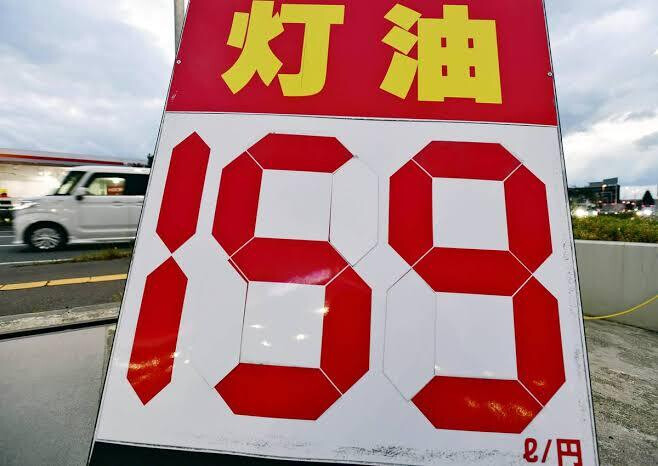
According to Ministry of Trade data released on October 13, the nationwide average retail price for kerosene stood at ¥142.40 per liter. Despite a ¥43 government subsidy, prices remain about ¥20 higher than during the same period last year.

The impact has been particularly severe in Hokkaido, where temperatures drop early:

On October 1, Co-op Sapporo raised its home delivery price by ¥15 per liter across the prefecture.
In the Sapporo area, the price reached ¥159 per liter—roughly 20% higher than last year.
On October 13, the Hokkaido Coop Union submitted an urgent request to the trade ministry’s regional bureau for effective countermeasures. A union representative voiced deep concern, stating, "It’s a matter of choosing between turning on the heat or curbing food expenses; it’s a matter of life and death."
Prof. Masatoshi Kojima of Momoyama Gakuin University, an expert on oil distribution, noted that Hokkaido’s particularly high ratio of imported products has accelerated the rapid price surge.

Government Measures and Broader Economic Risks

To mitigate the crisis, the Ministry of Economy, Trade and Industry has urged primary distributors and wholesalers to maintain sales and orders at October levels from the previous year. Furthermore, the government has:

Established a direct-purchasing system allowing agricultural and medical operators to bypass standard channels and buy directly from primary distributors during distribution disruptions.
Implemented additional financial backing by subsidizing the price difference when importing relatively expensive kerosene to actively secure supply levels.
Experts warn that the fallout could extend beyond household heating. Because kerosene is heavily used to warm agricultural greenhouses, a prolonged price surge could drive up agricultural production costs and ultimately push food prices higher.

Although distribution disruptions previously affected naphtha—a plastic manufacturing raw material—in February due to panic buying (as Japan imports roughly 40% of its naphtha), the situation for kerosene is structurally different. More than 90% of domestic kerosene consumption is covered by domestic refining.

A government official sought to calm public anxiety, stating, "We have enough kerosene domestically, and concerns are getting ahead of the actual situation. We want to reassure the public through our measures."

[Copyright (c) Global Economic Times. All Rights Reserved.]

  • #Cherry Garden
  • #HalalFood
  • #Halal
  • #Petlife
  • #Halalhorizone
  • #Hormuz Impasse
  • #globaleconomictimes
  • #micorea
  • #mykor
Global Economic Times Reporter
Reporter Page

Popular articles

  • "Some Chicken Actual Weight Less Than Displayed"... Industry Says "Large Variance After Cooking"

  • Gyeongsangbuk-do Joins Hands with Maryland and IonQ to Accelerate Global Quantum Industry Cooperation

  • Samsung Electronics Enters the 100 Trillion Won Quarterly Operating Profit Era

I like it
Share
  • Facebook
  • X
  • Kakaotalk
  • LINE
  • BAND
  • NAVER
  • https://www.globaleconomictimes.kr/article/1065579987683055 Copy URL copied.
Comments >

Comments 0

Weekly Hot Issue

  • 'Goddess of Victory: Nikke' 4th Anniversary Special Broadcast: "Concluding the Ark Story... Preparing for What Lies Beyond the Final Battle"
  • Pearl Abyss’s 'Crimson Desert' Targets Technical Award at the 2026 Korea Game Awards
  • Gravity's "Ragnarok Online PLUS+" Takes Its First Step... Official Guide and Archive Core Summary
  • Human language prefers safety over happiness?
  • Qnity Strengthens 'Customer Collaboration' Strategy for Semiconductor Material Innovation… “Shortening South Korea’s Semiconductor Development Cycles”
  • Detective in Disguise, Close Romance… TVING's "My Guilty Person"

Most Viewed

1
Nearly 900 Schools Temporarily Closed as 'Flu' Epidemic Sweeps Japan
2
US Pushes to Deploy Special Task Force to the Korean Peninsula—Is It Also Targeting China?
3
Samsung Electronics Enters the 100 Trillion Won Quarterly Operating Profit Era
4
AI Companies Rush to Go Public, But Face Sudden Brakes Amid Cooling Investor Sentiment
5
McDonald's Korea Expands and Relocates Headquarters to Booyoung Taepyeong Building in Taepyeong-ro
체리가든 스토리
nutri huevos
로타리
동포저널

Hot Issue

Wall Street Falls as Middle East Escalation Fears and Surging Oil Prices Send Dow Down 1.2%

Global Credit Spreads Widened to 17-Month High Amid AI Investment Concerns

Investor Deposits Plummet by 51 Trillion Won in Four Months, Dropping to Lowest Level This Year

Fashion Runway Show 2026

Let’s recycle the old blankets in Jeju Island’s closet instead of incinerating them.

Global Economic Times
korocamia@naver.com
CEO : LEE YEON-SIL
Publisher : KO YONG-CHUL
Registration number : Seoul, A55681
Registration Date : 2024-10-24
Youth Protection Manager: KO YONG-CHUL
Singapore Headquarters
5A Woodlands Road #11-34 The Tennery. S'677728
Korean Branch
Phone : +82(0)10 4724 5264
#304, 6 Nonhyeon-ro 111-gil, Gangnam-gu, Seoul
Copyright © Global Economic Times All Rights Reserved
  • 향기네무료급식
  • APEC2025
  • 반달곰 프로젝트
Search
Category
  • All articles
  • Synthesis
  • World
  • Business
  • Industry
  • ICT
  • Distribution Economy
  • Well+Being 
    • 전체
    • Pet Life
    • Halal Horizon
  • Travel
  • Eco-News
  • Education
  • Korean Wave News
  • Opinion
  • Arts&Culture
  • Sports
  • People & Life 
    • 전체
    • International Student Report
    • With Ambassador
  • Column 
    • 전체
    • Cho Kijo Column
    • Cherry Garden Story
    • Ko Yong-chul Column
    • Kim Seul-Ong Column
    • Lee Yeon-sil Column
  • Photo News
  • New Book Guide
  • Overseas Koreans
  • Multicultural News