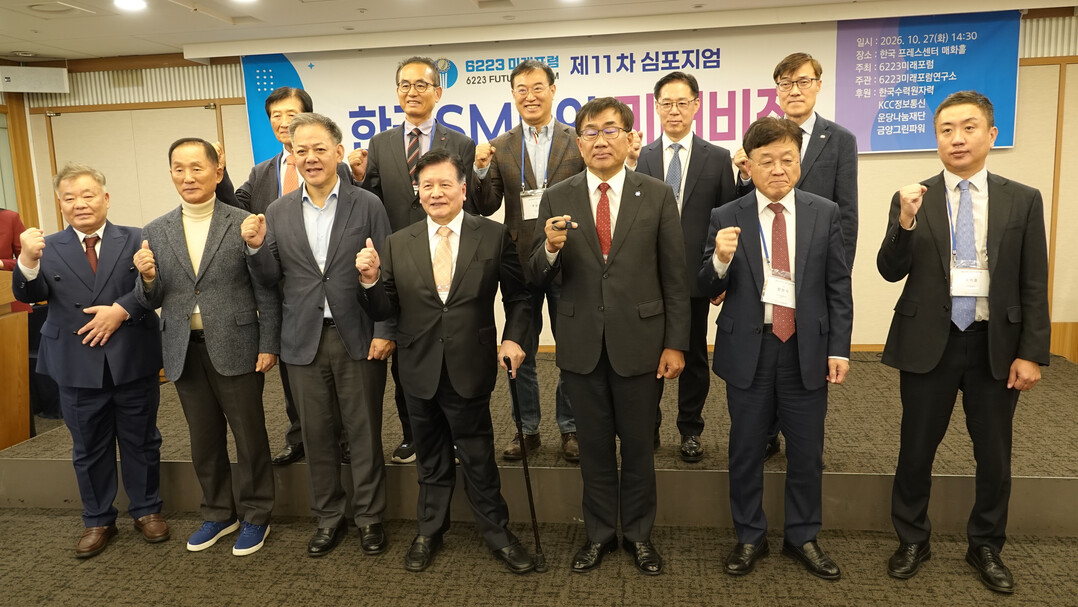
6223 Future Forum Successfully Holds the 11th Symposium on "Future Vision of Korea's SMR"Chairman Lee Chae-pil: “Electricity rates determine employment and survival… Urgent need to build 24/7 carbon-free energy SMR”Professor Joo Han-gook: “Must focus on preemptive regulation and demonstration of SMR”… Executive Lee Ji-hoon: “Strengthening SMR foundry position amidst AI explosion”
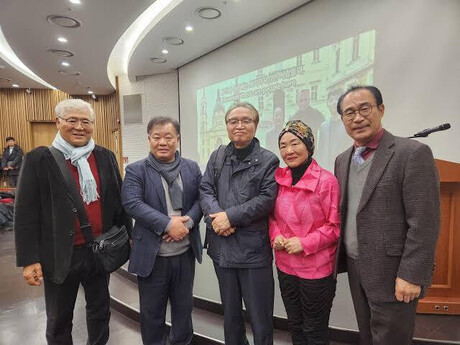
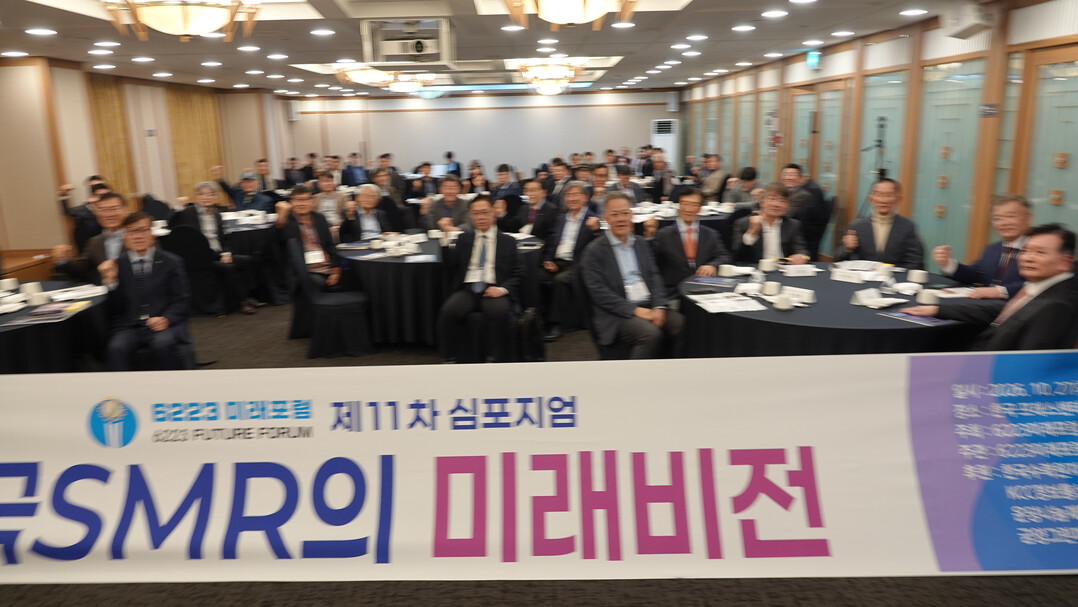
The 6223 Future Forum (Chairman Lee Chae-pil) successfully hosted its 11th symposium, themed "Future Vision of Korea's SMR," on the 27th at the Maehwa Hall of the Korea Press Center in Seoul, drawing enthusiastic participation from academia, industry, and related organizations.
The symposium was organized to discuss strategies for accelerating the commercialization of Small Modular Reactors (SMRs) as a core power source to address the exploding demand for electricity in the AI era and maintain the competitiveness of domestic manufacturing.
In his opening remarks, Chairman Lee Chae-pil stated, "The 'manufacturing exodus,' where companies relocate abroad because they cannot bear excessive energy costs, is a matter of national survival." He emphasized, "We must take a lesson from Germany's failure, where energy policies driven by ideology reduced it to the 'sick man of Europe.'" He added, "Electricity is the foundational infrastructure for national strategic industries such as AI and semiconductors. We must proactively build Korea-shaped SMRs, which offer secured site acquisition, economy of scale through modularization, and enhanced safety."
In the first presentation titled "SMR Development Status and Prerequisites for Commercialization," Professor Joo Han-gook of Seoul National University (former President of the Korea Atomic Energy Research Institute) noted, "With the expansion of AI data centers, supplying stable, uninterrupted power 24 hours a day has emerged as the top priority." He explained, "Given the clear limitations of renewable energy due to intermittency and spatial constraints, an appropriate energy mix with SMRs is essential." Professor Joo urged, "To accelerate the demonstration of SMART100, i-SMR, and Generation IV reactors (SFR, HTGR, MSR), we must preemptively establish SMR-dedicated regulatory processes, secure government early-stage support, and focus on promising reactor designs."
The second presentation, "Megatrends in the Nuclear Market: AI x SMR," was delivered by Lee Ji-hoon, Senior Vice President at Doosan Enerbility, who highlighted the moves by big tech companies to adopt SMRs and global nuclear power megatrends. Vice President Lee stated, "Doosan Enerbility is building manufacturing technology innovations and supply chains through collaborations with global SMR leading companies," and added, "We will focus our capabilities so that South Korea can lead the global market as a global SMR manufacturing and supply hub (foundry)."
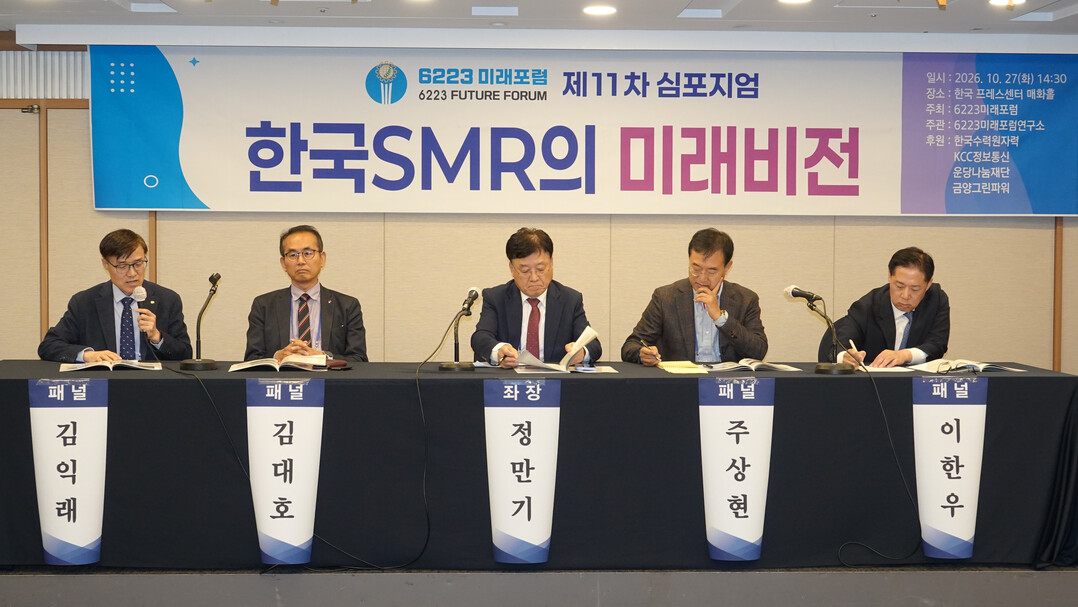
During the panel discussion moderated by Jeong Man-ki, former Vice Minister of Trade, Industry and Energy, experts including Kim Ik-rae, Advisor at KHNP; Cho Yoon-ki, Senior Vice President at POSCO E&C; Kim Dae-ho, Auditor at KNF; Joo Sang-hyun, former CEO of KEPCO Plant Service & Engineering; and Lee Han-woo, Head of the Energy Technology Division at Ulsan Technopark, participated to offer diverse execution strategies for SMR commercialization, including strengthening public-private cooperation systems, improving licensing and legal frameworks, and expanding supply chains.
Based on the proposals derived from this symposium, the 6223 Future Forum plans to submit relevant policy recommendations to the government and the National Assembly, while spearheading private-led SMR business discovery linked with regional industrial bases such as Ulsan and expanding into new industries such as nuclear-powered icebreakers for the Arctic route.
[Copyright (c) Global Economic Times. All Rights Reserved.]