![[등록] 2026-09-01 15:48:31](/support/_updata/banner2/tl181982910_6749.png)


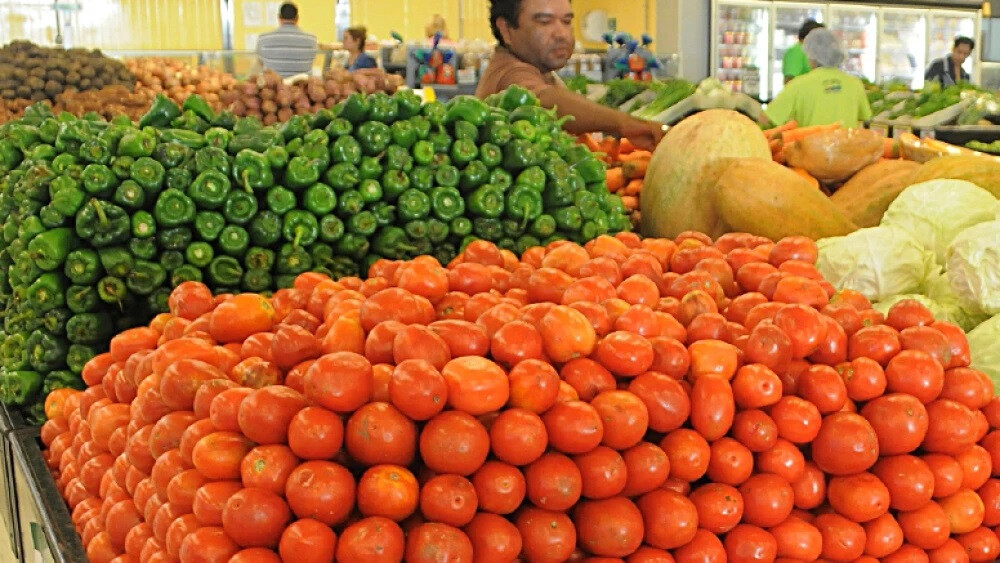
Amid escalating consumer complaints over a recent surge in tomato prices, nearing 18,000 Guaranies (approximately USD 2.45) per kilogram, producers are vehemently asserting that the high costs stem from issues within the distribution structure, particularly the excessive margins taken by intermediaries. Abel Brites, head of the Paraguayan Tomato Producers Council, highlighted these structural problems in an interview with local media, criticizing the situation as detrimental to both producers and consumers.
Infringement of Rights for Both Producers and Consumers
"The price of good quality tomatoes at the farm is only 8,000-9,000 Guaranies (approximately USD 1.09-1.22) per kilogram, but they are sold to consumers at twice that price," emphasized Brites, raising his voice against what he considers an infringement on the rights of both producers and consumers. He made it clear that the current high prices are not the fault of the producers but rather due to a system that allows intermediaries to take excessive margins.
Although prices began to rise again just a week after import permits were suspended, Brites stressed that while this might benefit producers, they cannot turn a blind eye to consumers. He added, "We cannot tolerate being blamed when we are not the source of the problem."
Brites also called for strong government regulation of the distribution network, warning, "Why does a tomato sold at 10,000 Guaranies (approximately USD 1.36) at the farm cost over 18,000 Guaranies (approximately USD 2.45) on the shelves? This is the important question. If this situation continues, we producers will be blamed as fraudsters."
Sufficient Domestic Production, Import Resumption Considered if Speculation Continues
When asked about the domestic market's supply capacity after the import suspension, Brites emphasized, "There has always been sufficient domestic production at this time of year," adding that the final output can vary depending on climatic variables. He urged, "We will secure production. We always have. But merchants and institutions must support us, control prices, and not abandon us during the domestic production period."
Brites further appealed to patriotic consciousness, stating, "Without consumers, there is no production, but without producers, there is nothing. This is a chain that must be respected. We should all work together instead of blaming each other." He pointed out that while producers are barely receiving fair prices, consumers are paying what is being called "golden tomato" prices.
Agriculture Minister Blames Middlemen, Warns of Import Reconsideration
Meanwhile, Carlos Giménez, Minister of Agriculture and Livestock (MAG), addressed consumer concerns over rising tomato and chili prices, assuring that there is sufficient production to supply the domestic market and attributing the primary responsibility for the price surge to intermediaries. Minister Giménez confirmed that farm-gate prices for tomatoes and chili peppers are around 8,000-9,000 Guaranies (approximately USD 1.09-1.22) per kilogram, while in supermarkets they reach 18,000 Guaranies (approximately USD 2.45) per kilogram.
He stated, "Technically, there is no reason for a price increase, because there is sufficient and good quality product. Prices will stabilize and return to fair levels within two to three days." Minister Giménez explained that the recent suspension of imports for these items was part of a strategy to strengthen domestic production and avoid unfair competition. However, he warned that if speculation continues and prices continue to rise, the MAG might reconsider import permits. He reiterated that while this would be disadvantageous for domestic producers, there is sufficient production for the remainder of the year.
This tomato price controversy goes beyond a simple agricultural product price issue, once again highlighting the complex distribution structure between producers, intermediaries, and consumers, and the necessity of government intervention in the market.
[Copyright (c) Global Economic Times. All Rights Reserved.]