• 2026.05.08 (Fri)
  • All articles
  • LOGIN
  • JOIN
Global Economic Times
fashionrunwayshow2026
  • Synthesis
  • World
  • Business
  • Industry
  • ICT
  • Distribution Economy
  • Well+Being
  • Travel
  • Eco-News
  • Education
  • Korean Wave News
  • Opinion
  • Arts&Culture
  • Sports
  • People & Life
    • International Student Report
    • With Ambassador
  • Column
    • Cho Kijo Column
    • Cherry Garden Story
    • Ko Yong-chul Column
    • Kim Seul-Ong Column
    • Lee Yeon-sil Column
  • Photo News
  • New Book Guide
MENU
 
Home > ICT

ChatGPT developer OpenAI collaborates with Broadcom and TSMC to create its own AI chip

Global Economic Times Reporter / Updated : 2024-10-30 11:46:20
  • -
  • +
  • Print
The chip design was handled by Broadcom, an American semiconductor design company


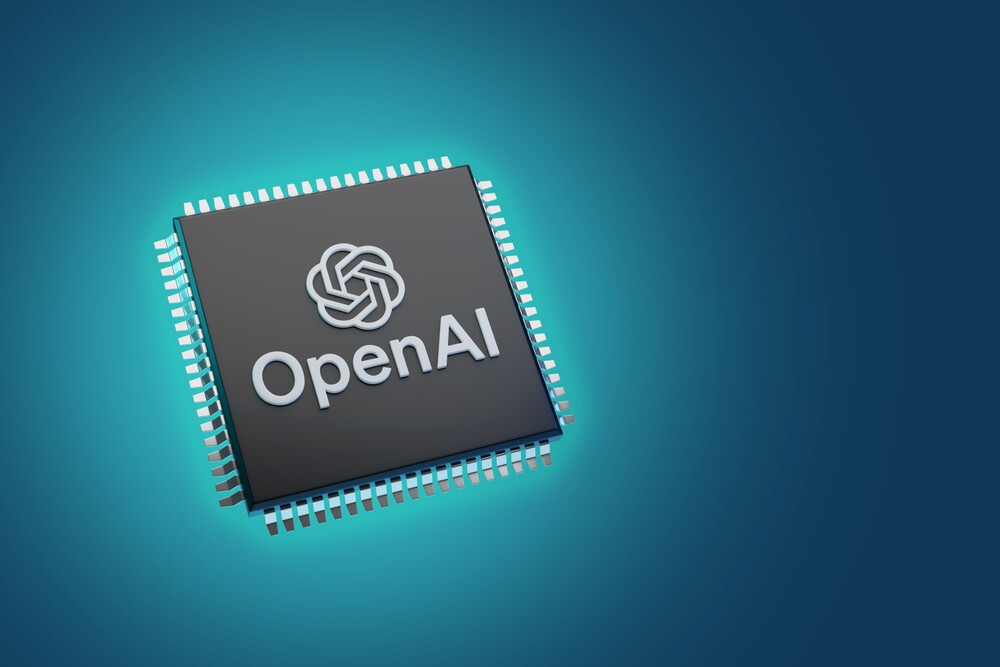
[GLOBAL ECONOMIC TIMES]  ChatGPT developer OpenAI plans to entrust the production of its own artificial intelligence (AI) chips to Taiwan's TSMC, the world's largest foundry (semiconductor consignment production) company. The chip design will be handled by Broadcom, an American semiconductor design company. The purpose is to reduce dependence on NVIDIA, which holds the AI ​​semiconductor hegemony.

On the 29th (local time), Reuters reported, “Open AI plans to develop its own chips with Broadcom to diversify chip supply and reduce costs.” In addition to developing its own chips, OpenAI has decided to increase the proportion of AI chips it procures from AMD, Nvidia's competitor.

Broadcom is in charge of chip design. Broadcom is an American fabless (semiconductor design company) that specializes in communication chip design. Google's deep learning specialized chip, Tensor Processor Unit (TPU), and Meta's AI chip 'Mita' are based on Broadcom's design. China's ByteDance, the operator of China's video platform TikTok, has also begun developing AI chips with Broadcom.

Manufacturing is handled by TSMC. Originally, OpenAI CEO Sam Altman envisioned a worldwide ‘fab (semiconductor factory) network’ to cover the vast demand for AI chips. To this end, it is known that they have drawn up a plan to raise funds amounting to 7 trillion dollars (approximately 9,300 trillion won), and have also met with a number of investors from the Middle East and other countries. Reuters reported, “OpenAI envisioned a high-cost plan consisting of networks of multiple foundries,” and added, “However, due to cost and time issues, this ambitious plan was abandoned and the company pivoted to solely focus on design.”

In order to maintain the large language model (LLM), which is the basis for AI learning and inference, a huge amount of computing chips are essential. Representative examples include AI computing graphics processing units (GPUs) for servers such as NVIDIA A100 and H100. AI companies spend billions of dollars every year on chips. OpenAI has been examining many options to lower chip costs and diversify supply. It is for this reason that Altman visited Korea in June of last year and January of this year. CEO Altman also toured Samsung Electronics' Pyeongtaek Foundry semiconductor production line in January, raising expectations for orders.

[Copyright (c) Global Economic Times. All Rights Reserved.]

Global Economic Times Reporter
Reporter Page

Popular articles

  • From the Alps to Seoul: Life in the Heart of Europe

  • BOK Holds Rate Steady for Seventh Consecutive Meeting, Signaling End of Easing Cycle

  • Welcome to Cherry Garden Restaurant!  

I like it
Share
  • Facebook
  • X
  • Kakaotalk
  • LINE
  • BAND
  • NAVER
  • https://www.globaleconomictimes.kr/article/1065581004311625 Copy URL copied.
Comments >

Comments 0

Weekly Hot Issue

  • South Korea’s KOSPI Surges to 7th in Global Market Cap, Overtaking Canada and UK
  • Global Pay Parity Demands Shaking Tech Giants: Samsung and SK Hynix Face Rising Labor Unrest in China
  • the 28th Overseas Koreans Literary Awards
  • Ambassador Hyuk-sang Sohn attended the "2026 Educational Community Sports Day" held at the Korean School of Paraguay on Friday, May 1.
  • Official Presentation of Credentials in Paraguay
  • U.S. World Cup "Host City Boom" Fizzles: Hotel Bookings Slump One Month Before Kickoff

Most Viewed

1
Iran Imposes Transit Fees on Strait of Hormuz Amid Escalating Maritime Tensions
2
Korea and Vietnam Forge Strategic Partnership in Science, Technology, and Innovation
3
Kurly Abandons 'All-Paper' Packaging Strategy Amid Rising Cost Pressures
4
80% of Enterprises Hit by 'AI Agent Anomalies': SailPoint Calls for Integrated Identity Governance
5
Tradition Meets the Public: Chungju’s Gugak Busking
광고문의
임시1
임시3
임시2

Hot Issue

Hyundai Motor Group Bets $700 Million on Mexico Amid Trade Policy Volatility

Honda Halts $15B Canada EV Plant Plans Amid Strategic Pivot to Hybrids

Digital Ghosts: The Rise of AI Ex-Partner Replicas and the Ethics of "Technological Mourning"

Kakao Hits Record Q1 Performance: Operating Profit Surges 66% as Focus Shifts to "Agentic AI"

Fashion Runway Show 2026

Global Economic Times
korocamia@naver.com
CEO : LEE YEON-SIL
Publisher : KO YONG-CHUL
Registration number : Seoul, A55681
Registration Date : 2024-10-24
Youth Protection Manager: KO YONG-CHUL
Singapore Headquarters
5A Woodlands Road #11-34 The Tennery. S'677728
Korean Branch
Phone : +82(0)10 4724 5264
#304, 6 Nonhyeon-ro 111-gil, Gangnam-gu, Seoul
Copyright © Global Economic Times All Rights Reserved
  • 에이펙2025
  • APEC2025가이드북TV
  • 반달곰 프로젝트
Search
Category
  • All articles
  • Synthesis
  • World
  • Business
  • Industry
  • ICT
  • Distribution Economy
  • Well+Being
  • Travel
  • Eco-News
  • Education
  • Korean Wave News
  • Opinion
  • Arts&Culture
  • Sports
  • People & Life 
    • 전체
    • International Student Report
    • With Ambassador
  • Column 
    • 전체
    • Cho Kijo Column
    • Cherry Garden Story
    • Ko Yong-chul Column
    • Kim Seul-Ong Column
    • Lee Yeon-sil Column
  • Photo News
  • New Book Guide
  • Multicultural News
  • Jobs & Workers