• 2026.03.22 (Sun)
  • All articles
  • LOGIN
  • JOIN
Global Economic Times
fashionrunwayshow2026
  • Synthesis
  • World
  • Business
  • Industry
  • ICT
  • Distribution Economy
  • Well+Being
  • Travel
  • Eco-News
  • Education
  • Korean Wave News
  • Opinion
  • Arts&Culture
  • Sports
  • People & Life
    • International Student Report
    • With Ambassador
  • Column
    • Cho Kijo Column
    • Cherry Garden Story
    • Ko Yong-chul Column
    • Kim Seul-Ong Column
    • Lee Yeon-sil Column
  • Photo News
  • New Book Guide
MENU
 
Home > Synthesis

South Koreans’ Vegetable Intake Plummets, Blaming 'Mushy' Eggplant

Shin Yeju Intern Reporter / Updated : 2025-09-13 11:59:37
  • -
  • +
  • Print


SEOUL – South Korea's reputation as a nation of vegetable lovers is now a thing of the past. The country, once the world's leading consumer of vegetables, has fallen to 12th place globally, a stark decline fueled by a 20% drop in average daily consumption over the last decade.

According to a report by the Korea Rural Economic Institute, the average person consumed 187.6 kg of vegetables annually in 2000, placing Korea first. However, a steady shift towards Westernized diets has seen that number plummet to 164 kg as of 2020. This decline also highlights a significant nutritional imbalance, with experts noting a particular lack of "purple foods" in the average Korean diet, which is heavily skewed toward white and green vegetables like cabbage and spinach.

 
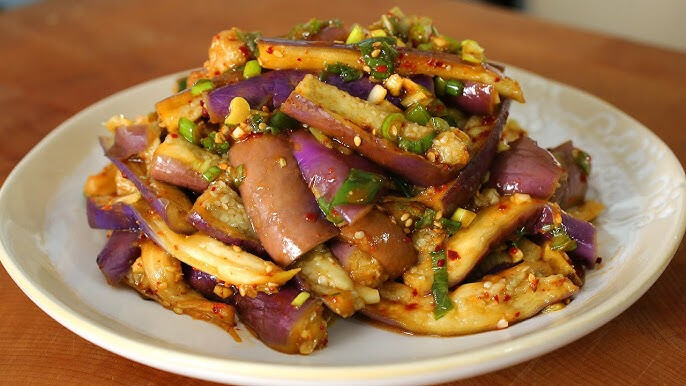
The most reviled of all purple foods for Koreans is the eggplant. A 2021 survey of nearly 40,000 people found eggplant to be the most disliked vegetable, with participants citing its "bizarre purple color" and "squishy, mushy texture" as the primary reasons. This aversion is unique to Korea; surveys show that Americans dislike beets and kale the most, while Japanese prefer to avoid celery.

The reason for the unique texture is often the cooking method. In contrast to Western dishes like "Eggplant Parmesan," which involves frying or baking, Koreans commonly steam eggplant, a process that makes the vegetable soft and gelatinous.

To overcome this dislike and reap the vegetable's health benefits, U.S.-certified nutritionist Kim Min-jung suggests changing preparation methods. "The anthocyanin in eggplant is water-soluble, so it can easily be lost when boiling or steaming for a long time," she said. "For better nutrient absorption, it's more beneficial to grill or stir-fry it in a healthy oil for a short time."

Kim noted that eggplant is a superfood rich in anthocyanin, an antioxidant that helps slow cellular aging, strengthens blood vessel walls, and is beneficial for preventing cardiovascular disease. Other nutrient-rich purple foods include beets, red onions, purple sweet potatoes, blueberries, and grapes.

[Copyright (c) Global Economic Times. All Rights Reserved.]

  • #globaleconomictimes
  • #micorea
  • #mykorea
  • #Lifeplaza
  • #nammidonganews
  • #singaporenewsk
  • #Samsung
  • #Daewoo
  • #Hyosung
  • #A
Shin Yeju Intern Reporter
Shin Yeju Intern Reporter Social Intern Reporter

Popular articles

  • K-Content Hits Record Highs: $140 Billion in Exports and ₩157 Trillion in Sales in 2024

  • ASML Declares High-NA EUV Ready for Mass Production: A Multi-Billion Dollar Leap for AI Chips

  • Memory Price Tsunami: Global PC and Smartphone Shipments to Hit 10-Year Low

I like it
Share
  • Facebook
  • X
  • Kakaotalk
  • LINE
  • BAND
  • NAVER
  • https://www.globaleconomictimes.kr/article/1065581931850955 Copy URL copied.
Comments >

Comments 0

Weekly Hot Issue

  • Coway Clinches Top Honor at "Water Taste Awards" for 7th Consecutive Year
  • HP Targets Korea as Strategic Hub for 'Edge AI' Expansion, Seeking Startup Partnerships
  • Pearl Abyss’s 'Crimson Desert' Shatters Records with 2 Million Copies Sold on Day One
  • "BTS Over Books?" Indian Academies Issue Emergency Notices as Students Plot Mass Absences for Comeback Live
  • Naver to Shut Down Men's Fashion Service 'MR.' to Launch Expanded AI-Driven Fashion Platform
  • JBNU and SKKU Researchers Achieve Breakthrough in "Dream Material" MXene, Setting New World Records in Performance

Most Viewed

1
An Open Letter to BTS On the Eve of a Historic Performance
2
From Industrial Capital to Tourism Mecca... Ulsan Makes a Bold Move with ‘Experiential Content’ in 2026
3
Ko Sang-goo, President of World Federation of Korean Associations, Elected as First Private Sector Chair of World Korean Community Leaders Convention
4
It is Time for BTS’s Fandom, ARMY, to Step Forward
5
Korean Stock Market Plunges: Circuit Breaker and Sidecar Triggered Amid Geopolitical Crisis
광고문의
임시1
임시3
임시2

Hot Issue

Vishay Unveils Ultra-Compact 0404 RGB LED with Independent Chip Control for Enhanced Color Precision

Coway Clinches Top Honor at "Water Taste Awards" for 7th Consecutive Year

AI Medical Ecosystem in Focus: KIMES 2026 Opens in Seoul as Global Healthcare Hub

Netanyahu Declares Decisive Blow to Iran’s Nuclear and Missile Programs, Signals Early End to War

Let’s recycle the old blankets in Jeju Island’s closet instead of incinerating them.

Global Economic Times
korocamia@naver.com
CEO : LEE YEON-SIL
Publisher : KO YONG-CHUL
Registration number : Seoul, A55681
Registration Date : 2024-10-24
Youth Protection Manager: KO YONG-CHUL
Singapore Headquarters
5A Woodlands Road #11-34 The Tennery. S'677728
Korean Branch
Phone : +82(0)10 4724 5264
#304, 6 Nonhyeon-ro 111-gil, Gangnam-gu, Seoul
Copyright © Global Economic Times All Rights Reserved
  • 에이펙2025
  • APEC2025가이드북TV
  • 독도는우리땅
Search
Category
  • All articles
  • Synthesis
  • World
  • Business
  • Industry
  • ICT
  • Distribution Economy
  • Well+Being
  • Travel
  • Eco-News
  • Education
  • Korean Wave News
  • Opinion
  • Arts&Culture
  • Sports
  • People & Life 
    • 전체
    • International Student Report
    • With Ambassador
  • Column 
    • 전체
    • Cho Kijo Column
    • Cherry Garden Story
    • Ko Yong-chul Column
    • Kim Seul-Ong Column
    • Lee Yeon-sil Column
  • Photo News
  • New Book Guide
  • Multicultural News
  • Jobs & Workers