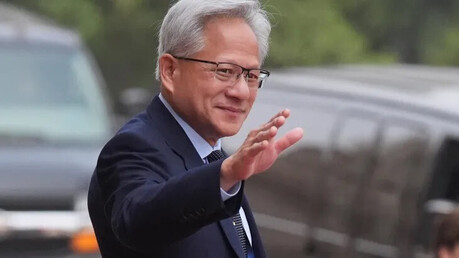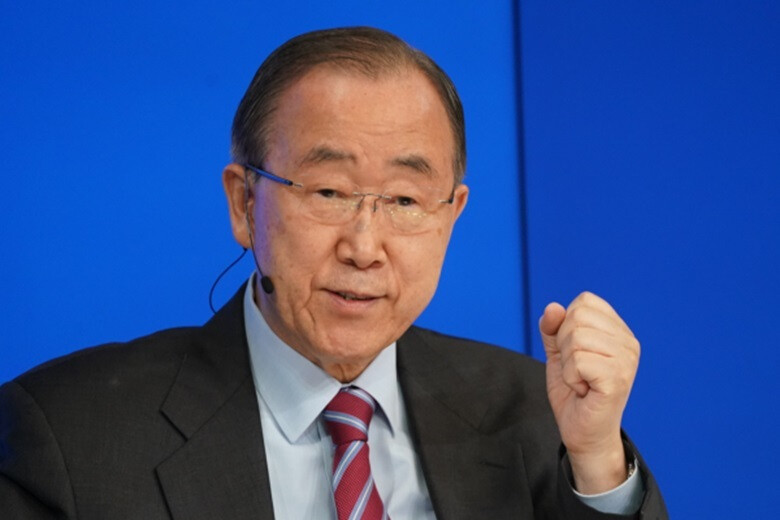
Amidst international cooperation systems facing major challenges due to war and geopolitical conflict, former UN Secretary-General Ban Ki-moon and former Japanese Prime Minister Hatoyama Yukio have highlighted the significance of cooperation between local governments for peace and shared prosperity in Northeast Asia. Their call stresses that even amidst conflict and confrontation between central governments, local authorities must maintain channels of exchange and jointly address common challenges such as the climate crisis.
During his keynote speech at the "International Forum for the 30th Anniversary of the Network of East Asian Local Governments (NEAR)" held at the Hilton Hotel in Gyeongju, North Gyeongsang Province, on the 12th, former UN Chief Ban diagnosed that "the international community is finding it increasingly difficult to speak with a united voice, and self-serving 'every-man-for-himself' nationalism is gaining ground."
In particular, he criticized, "What is most worrying is that, in the face of these complex crises, multilateralism and international cooperation are being seriously damaged. Countries that should be exercising leadership are taking the lead in destroying the rules-based international order maintained since World War II."
As an example of this retreat in international cooperation, Ban pointed to U.S. President Donald Trump's withdrawal from the Paris Agreement. Stating that "climate change is not a problem of the future, but a survival issue happening right now," he criticized the withdrawal as "an irresponsible act for the world's second-largest carbon emitter." The Paris Agreement is a historic milestone in climate action, as it requires both developed and developing countries to commit to reducing greenhouse gas emissions. It was adopted unanimously in 2015 while Ban was in office and took effect the following year.
Mentioning worsening heatwaves, floods, droughts, and wildfires, Ban emphasized the role of local governments in overcoming climate disasters. "While central governments must step up in the first place, concrete problems arise at the local level," he noted, proposing that NEAR member local governments pursue joint projects for climate crisis response and green growth.
Following the keynote speech, former Prime Minister Hatoyama took the podium and asserted that regional exchanges must continue even during times of deteriorating state-to-state relations. "Northeast Asia has achieved economic growth, but faces numerous challenges including political tensions, differences in historical perception, population decline, and disaster and environmental issues," Hatoyama evaluated. "The role of NEAR, which has worked for 30 years to ensure that communication channels between regions and people are not cut off even in difficult times between nations, is deeply meaningful."
At this juncture, Hatoyama referenced the history of European integration. "Europe also chose the path of cooperation and integration after passing through a history of prolonged wars and confrontation," he said, adding, "It is entirely possible for Northeast Asia to envision a community future based on its unique history, culture, and values." He stressed that "Northeast Asia is a region that retains memories of confrontation, yet is also filled with potential for cooperation."
Believing that "the small trusts built by local government officials in their respective regions will one day cross national borders and lead to lasting peace," Hatoyama underscored the need for continued dialogue among local governments, deepened cooperation centered on residents' daily lives, and investments in future generations.
The forum was held under the theme "30 Years of NEAR: Northeast Asian Co-prosperity and Peace through Local Cooperation." About 170 participants attended, including representatives of member local governments from South Korea, China, Japan, Mongolia, Russia, and Kazakhstan, as well as diplomatic corps and international relations experts.
Lim Byung-jin, Secretary-General of NEAR, stated, "Continuing dialogue and exchanges between local governments even when state relations are difficult serves as the foundation for building mutual understanding and trust. We will develop NEAR beyond a mere meeting place into a platform that solves common problems and creates practical results."
Lee Cheol-woo, Governor of North Gyeongsang Province, expressed joy, saying, "I am delighted that NEAR has grown into a prestigious multilateral cooperation platform for local governments encompassing Central Asia and ASEAN. We will continue to support NEAR so that it can achieve sustainable growth."
Founded in Gyeongju in 1996, NEAR is the largest multilateral cooperative organization among local governments in Northeast Asia, with its secretariat located in Pohang, North Gyeongsang Province. Its operational budget is funded by Gyeongsangbuk-do.
[Copyright (c) Global Economic Times. All Rights Reserved.]