BEIJING / TOKYO — Diplomatic friction between China and Japan has entered a protracted stalemate, underscored by frosty interactions at the recent Asia-Pacific Economic Cooperation (APEC) summit in Shenzhen. With Beijing tightening targeted economic pressure and domestic politics leaving little room for compromise in either capital, analysts warn that bilateral relations are unlikely to thaw anytime soon.
A Chilly Reception in Shenzhen
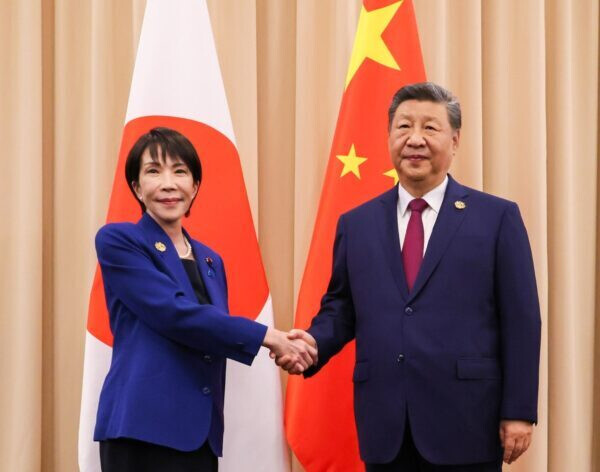
During the APEC summit held in southern China on November 18–19, Japanese Prime Minister Sanae Takaichi and Chinese President Xi Jinping exchanged only brief handshakes at a welcome banquet and summit venue, failing to hold a formal bilateral meeting.
Questions over diplomatic protocol further highlighted the rift. While President Xi personally welcomed U.S. President Donald Trump and other leaders were greeted with elaborate ceremonies, Takaichi was met at the airport solely by a Chinese Foreign Ministry official.
The Taiwan Deadlock and Domestic Politics
The current impasse dates back to early November last year, when Takaichi stated that a Chinese military attack or naval blockade against Taiwan could constitute an existential threat to Japan, potentially triggering the exercise of collective self-defense. Beijing condemned the remarks as a direct challenge to its "One China" principle and an indication of Japanese military intervention.
Neither leader faces strong domestic incentives to back down:
Japan’s Political Calculus: Takaichi relies heavily on conservative voters who favor a hardline stance against Beijing. Amid declining overall cabinet approval ratings, retracting her comments risks alienating her core base. A November poll by Jiji Press showed that while 33.6% of the general public approved of her China policy, support among cabinet backers stood at 57.1%.
China’s Strategic Timeline: Beijing is equally constrained ahead of the 21st National Congress of the Chinese Communist Party in late 2027—where Xi is widely expected to secure a fourth term—and Taiwan’s presidential election in January 2028.
Even Washington’s mediation has fallen short. Reports indicate that when President Trump urged Xi during a September U.S.-China summit to ease export restrictions on Japan and engage with Takaichi, Beijing declined a top-level meeting, offering talks with Premier Li Qiang instead.
"The core dilemma for the Takaichi administration is the lack of political incentive to mend ties," said Choi Eun-mi, a research fellow at the Asan Institute for Policy Studies. "Making concessions to China right now would only erode her domestic support base, making a diplomatic breakthrough unlikely in the near term."
"Selective Decoupling": Tourism and Rare Earths Hit Hardest
As diplomatic channels remain frozen, Beijing has rolled out targeted economic countermeasures, avoiding a full-scale trade war while squeezing politically sensitive sectors:
Tourism Slump: Following Beijing’s travel advisories against Japan last November and subsequent flight reductions by Chinese airlines, Chinese arrivals in Japan plunged 53.9% year-on-year in the third quarter to roughly 1.28 million. Tourist spending dropped 39.8% to 358.3 billion yen over the same period.
Critical Minerals and Export Controls: In January, China banned exports of dual-use items capable of bolstering Japanese military capabilities. Beijing subsequently placed 40 Japanese entities—including subsidiaries of Mitsubishi Heavy Industries and Subaru—onto export control and watch lists across February and June. While China’s overall rare earth exports rose 3.7% between January and September, shipments to Japan fell 11.7%, with exports of dysprosium and terbium—vital for high-performance magnets—halting completely through August.
Lee Ki-tae, a senior research fellow at the Sejong Institute, characterized the trend as "selective decoupling." Because deep economic interdependence means a total rupture would damage both economies, Beijing is deliberately restricting high-sensitivity sectors while leaving general trade intact.
Upcoming Flashpoints: Defense Revisions and 2027 Elections
Observers point to several upcoming milestones that could further test the relationship:
Japan’s Security Strategy Overhaul (December 2026): The Takaichi government plans to revise its three key national security documents by year-end to boost defense spending and deterrence. According to a recent report by Adam Liff of the Brookings Institution, the updated strategy is expected to explicitly address Chinese military threats, expand Japan's role in a Taiwan contingency, and deepen security ties with the U.S., Australia, and the U.K.
Constitutional Debate and Party Elections (2027): Tokyo is also pushing discussions to revise its pacifist constitution to formally recognize the Self-Defense Forces. With the Liberal Democratic Party (LDP) presidential election scheduled for autumn 2027 alongside China's 21st Party Congress, both governments will remain under intense pressure to project strength.
"Beijing's pushback will likely intensify as Tokyo moves forward with its security document revisions and constitutional debates," noted Oh Seung-hee, a professor at the Korea National Diplomatic Academy. "With next year's LDP leadership race on the horizon, Takaichi cannot afford to ignore conservative sentiment, meaning bilateral relations will remain strained for the foreseeable future."
[Copyright (c) Global Economic Times. All Rights Reserved.]