![[등록] 2026-09-01 15:48:31](/support/_updata/banner2/tl181982910_6749.png)


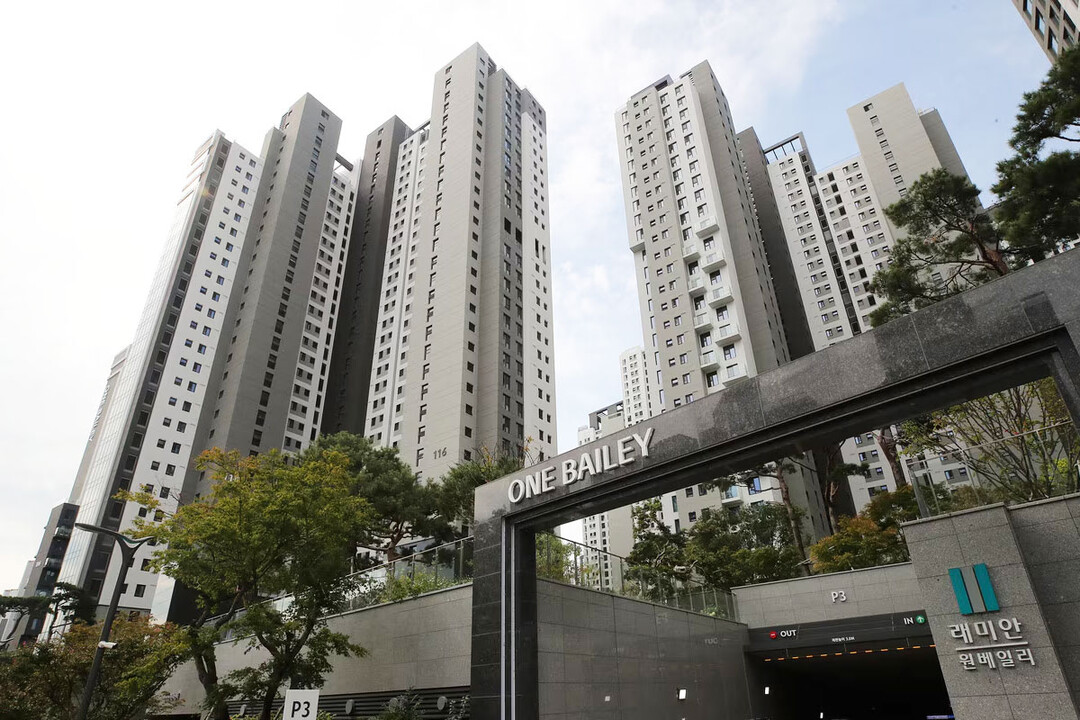
Seoul's average home sales price has surpassed KRW 1 billion for the first time, signaling a deepening overheating of the housing market. In particular, apartment prices in the Gangnam area are more than KRW 20 million per pyeong higher than in Gangbuk, marking the largest gap since statistics began and indicating extreme polarization in the housing market. Furthermore, the increase in household loans, primarily driven by mortgage loans, shows no signs of abating, leading to a heightened sense of crisis, likened to a "locomotive with broken brakes."
Seoul Home Prices Show No Signs of Slowing Down
According to KB Real Estate's monthly housing price trends, the average sales price for homes in Seoul last month was KRW 1,003.98 million. This is the highest figure since KB Real Estate began compiling related statistics in December 2008. The driving force behind this surge in Seoul's housing prices was apartments. Last month, the average sales price for apartments in Seoul was KRW 1,345.43 million, an increase of KRW 15.77 million in just one month, and nearly KRW 70 million higher compared to the beginning of the year (KRW 1,275.03 million in January). Considering that the average apartment sales price nationwide is KRW 525.43 million and in the metropolitan area is KRW 770.18 million, the solo surge in Seoul apartment prices is particularly prominent.
Within Seoul, the phenomenon of "one excellent property" is intensifying. Despite the expanded designation of land transaction 허가 zones (허가 meaning "permission"), apartments breaking record-high prices are rampant, further widening the price gap. The 5-quintile ratio, which indicates the price difference between the top 20% (5th quintile) and bottom 20% (1st quintile) of apartments, recorded 11.6 times in May, also setting a new high since related statistics began in December 2008. The average sales price of the top 20% of apartments in Seoul exceeded KRW 3 billion for the first time, reaching KRW 3,009.42 million, while the average price of the bottom 20% was KRW 490.44 million. Apartment prices in major Seoul areas have continued to rise for 12 consecutive months since June 2024.
Gangnam-Gangbuk Gap Reaches "All-Time High," Polarization Deepens
According to a survey by Real Estate R114, the average sales price per 3.3 square meters for apartments in the 11 districts south of the Han River (Gangnam area) in Seoul was KRW 53.34 million. This is KRW 20.08 million (60.4%) higher than the average price per pyeong of KRW 33.26 million in the 14 districts north of the Han River (Gangbuk area). This gap is the largest on a monthly basis since Real Estate R114 began surveying apartment market prices in 2000. Compared to the same period last year, the Gangnam area saw a 12.7% increase, while the Gangbuk area rose by 7.4%, further widening the disparity between the two regions.
By autonomous district, Seocho-gu in the Gangnam area was the most expensive at an average of KRW 83.70 million per 3.3 square meters, followed by Gangnam-gu (KRW 83.36 million), Songpa-gu (KRW 60.98 million), and Gangdong-gu (KRW 40.70 million). In the Gangbuk area, Yongsan-gu was the highest at KRW 60.13 million, followed by Seongdong-gu (KRW 49.17 million), Mapo-gu (KRW 45.14 million), and Gwangjin-gu (KRW 45.00 million). All these areas recorded significant increases.
Household Loans Surge: Demand Rushes Ahead of "Stress DSR"
Along with the soaring housing prices in Seoul and Gangnam, the increase in household loans, primarily mortgage loans, is also alarming. According to banking sources, as of the 26th of last month, the outstanding balance of household loans from the top five banks (KB Kookmin, Shinhan, Hana, Woori, and NH Nonghyup Bank) was KRW 747.7033 trillion, an increase of KRW 4.6185 trillion from the previous month. This figure exceeds the previous month's increase (KRW 4.5337 trillion), indicating an even faster pace of household loan growth despite fewer banking business days due to a long holiday early this month.
In particular, the outstanding balance of mortgage loans, at KRW 593.0243 trillion, increased by KRW 3.5943 trillion in one month, leading the surge in household loans. The outstanding balance of credit loans also increased by KRW 986.8 billion to KRW 103.4799 trillion, already surpassing the previous month's increase (KRW 886.8 billion).
This increase in household loans is attributed to a rush of speculative demand, driven by concerns that loan limits will decrease ahead of the strengthening of the third phase of Stress DSR (Debt Service Ratio) regulations, set to take effect on July 1st. With the Bank of Korea increasingly likely to cut the benchmark interest rate more than twice for economic stimulus, the increase in household loans is not expected to subside easily.
Criticism of Unproductive Resource Waste: A Task for the Democratic Government
Criticism has been raised that apartments are unproductive assets that cannot be exported or create added value. The overheated real estate market distorts finance into an unproductive sector and, furthermore, hinders the response to the Fourth Industrial Revolution. Despite this situation, South Korea is still criticized for squandering social resources and energy on the soaring prices of apartments in Seoul and Gangnam, swinging between joy and sorrow over their fluctuations.
Experts assert that if the housing prices in Seoul and Gangnam are not stabilized, and the financial inflow into these areas is not effectively blocked, South Korea will find it difficult to escape the quagmire of low growth, low birth rates, and various polarizations.
The incoming democratic government must now seek a shift from growth dependent on real estate to healthy growth based on the real economy. Even in the face of extreme political resistance, it must stabilize home prices in Seoul and Gangnam by mobilizing not only tax policies but also non-tax policy tools such as interest rates and loan regulations. Furthermore, policies to disperse housing price pressure, such as a large-scale supply of high-quality public rental housing and innovative balanced national development, must be pursued concurrently. It is clear that the stabilization of home prices in Seoul and other areas will be one of the key factors determining the success or failure of the democratic government that will emerge from an early presidential election.
[Copyright (c) Global Economic Times. All Rights Reserved.]