• 2026.03.22 (Sun)
  • All articles
  • LOGIN
  • JOIN
Global Economic Times
fashionrunwayshow2026
  • Synthesis
  • World
  • Business
  • Industry
  • ICT
  • Distribution Economy
  • Well+Being
  • Travel
  • Eco-News
  • Education
  • Korean Wave News
  • Opinion
  • Arts&Culture
  • Sports
  • People & Life
    • International Student Report
    • With Ambassador
  • Column
    • Cho Kijo Column
    • Cherry Garden Story
    • Ko Yong-chul Column
    • Kim Seul-Ong Column
    • Lee Yeon-sil Column
  • Photo News
  • New Book Guide
MENU
 
Home > World

Low Confidence in US Defense of Japan Amid Shifting Diplomatic Views: Asahi Poll

Global Economic Times Reporter / Updated : 2025-04-28 12:55:07
  • -
  • +
  • Print

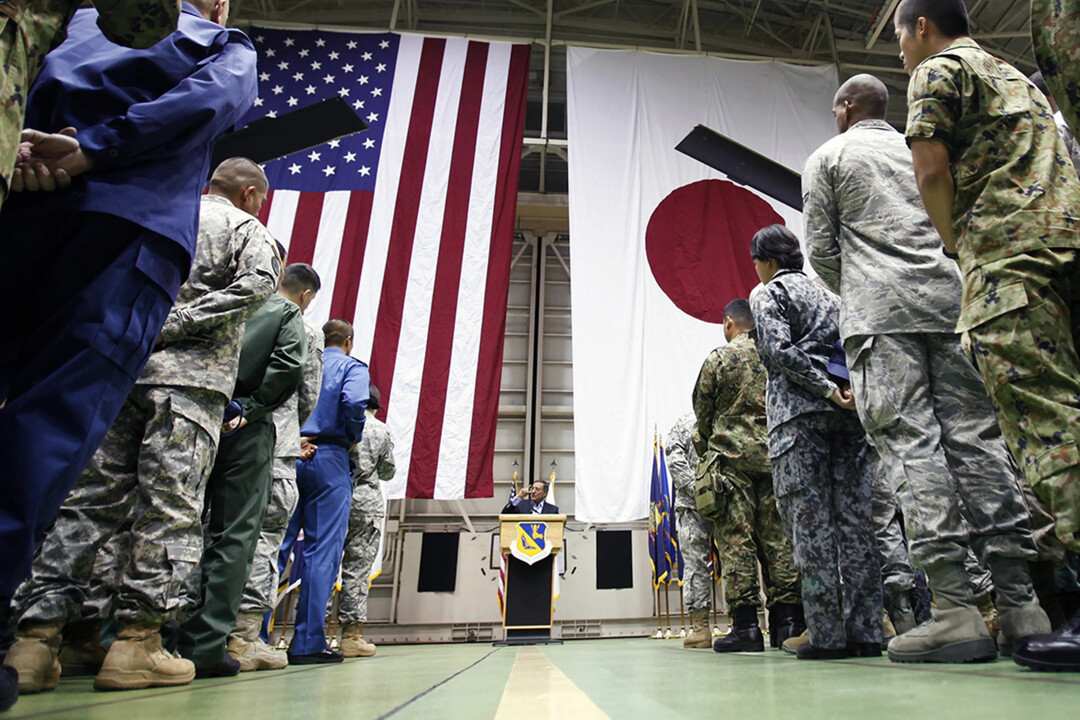
TOKYO, JAPAN - A recent survey conducted by the Asahi Shimbun has revealed a significant lack of confidence among the Japanese populace regarding the United States' commitment to defending Japan in a potential crisis, despite the long-standing security treaty between the two nations. The poll, conducted via mail between February and early April, found that a mere 15% of the 1,899 respondents believe the U.S. would "genuinely defend Japan in the event of a contingency." A striking 77% expressed skepticism, stating they "do not think so."

The Asahi Shimbun noted that while direct comparisons with previous surveys are challenging due to methodological differences, the current level of doubt significantly surpasses past figures, which had skepticism towards U.S. defense hovering around the 60% mark at its peak. Analysts suggest that the "America First" approach championed by the Trump administration has likely eroded trust in the reliability of U.S. security guarantees.

The survey also shed light on evolving views regarding Japan's diplomatic direction. A substantial 68% of respondents favored Japan becoming "as independent as possible" in its foreign policy, nearly three times the 24% who preferred to "follow the U.S.'s intentions as much as possible." This indicates a growing sentiment within Japan for a more autonomous role on the international stage.

However, this desire for greater independence does not necessarily translate into a pivot away from the U.S. alliance towards closer ties with regional powers like China. A strong majority (66%) opposed the idea of shifting from a "pro-U.S. diplomacy" to prioritizing strengthened cooperation with Asian countries, with only 16% expressing support for such a change. This suggests a nuanced perspective where Japan seeks greater self-reliance while still valuing the U.S. alliance.

The survey also touched upon the sensitive issue of Japan's historical accountability. A majority (58%) of respondents believe Japan has "sufficiently apologized and compensated" for its past war and colonial rule, while 29% felt it has not. Furthermore, opinions were divided on the need for continued apologies from Japanese politicians regarding past historical issues, with 47% stating "there is no need to do so," slightly higher than the 44% who believed it is "necessary." Notably, a similar Asahi survey conducted a decade ago showed the opposite result, with a higher percentage favoring continued apologies. This shift in public opinion indicates a potential growing sentiment that Japan has adequately addressed its wartime past.

The findings of this survey underscore a complex and potentially evolving dynamic in the U.S.-Japan security alliance. While the formal treaty remains intact, the low level of public confidence in the U.S.'s commitment raises questions about the perceived strength and reliability of this cornerstone of East Asian security. Moreover, the growing desire for a more independent Japanese foreign policy, coupled with a cautious approach to closer ties with regional rivals, suggests a delicate balancing act for Tokyo as it navigates an increasingly complex geopolitical landscape. The survey results will likely fuel further debate within Japan regarding its security posture and diplomatic priorities in the years to come.

[Copyright (c) Global Economic Times. All Rights Reserved.]

  • #NATO
  • #OTAN
  • #OECD
  • #G20
  • #globaleconomictimes
  • #Korea
  • #UNPEACEKOR
  • #micorea
  • #mykorea
  • #newsk
  • #UN
  • #UNESCO
  • #nammidongane
Global Economic Times Reporter
Reporter Page

Popular articles

  • From Industrial Capital to Tourism Mecca... Ulsan Makes a Bold Move with ‘Experiential Content’ in 2026

  • A New Milestone for Ukraine’s Post-War Reconstruction: The Birth of ISVP

  • About mexican food 

I like it
Share
  • Facebook
  • X
  • Kakaotalk
  • LINE
  • BAND
  • NAVER
  • https://www.globaleconomictimes.kr/article/1065585223087498 Copy URL copied.
Comments >

Comments 0

Weekly Hot Issue

  • Coway Clinches Top Honor at "Water Taste Awards" for 7th Consecutive Year
  • HP Targets Korea as Strategic Hub for 'Edge AI' Expansion, Seeking Startup Partnerships
  • Pearl Abyss’s 'Crimson Desert' Shatters Records with 2 Million Copies Sold on Day One
  • "BTS Over Books?" Indian Academies Issue Emergency Notices as Students Plot Mass Absences for Comeback Live
  • Naver to Shut Down Men's Fashion Service 'MR.' to Launch Expanded AI-Driven Fashion Platform
  • JBNU and SKKU Researchers Achieve Breakthrough in "Dream Material" MXene, Setting New World Records in Performance

Most Viewed

1
An Open Letter to BTS On the Eve of a Historic Performance
2
From Industrial Capital to Tourism Mecca... Ulsan Makes a Bold Move with ‘Experiential Content’ in 2026
3
Ko Sang-goo, President of World Federation of Korean Associations, Elected as First Private Sector Chair of World Korean Community Leaders Convention
4
It is Time for BTS’s Fandom, ARMY, to Step Forward
5
Korean Stock Market Plunges: Circuit Breaker and Sidecar Triggered Amid Geopolitical Crisis
광고문의
임시1
임시3
임시2

Hot Issue

Vishay Unveils Ultra-Compact 0404 RGB LED with Independent Chip Control for Enhanced Color Precision

Coway Clinches Top Honor at "Water Taste Awards" for 7th Consecutive Year

AI Medical Ecosystem in Focus: KIMES 2026 Opens in Seoul as Global Healthcare Hub

Netanyahu Declares Decisive Blow to Iran’s Nuclear and Missile Programs, Signals Early End to War

Let’s recycle the old blankets in Jeju Island’s closet instead of incinerating them.

Global Economic Times
korocamia@naver.com
CEO : LEE YEON-SIL
Publisher : KO YONG-CHUL
Registration number : Seoul, A55681
Registration Date : 2024-10-24
Youth Protection Manager: KO YONG-CHUL
Singapore Headquarters
5A Woodlands Road #11-34 The Tennery. S'677728
Korean Branch
Phone : +82(0)10 4724 5264
#304, 6 Nonhyeon-ro 111-gil, Gangnam-gu, Seoul
Copyright © Global Economic Times All Rights Reserved
  • 에이펙2025
  • APEC2025가이드북TV
  • 독도는우리땅
Search
Category
  • All articles
  • Synthesis
  • World
  • Business
  • Industry
  • ICT
  • Distribution Economy
  • Well+Being
  • Travel
  • Eco-News
  • Education
  • Korean Wave News
  • Opinion
  • Arts&Culture
  • Sports
  • People & Life 
    • 전체
    • International Student Report
    • With Ambassador
  • Column 
    • 전체
    • Cho Kijo Column
    • Cherry Garden Story
    • Ko Yong-chul Column
    • Kim Seul-Ong Column
    • Lee Yeon-sil Column
  • Photo News
  • New Book Guide
  • Multicultural News
  • Jobs & Workers