• 2025.12.13 (Sat)
  • All articles
  • LOGIN
  • JOIN
Global Economic Times
APEC2025KOREA가이드북
  • Synthesis
  • World
  • Business
  • Industry
  • ICT
  • Distribution Economy
  • Well+Being
  • Travel
  • Eco-News
  • Education
  • Korean Wave News
  • Opinion
  • Arts&Culture
  • Sports
  • People & Life
  • Column
    • Cho Kijo Column
    • Lee Yeon-sil Column
    • Ko Yong-chul Column
    • Cherry Garden Story
  • Photo News
  • New Book Guide
MENU
 
Home > Column > Cherry Garden Story

Patjuk: Korea’s Winter Solstice Red Bean Porridge

Hwang Sujin Reporter / Updated : 2024-12-19 12:56:12
  • -
  • +
  • Print


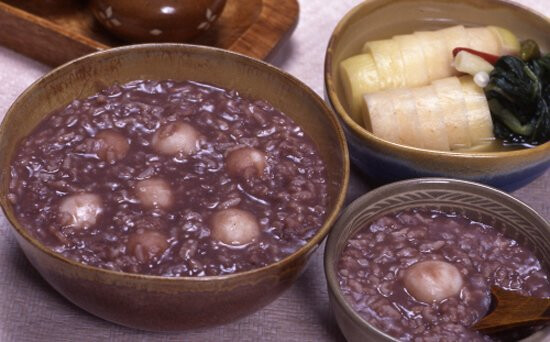
Patjuk, a red bean porridge, is a traditional Korean dish that is consumed on Dongji, the winter solstice. It is deeply rooted in Korean culture and carries significant symbolic meaning.

What is Patjuk?
Patjuk is made by boiling red beans until they are soft and then blending them into a thick, smooth porridge. Often, small glutinous rice balls called seolgi are added to the porridge. The red color of the beans is believed to ward off evil spirits, and the sweet and savory flavor of the porridge makes it a comforting winter treat.

Ingredients and Flavors
Red beans: The primary ingredient, red beans provide a sweet and slightly earthy flavor.
Glutinous rice: Used to make seolgi, glutinous rice adds a chewy texture to the porridge.
Salt: Salt enhances the overall flavor of the porridge.

How to Make Patjuk
Ingredients:

1 cup red beans
6 cups water
1/2 cup glutinous rice flour
1/4 teaspoon salt

Instructions:

Soak the red beans: Soak the red beans in water overnight.
Cook the red beans: Drain the soaked beans and place them in a large pot with fresh water. Bring to a boil, then reduce heat and simmer until the beans are soft and easily mashed.
Make the seolgi: In a separate bowl, combine glutinous rice flour with a little water to form a dough. Roll the dough into small balls.
Combine: Mash the cooked red beans and add them back to the pot. Add salt and bring to a boil. Gently stir in the seolgi.
Serve: Serve hot.

Cultural Significance
Patjuk is more than just a food; it is a symbol of winter and renewal. The red color of the beans is associated with Yang energy, which is believed to counteract the negative energy associated with the winter solstice. Eating patjuk on Dongji is seen as a way to ward off evil spirits and bring good luck for the coming year.

Patjuk as a Global Food
While patjuk is a traditional Korean dish, its unique flavor and cultural significance have made it a popular item on the menus of many Korean restaurants worldwide.

In conclusion, patjuk is a delicious and nutritious dish that is deeply rooted in Korean culture. Its rich history and symbolic meaning make it a special treat that is enjoyed by people of all ages.

[Copyright (c) Global Economic Times. All Rights Reserved.]

  • #globaleconomictimes
  • #koyongchul
  • #cherrylee
  • #seoulkorea
  • #periodicoeconomico
  • #글로벌이코노믹타임즈
  • #GET
  • #GETtv
  • #liderdel
Hwang Sujin Reporter

Popular articles

  • Massive Fire Engulfs E-Land Fashion Logistics Center in Cheonan, Causing Major Shipping Delays

  • Kimchi's Day Celebrated with a Glimpse into its Future

  • UNIQLO's Collaboration Strategy: Designer Fashion Meets Mass Appeal

I like it
Share
  • Facebook
  • X
  • Kakaotalk
  • LINE
  • BAND
  • NAVER
  • https://www.globaleconomictimes.kr/article/1065585244507158 Copy URL copied.
Comments >

Comments 0

Weekly Hot Issue

  • International Organizations Raise China's Growth Forecasts, Citing Stimulus and Exports
  • US-Japan Counteract Sino-Russian Drills with Joint Bomber Exercise in East Sea Airspace
  • Thailand-Cambodia Conflict Escalates: 22 Dead, Over 100 Injured as Border Clashes Spread
  • Swiss Economy Minister Guy Parmelin Poised to Lead as President in 2026
  • Russia Claims Downing Record 278 Ukrainian Drones Overnight, 40 Targeting Moscow Region
  • ZTE Faces Massive US Fine Over Alleged Foreign Bribery; Potential Settlement Could Exceed $2 Billion

Most Viewed

1
A Garden Where the City's Rhythm Stops: Dongdaemun's 'Cherry Garden', Cooking Consideration and Diversity
2
The Sudden Halt of Ayumi Hamasaki's Shanghai Concert: Unpacking the Rising Sino-Japanese Tensions
3
Choi Bun-do, Chairman of PTV Group, Assumes Presidency of the Korean Chamber of Commerce and Industry in South Central Vietnam
4
The Paradox of the 'Juvenile Offender' (Chokbeop Sonyeon): Impunity or Unfinished Rehabilitation?
5
South Korea Unveils 'K-Med': A Gigantic leap in Medical AI, Challenging Global Tech Giants
광고문의
임시1
임시3
임시2

Hot Issue

Mexico Hikes Tariffs on 'Strategic Goods' from South Korea, China, and Other Non-FTA Nations

Tech Tensions Flare: DeepSeek Allegedly Smuggles Banned NVIDIA Blackwell Chips for New AI Model

Netflix Stock Plummets 10% on Credit Downgrade Fears Following Blockbuster Warner Bros. Acquisition

LG Innotek Develops Eco-Friendly Next-Gen Smart IC Substrate, Reducing Carbon Emissions by Half

Let’s recycle the old blankets in Jeju Island’s closet instead of incinerating them.

Global Economic Times
korocamia@naver.com
CEO : LEE YEON-SIL
Publisher : KO YONG-CHUL
Registration number : Seoul, A55681
Registration Date : 2024-10-24
Youth Protection Manager: KO YONG-CHUL
Singapore Headquarters
5A Woodlands Road #11-34 The Tennery. S'677728
Korean Branch
Phone : +82(0)10 4724 5264
#304, 6 Nonhyeon-ro 111-gil, Gangnam-gu, Seoul
Copyright © Global Economic Times All Rights Reserved
  • 에이펙2025
  • APEC2025가이드북TV
  • 독도는우리땅
Search
Category
  • All articles
  • Synthesis
  • World
  • Business
  • Industry
  • ICT
  • Distribution Economy
  • Well+Being
  • Travel
  • Eco-News
  • Education
  • Korean Wave News
  • Opinion
  • Arts&Culture
  • Sports
  • People & Life
  • Column 
    • 전체
    • Cho Kijo Column
    • Lee Yeon-sil Column
    • Ko Yong-chul Column
    • Cherry Garden Story
  • Photo News
  • New Book Guide
  • Multicultural News
  • Jobs & Workers