![[등록] 2026-09-01 15:48:31](/support/_updata/banner2/tl181982910_6749.png)


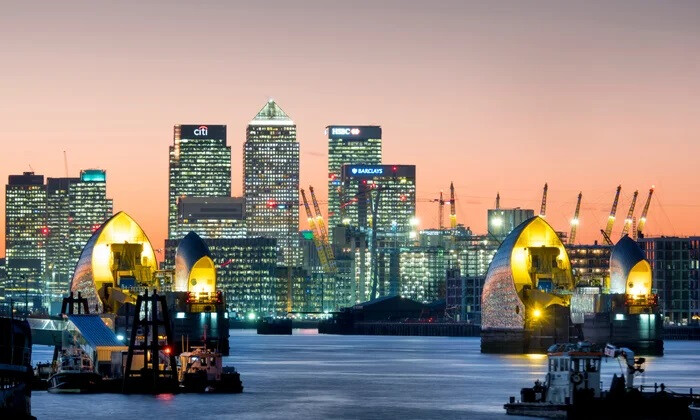
As a trade war looms over the global economy, declared by the previous occupant of the White House, the notion of the United Kingdom transforming into a 'Singapore-on-Thames' has resurfaced. This idea recently gained traction through discussions on broadcast media featuring Lance Forman, a former Brexit Party Member of the European Parliament and smoked salmon company director, and Jeremy Hunt, the former Chancellor of the Exchequer.
Adding further impetus, Mohamed El-Erian, President of Queens' College, Cambridge, and a distinguished economic scholar, urged Labour leader Keir Starmer in a BBC Radio interview to consider a British iteration of the Singapore model. He suggested that the UK, unlike other OECD nations facing economic headwinds from American tariffs, could attract businesses through its free markets and low tax rates.
The present author's own experience, involving regular visits to Singapore and Hong Kong during the 1980s while based in Asia, offers a comparative perspective. While I held a preference for the vibrant, albeit somewhat chaotic, atmosphere of Hong Kong, Singapore presented itself as a gracious, clean, and meticulously managed city-state, a stark contrast to the disarray of Malaysia or Indonesia.
However, even with the most charitable view, the ambition of molding Britain into a likeness of Singapore appears fundamentally unrealistic.
Singapore's genesis is inextricably linked to Lee Kuan Yew, its founding Prime Minister. He led its separation from the Federation of Malaya following a tumultuous twelve-year Malayan Emergency instigated by predominantly Chinese Malayan communists with ties to the Chinese Communist Party. This period also saw the silent erasure from British history of incidents such as the Batang Kali massacre in 1948, where the British Scots Guards infamously killed 24 unarmed civilians – a grim footnote in the denouement of empire, alongside extrajudicial executions of trade union leaders and unarmed villagers.
Lee Kuan Yew, influenced by Fabian Society ideals encountered during his time at Cambridge University, co-founded the People's Action Party (PAP) with Devan Nair, an Indian trade union leader in Singapore.
Today, the Singaporean state exerts a profound influence over its economic operations, in a manner reminiscent of the policy objectives of the British Labour Party. Private land ownership is non-existent in Singapore; all land is state-owned and leased out as required.
In contrast, a prime opportunity for the UK to establish a significant sovereign wealth fund, utilizing revenues from North Sea oil, was arguably missed by a past Prime Minister, who instead prioritized tax cuts to bolster popularity. The Singaporean government, on the other hand, manages two substantial sovereign wealth funds, with government appointees serving on corporate boards. While Singapore, exporting semiconductors and pharmaceuticals to the United States, faces a similar 10% tariff, the 25% levy on British automotive and steel industries – leading Jaguar Land Rover to halt US exports entirely – starkly illustrates the fallacy of post-Brexit Britain being insulated from the impact of that former leader's policies.
Significantly, Singapore's free trade agreement with the US is founded on entirely tariff-free trade. The prospect of the current UK government securing a similar agreement to safeguard British exports, especially under the current protectionist sentiment emanating from the United States, appears exceedingly slim.
One must also question whether proponents of the 'Singapore-on-Thames' vision are cognizant of the fact that Singaporean trade union leaders sit on company boards, or that the Secretary-General of the National Trades Union Congress of Singapore holds a position within the Cabinet.
Singapore represents an effective model of controlled, corporate-centric city-state capitalism for its six million inhabitants (two million of whom are immigrants). However, it is a prospect unlikely to be embraced by any major political party in the United Kingdom.
According to every international press monitoring organization, freedom of the press is non-existent in Singapore. Publishing a newspaper or magazine necessitates government permits.
Nevertheless, certain facets of Singaporean life might appeal to Reform UK supporters or Conservative MPs of a certain persuasion. Singapore employs caning as a punishment for overstaying foreign workers and illegal immigrants. The government defends this practice as necessary to deter potential immigration lawbreakers, given Singapore's attractiveness as a destination for undocumented migrants. While this may hold a certain grim fascination for some, it is an incongruous notion for a Cambridge college head.
Singapore imposes the death penalty for those convicted of drug possession – potentially disquieting news for cocaine users of a particular generation or the numerous prominent journalists who have admitted to drug use.
Detention without trial exists in Singapore and is often deployed against perceived opponents of the ruling People's Action Party (PAP).
In a nod to British tradition, a 'Speakers' Corner' exists. However, individuals wishing to speak or demonstrate there are required to register their personal details with the National Parks Board, and the vicinity is monitored by surveillance cameras.
It is readily apparent why Singapore holds a certain allure for those on the right of the political spectrum, despite its managed, state-influenced economic system running counter to the prescriptions of mainstream financial media outlets.
Singapore is a successful model on its own terms. However, the notion that Britain can, or should aspire to, become a 21st-century Singapore is a dangerous fantasy that serious policymakers would do well to avoid.
[Copyright (c) Global Economic Times. All Rights Reserved.]