• 2026.11.11 (Wed)
  • All articles
  • LOGIN
  • JOIN
Global Economic Times
[등록] 2026-09-01 15:48:31
  • Synthesis
  • World
  • Business
  • Industry
  • ICT
  • Distribution Economy
  • Well+Being
    • Pet Life
    • Halal Horizon
  • Travel
  • Eco-News
  • Education
  • Korean Wave News
  • Opinion
  • Arts&Culture
  • Sports
  • People & Life
    • International Student Report
    • With Ambassador
  • Column
    • Cho Kijo Column
    • Cherry Garden Story
    • Ko Yong-chul Column
    • Kim Bong-seon's Photo Column
    • Kim Seul-Ong Column
    • Lee Yeon-sil Column
  • Photo News
  • New Book Guide
MENU
 
Home > Distribution Economy

Global Fossil Fuel Carbon Emissions Expected to Drop by 0.4% Despite Economic Growth

Cho Kijo Reporter / Updated : 2026-11-11 13:14:24
  • -
  • +
  • Print


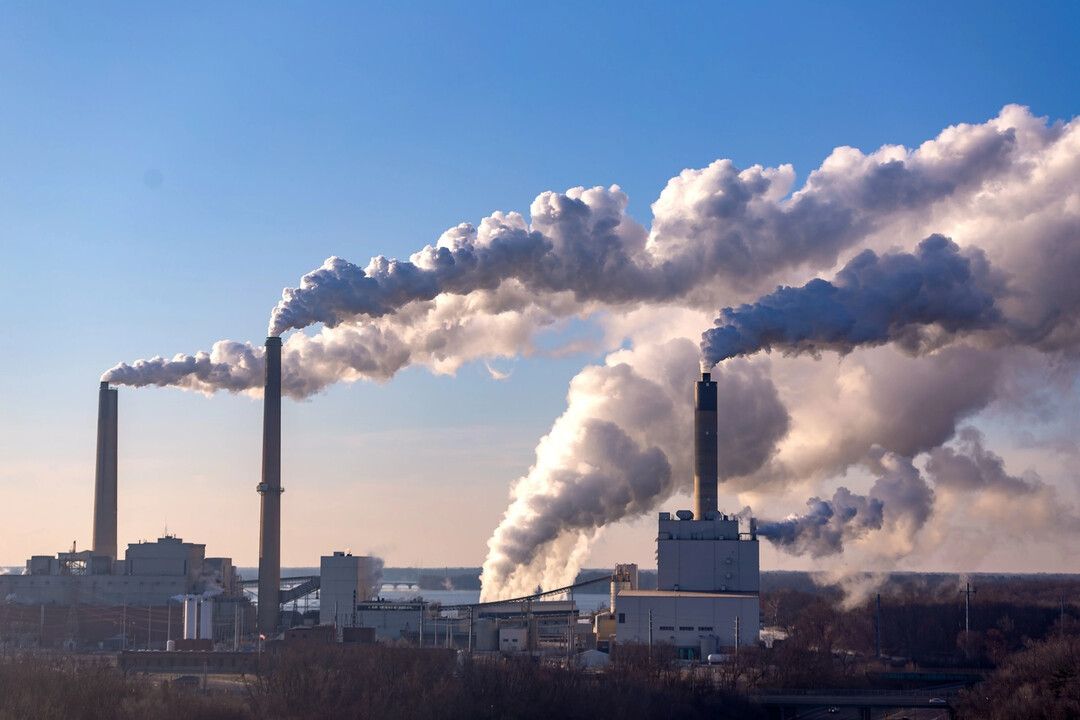
SEOUL — In what climate scientists are calling a rare and encouraging milestone, global carbon dioxide (CO₂) emissions from fossil fuels and cement production are projected to decline by 0.4% this year, even as the world economy expands at an estimated 3.1%.

According to the "2026 Global Carbon Budget" report released by the Global Carbon Project (GCP) and highlighted by The Wall Street Journal, worldwide fossil fuel-related emissions are on track to reach approximately 38.24 billion metric tons.

Historically, significant drops in global carbon output have only occurred during severe economic contractions, such as the collapse of the Soviet Union, the 2008 global financial crisis, and the COVID-19 pandemic. Experts note that a decline coinciding with positive economic growth is unprecedented.

"This is likely the first time we have seen emissions fall without a major dip in Gross Domestic Product (GDP)," said Pierre Friedlingstein, who leads the Global Carbon Budget research team at the University of Exeter. "While we cannot yet guarantee this will happen every year, it certainly points us in the right direction."

The Drivers Behind the Decline

The reduction is primarily attributed to a spike in energy prices following the Iran conflict, which curbed oil consumption. Researchers estimate that global oil-related emissions will decrease by 1.9%, and natural gas emissions will edge down by 0.3%, whereas coal emissions are still expected to rise by 0.6%.

Additionally, the rapid expansion of solar power, wind energy, and electric vehicles (EVs) has begun to sever the traditional link between economic growth and soaring energy emissions. Projections indicate that clean technologies will offset between 64% and 79% of the emissions generated by new energy demands through 2028.

Regional Trends

The trend of decoupling economic growth from carbon output is spreading. Between 2019 and last year, 59 countries experienced economic expansion alongside declining emissions, up from 39 countries during the 2004–2010 period. However, analysts caution that six years of reduction are not yet enough to confirm whether these nations have permanently passed their peak emissions.

China, accounting for about 32% of global fossil fuel emissions, is expected to see a 0.9% drop this year due to lower oil usage and massive rollouts of renewable energy and EVs. Roughly half of the global emission reductions driven by clean tech are attributed to China.
The United States is projected to cut emissions by 1.3%, largely driven by a baseline effect following a temporary surge in coal usage last year caused by harsh weather and high natural gas prices.
The European Union and Japan anticipate declines of 1.5% and 1.0%, respectively.
India, conversely, is expected to see its emissions increase by 4.4%.

A Nuanced Outlook

Despite the positive news regarding fossil fuels, overall global CO₂ emissions are still forecasted to rise—moving from 42.8 billion tons last year to 43.3 billion tons this year. This increase is driven by growing emissions from land-use changes, including deforestation and peatland fires.

Furthermore, analysts warn that a single year of decline does not guarantee a permanent peak in global emissions. If energy prices fall once geopolitical tensions in regions like the Middle East settle, fossil fuel usage could rebound. Researchers emphasize that sustained and accelerated deployment of clean energy remains critical to locking in long-term reductions.

[Copyright (c) Global Economic Times. All Rights Reserved.]

  • #Cherry Garden
  • #HalalFood
  • #Halal
  • #Petlife
  • #Halalhorizone
  • #Hormuz Impasse
  • #globaleconomictimes
  • #micorea
  • #mykor
Cho Kijo Reporter
Cho Kijo Reporter

Popular articles

  • McDonald's Korea Expands and Relocates Headquarters to Booyoung Taepyeong Building in Taepyeong-ro

  • Sharing Family Dinners Linked to Lower Pre-Diabetes Risk in Men, Study Suggests

  • US Big Tech Shakes Up Korean Semiconductor Industry as Giants Eye Chinese Memory Alternatives

I like it
Share
  • Facebook
  • X
  • Kakaotalk
  • LINE
  • BAND
  • NAVER
  • https://www.globaleconomictimes.kr/article/1065586358375215 Copy URL copied.
Comments >

Comments 0

Weekly Hot Issue

  • Bridging Distances: Africa and the Middle East Korean Communities Forge Historic Regional Alliance in Addis Ababa
  • Beyond the Clean Bill of Health: Why You Still Feel Unwell After Normal Test Results
  • Echoes of Baek Seok in Dalian: A Poetry Recital Bridging Divides and Generations
  • South Korea's Real Estate Sector Emphasizes Human Trust Amid AI Integration
  • Korea’s Trade Insurer Fuels Record-Breaking Export Drive with 100 Trillion Won in SME Support
  • South Korea Pioneers Offshore Won Settlement for Inbound Investment; Full Rollout Planned for January

Most Viewed

1
South Korea and Ethiopia Sign Trilateral MOU to Introduce Liquid-Based Cytology (LBC) Technology for Cervical Cancer Diagnosis
2
US Army Conducts Rare Temporary Burial Drills to Prepare for Worst-Case Large-Scale War Scenarios
3
World Citizens are Flying Directly to Busan... The Era of 4 Million Foreigners is Just Around the Corner
4
From Kim Whanki to Pokémon Cards... Seoul Auction Opens the Floodgates
5
Eating 100g of Baechu Kimchi Daily Linked to Lower High-Cholesterol Risks
체리가든 스토리
nutri huevos
로타리
동포저널

Hot Issue

LG Electronics and Skyscanner Partner to Bring Smart Travel Planning to Living Rooms

Regional Tourism in South Korea Struggles as Infrastructure Lags Behind Inbound Airport Growth

Miky Lee Honored with Asian Hall of Fame’s Centennial Medal for Pioneering Global K-Culture

Fashion Runway Show 2026

Let’s recycle the old blankets in Jeju Island’s closet instead of incinerating them.

Global Economic Times
korocamia@naver.com
CEO : LEE YEON-SIL
Publisher : KO YONG-CHUL
Registration number : Seoul, A55681
Registration Date : 2024-10-24
Youth Protection Manager: KO YONG-CHUL
Singapore Headquarters
5A Woodlands Road #11-34 The Tennery. S'677728
Korean Branch
Phone : +82(0)10 4724 5264
#304, 6 Nonhyeon-ro 111-gil, Gangnam-gu, Seoul
Copyright © Global Economic Times All Rights Reserved
  • News K
  • 반달곰 프로젝트
  • 광고문의
Search
Category
  • All articles
  • Synthesis
  • World
  • Business
  • Industry
  • ICT
  • Distribution Economy
  • Well+Being 
    • 전체
    • Pet Life
    • Halal Horizon
  • Travel
  • Eco-News
  • Education
  • Korean Wave News
  • Opinion
  • Arts&Culture
  • Sports
  • People & Life 
    • 전체
    • International Student Report
    • With Ambassador
  • Column 
    • 전체
    • Cho Kijo Column
    • Cherry Garden Story
    • Ko Yong-chul Column
    • Kim Bong-seon's Photo Column
    • Kim Seul-Ong Column
    • Lee Yeon-sil Column
  • Photo News
  • New Book Guide
  • Overseas Koreans
  • Multicultural News