• 2026.06.27 (Sat)
  • All articles
  • LOGIN
  • JOIN
Global Economic Times
fashionrunwayshow2026
  • Synthesis
  • World
  • Business
  • Industry
  • ICT
  • Distribution Economy
  • Well+Being
  • Travel
  • Eco-News
  • Education
  • Korean Wave News
  • Opinion
  • Arts&Culture
  • Sports
  • People & Life
    • International Student Report
    • With Ambassador
  • Column
    • Cho Kijo Column
    • Cherry Garden Story
    • Ko Yong-chul Column
    • Kim Seul-Ong Column
    • Lee Yeon-sil Column
  • Photo News
  • New Book Guide
MENU
 
Home > Industry

Anthropic Explores In-House AI Chip Development to Break Hardware Bottlenecks

Global Economic Times Reporter / Updated : 2026-04-10 13:13:55
  • -
  • +
  • Print


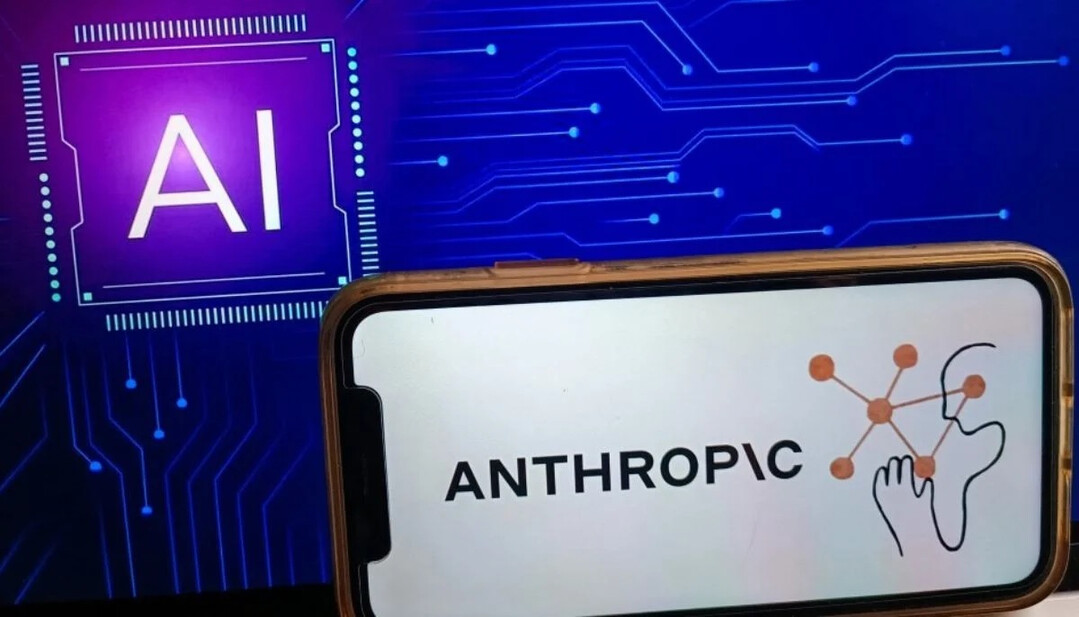
SAN FRANCISCO — Anthropic, the high-profile artificial intelligence startup backed by industry titans such as Amazon and Google, has reportedly begun exploring the development of its own custom AI semiconductors. The move signals a strategic shift aimed at mitigating the chronic global shortage of high-end GPUs and securing the massive computational power required for the next generation of large language models (LLMs).

According to a report by Reuters on April 9 (local time), citing multiple sources familiar with the matter, the San Francisco-based firm is in the early stages of evaluating a proprietary chip design program. While the initiative marks a significant step toward hardware independence, insiders cautioned that the project is still in its infancy. No formal blueprints have been finalized, and the company maintains the option to scrap the plans should the technical or financial hurdles prove too steep.

Navigating the Silicon Crunch
The exploration comes as the "AI arms race" places unprecedented strain on the global semiconductor supply chain. Currently, Anthropic relies heavily on specialized hardware from external providers. The company utilizes NVIDIA’s H100s and other high-performance chips through its primary cloud partners, Amazon Web Services (AWS) and Google Cloud.

Furthermore, Anthropic recently solidified its infrastructure roadmap by striking a strategic alliance with Google and Broadcom on April 7. This deal is designed to secure an staggering 3.5GW (gigawatts) of AI computing capacity starting in 2027—a move that underscores the sheer scale of energy and hardware required to sustain the growth of models like Claude.

A Growing Industry Trend
Anthropic is not alone in its pursuit of "silicon sovereignty." The trend of AI software giants venturing into hardware design has become a defining characteristic of the 2026 tech landscape. The primary drivers are twofold: cost reduction and performance optimization.

Cost Efficiency: Relying on third-party vendors like NVIDIA involves high premiums and long lead times. By designing custom silicon, firms can tailor chips to the specific mathematical architectures of their models, potentially reducing power consumption and operational costs.
Vertical Integration: Much like Apple’s success with its M-series chips, AI firms seek to integrate their software and hardware tightly to achieve processing speeds that general-purpose chips cannot match.
OpenAI, Anthropic’s chief rival, has already embarked on a similar path. Reports indicate that OpenAI is collaborating with Broadcom and TSMC to develop its own AI infrastructure, seeking to reduce its dependency on NVIDIA’s market dominance.

The Road Ahead: High Stakes and High Costs
Despite the potential benefits, developing a proprietary AI chip is an arduous and capital-intensive endeavor. It requires assembling elite teams of silicon engineers and navigating complex patent landscapes.

"The decision to move into hardware is never taken lightly by a software-first company," noted one industry analyst. "For Anthropic, it is a calculation of whether the long-term autonomy is worth the multibillion-dollar R&D investment required today."

For now, Anthropic appears to be keeping its options open. By maintaining strong ties with Broadcom and Google while simultaneously exploring internal designs, the company is hedging its bets in an increasingly volatile hardware market. Whether these "early-stage" discussions evolve into a physical chip will likely depend on how effectively current supply chains can meet the insatiable appetite for AI compute over the next year.

[Copyright (c) Global Economic Times. All Rights Reserved.]

  • #globaleconomictimes
  • #micorea
  • #mykorea
  • #nammidonganews
  • #singaporenewsk
  • #Samsung
  • #Daewoo
  • #Hyosung
  • #Apple
  • #korea
Global Economic Times Reporter
Reporter Page

Popular articles

  • [Interview] From Radiant Actor to Warm Companion… Actor Han Ji-il’s Great Second Act of Life

  • Asking about the Future of ‘Hangeul City Ulsan’… Special Lecture by Novelist Kim Jin-myung to be Held

  • Surging Memory Prices Weigh Heavily on Samsung and LG Electronics' Production Costs

I like it
Share
  • Facebook
  • X
  • Kakaotalk
  • LINE
  • BAND
  • NAVER
  • https://www.globaleconomictimes.kr/article/1065586372351020 Copy URL copied.
Comments >

Comments 0

Weekly Hot Issue

  • BYD Unveils First Plug-in Hybrid ‘Sealion 6’ in Korea, Targeting Eco-Friendly Market at 37.5 Million Won 
  • Kia’s Strategic Pivot: Accelerating Electrification Through SDV, PBV, and EREV Innovation
  • Devastating Twin Earthquakes Strike Venezuela: Death Toll Rises Amid Humanitarian Crisis
  • Hyundai Motor Prioritizes "Customer Experience" Over Pricing: Aiming for Lifelong Loyalty with the New Avante
  • South Korea's Path to Round of 32 Grows Perilous Following Australia-Paraguay Draw
  • The True Face of Our Politics After Stripping Away the Mask of Fairness

Most Viewed

1
[In-depth Report] The Islamic ‘Halal Barrier’ Just Around the Corner… The Silent Screams of K-Beauty SMEs
2
Asking about the Future of ‘Hangeul City Ulsan’… Special Lecture by Novelist Kim Jin-myung to be Held
3
Embassy of Pakistan in Seoul Hosts Commemorative Event for the 150th Birth Anniversary of Muhammad Ali Jinnah
4
KOSPI Hits Historic 9,300 Milestone as Market Cap Surpasses 8,000 Trillion Won
5
Kim Yoon-ji Appointed as New President of KOCCA: “Leading the Global Expansion of K-Culture”
광고문의
임시1
임시3
임시2

Hot Issue

Devastating Twin Earthquakes Strike Venezuela: Death Toll Rises Amid Humanitarian Crisis

Political Debates Spark Over Semiconductor "Windfall" Redistribution

Google Play Hosts 'ChangGoo Alumni Day' to Accelerate Global Expansion for 760 Korean Startups

Government Slashes Petroleum Price Caps by 150 Won per Liter amid Easing Middle East Tensions

Fashion Runway Show 2026

Global Economic Times
korocamia@naver.com
CEO : LEE YEON-SIL
Publisher : KO YONG-CHUL
Registration number : Seoul, A55681
Registration Date : 2024-10-24
Youth Protection Manager: KO YONG-CHUL
Singapore Headquarters
5A Woodlands Road #11-34 The Tennery. S'677728
Korean Branch
Phone : +82(0)10 4724 5264
#304, 6 Nonhyeon-ro 111-gil, Gangnam-gu, Seoul
Copyright © Global Economic Times All Rights Reserved
  • 향기네무료급식
  • BCB부천방송
  • 반달곰 프로젝트
Search
Category
  • All articles
  • Synthesis
  • World
  • Business
  • Industry
  • ICT
  • Distribution Economy
  • Well+Being
  • Travel
  • Eco-News
  • Education
  • Korean Wave News
  • Opinion
  • Arts&Culture
  • Sports
  • People & Life 
    • 전체
    • International Student Report
    • With Ambassador
  • Column 
    • 전체
    • Cho Kijo Column
    • Cherry Garden Story
    • Ko Yong-chul Column
    • Kim Seul-Ong Column
    • Lee Yeon-sil Column
  • Photo News
  • New Book Guide
  • Multicultural News
  • Jobs & Workers