![[등록] 2026-09-01 15:48:31](/support/_updata/banner2/tl181982910_6749.png)


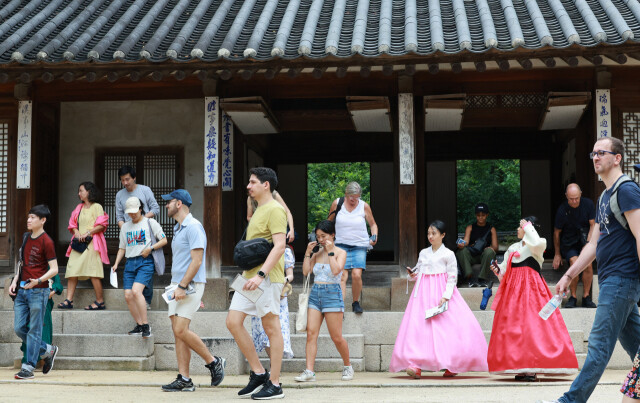
SEOUL, South Korea – Last year, more than 5 out of every 100 people in South Korea were identified as foreign residents, marking a historic high in the proportion of foreign residents. This indicator unequivocally demonstrates the accelerating pace of South Korea's transition into a multicultural society, underscoring the growing importance of immigration policies and social integration discussions across all sectors of Korean society.
Sharp Increase in Foreign Inflow Post-COVID-19
According to the Ministry of Justice's Korea Immigration Service, the number of foreign residents in South Korea in 2024 totaled 2,650,783. This figure significantly surpasses the 2,524,656 recorded in 2019, prior to the widespread outbreak of COVID-19, indicating a complete recovery from the five-year decline and a return to a sharp upward trend.
As of 2024, South Korea's total population stands at 51,217,211, with foreign residents accounting for 5.17% of the total population. This is an increase of 126,127 people compared to 2019, which saw the previous highest number of foreign residents, and is 0.28 percentage points higher than the previous record of 4.89% in 2023.
Over the past decade, the number of foreign residents steadily increased from 1.9 million in 2015 to 2.52 million in 2019. Following a temporary decline due to the COVID-19 pandemic, the numbers began to rebound in 2022 and have continued to rise. This trend is attributed to a combination of South Korea's increasing reliance on foreign labor and the effectiveness of policies aimed at attracting international students.
High Proportion of Long-Term Residents, Chinese Nationals Predominant
Among the approximately 2.65 million foreign residents, 2,042,017 individuals (77.0%) were long-term residents who registered with authorities or reported their place of residence for a stay exceeding 90 days. Short-term residents accounted for 608,766 individuals (23.0%).
By nationality, China ranked overwhelmingly first with 958,959 residents. This is largely due to historical inflows of ethnic Koreans from China, as well as a recent increase in Chinese international students and laborers. Following China were Vietnam (305,936), Thailand (188,770), the United States (170,251), and Uzbekistan (94,893). This highlights the significant role of foreign nationals from Southeast and Central Asian countries in meeting the labor demands of various industries.
In terms of age distribution, individuals in their 20s and 30s comprised nearly half (49.7%) of the total foreign resident population. This suggests that foreign laborers and international students are primarily concentrated in the younger demographic. Other age groups included those in their 40s (15.9%), 60 and older (12.9%), and 50s (12.6%).
The number of registered foreign residents totaled 1,488,353, an increase of 10.4% from the previous year (1,348,626). The residences of registered foreign nationals were concentrated in Gyeonggi Province (31.4%) and Seoul (17.8%), with significant numbers also distributed in industrial complexes and agricultural/fishing areas such as Gyeongnam, Chungnam, Incheon, Gyeongbuk, and Jeonnam. The top nationalities among registered foreign residents were China (31.3%), Vietnam (17.6%), Nepal (4.8%), Uzbekistan (4.1%), and Cambodia (4.1%).
Foreign Student Numbers at All-Time High, Illegal Stay Rate Decreasing
The number of foreign students has steadily increased since 2020 (153,361), reaching a record high of 263,775 in 2024. This represents a 16.5% increase from the previous year (226,507). Among them, 178,519 were pursuing formal degrees, while 85,256 were studying Korean language. This growth is attributed to a combination of the Korean government's proactive student recruitment policies and the global popularity of K-Culture.
Conversely, the number of unregistered (illegal) foreign residents decreased by 6.2% from the previous year (423,675) to 397,522. The illegal stay rate relative to the total foreign resident population has steadily declined since its peak in 2021 (19.9%), settling at 15.0%. This is interpreted as a partial effect of the government's strengthened crackdown on illegal stays and policies encouraging voluntary departure.
Refugee Recognition Rate Remains Low: Policy Considerations Needed
New refugee applications totaled 18,336, but only 5,610 applications were processed. Among these, 105 cases were recognized as refugees, and 101 cases were granted humanitarian stay permits. The refugee recognition rate was a mere 1.9%, with a protection rate of 3.7%. The significantly low recognition and protection rates compared to the number of applications and processed cases indicate that the Korean government applies strict criteria in the refugee recognition process. This has drawn criticism from the international community, prompting calls for finding a balance between human rights protection, national security, and social integration.
Nationalities of recognized refugees included Egypt (39), Myanmar (24), Afghanistan (7), Democratic Republic of Congo (7), and Burundi (4). For those granted humanitarian stay, the nationalities were Haiti (40), Sudan (13), Syria (8), Afghanistan (8), and Yemen (8).
Policy Recommendations for a Sustainable Multicultural Society
These statistics reveal that South Korean society must definitively move beyond the outdated notion of being a "single-ethnic nation" and acknowledge its transition into a "multicultural society." Experts uniformly emphasize the urgent need for more sophisticated and comprehensive immigration policies to foster sustainable development and a truly multicultural society.
An official from the Ministry of Justice stressed, "Immigration policies should be utilized as a national growth engine by encouraging excellent talent, such as international students, and essential foreign labor to stably settle in Korea." The official added, "Securing public consensus for harmoniously achieving both the establishment of stay order and the social integration of immigrants is also crucial."
Cho Young-hee, a research fellow at the Korea Immigration Policy Research Institute, emphasized, "This is a critical time for acquiring a new population through economic vitality and social integration." She further asserted, "We must establish a rational system for foreign inflow and utilization, and achieve high-quality social integration through harmonious coexistence between Koreans and immigrants."
Currently, the South Korean government faces challenges such as a declining working-age population due to deepening low birth rates and an aging society, along with the crisis of local population decline. The influx of foreign labor is recognized as one of the significant alternatives to overcome these crises. However, beyond merely increasing the number of foreign residents, it is imperative to re-evaluate and restructure the entire social system—including education, housing, healthcare, and culture—to ensure their stable settlement and contribution to Korean society. Simultaneously, social efforts to foster cultural understanding and coexistence between Koreans and immigrants are vital. Policy movements, such as discussions about establishing an immigration agency, are expected to accelerate further in this context.
[Copyright (c) Global Economic Times. All Rights Reserved.]