![[등록] 2026-09-01 15:48:31](/support/_updata/banner2/tl181982910_6749.png)


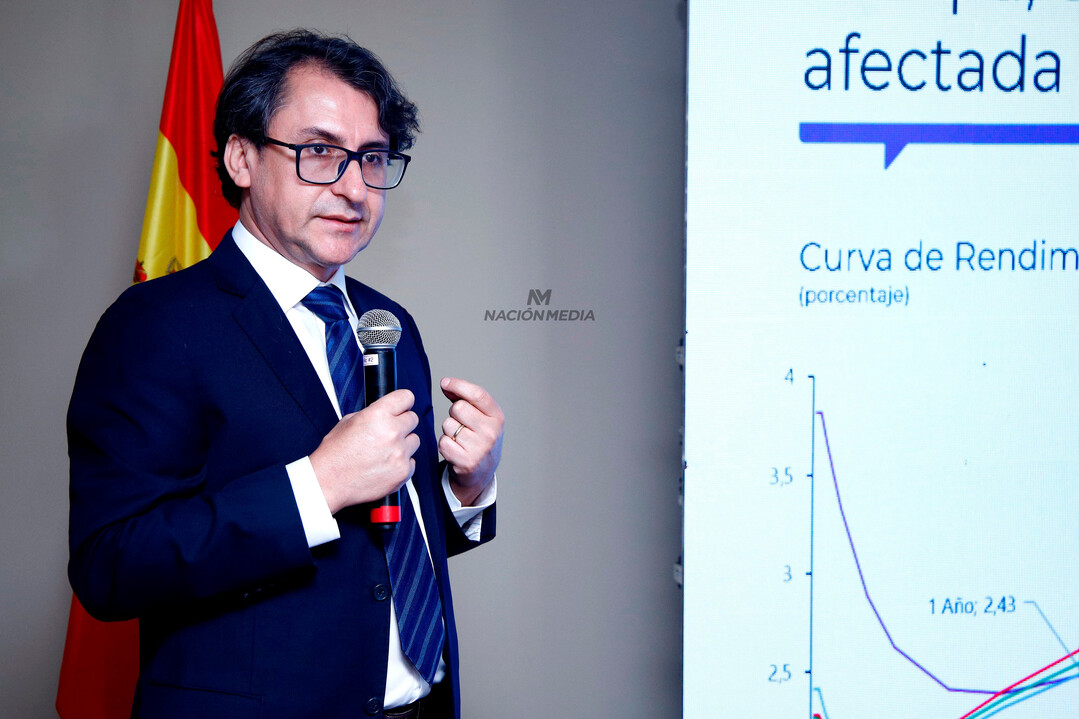
The Paraguayan economy is highly dependent on agricultural production. According to Waldo Gonzalez, an economic expert at Basa Capital, this implies that Paraguay can lessen this reliance by taking advantage of its strengths to generate more value-added in production in the short and long term.
Gonzalez emphasized that Paraguay has a competitive advantage in agricultural production. "We need to focus on leveraging these strengths to create more value-added in production, both in the short and long term," he told La Nación/Nación Media. Adding value to production means the process of industrializing raw materials.
In the long term, the expert believes that the country should invest in diversifying its economy by improving the quality of its workforce, accelerating infrastructure investment to reduce development gaps, and strengthening social protection systems. "These efforts will not only strengthen the competitiveness of the agricultural sector but also promote other productive sectors, fostering a more diversified and resilient economy," he noted.
Impact on GDP
Paraguay is experiencing a severe drought affecting the agricultural sector. Initial data suggests that soybean production is expected to be lower than anticipated. In this context, it is uncertain whether this situation will affect the growth prospects estimated by the Central Bank of Paraguay (BCP). Gonzalez said it is still too early to measure the impact with the data available.
"Since agricultural GDP accounted for about 6.9% in 2024, this decline could lead to an estimated 1% reduction in GDP in 2025. Nevertheless, it is premature to accurately quantify the impact of the agricultural sector with only two months of data," he told La Nación.
Compensating Sectors
Looking back at 2024, he recalled that the economy experienced a unique phenomenon of moving at "two speeds." In other words, sectors related to natural resources, such as agriculture, showed little dynamism despite good production volumes. In contrast, sectors unrelated to natural resources performed exceptionally well.
In 2025, a similar phenomenon is likely to occur, with compensation taking place in the national economy. "The question is whether these sectors, which do not depend on agriculture, can once again compensate for the potential underperformance of the natural resource sector. So far, both market prospects and initial economic activity indicators suggest that this compensation scenario is very likely to repeat," he told LN/NM.
The Need for Economic Diversification in Paraguay
The Paraguayan economy has long been heavily dependent on agriculture, particularly soybean production. This dependence makes it vulnerable to external factors such as fluctuations in international agricultural commodity prices and climate change. Therefore, Paraguay needs to reduce these vulnerabilities and pursue sustainable growth through economic diversification.
Measures for Economic Diversification
Adding High Value to the Agricultural Sector: Moving beyond simple agricultural production and expanding into high value-added industries such as processing, packaging, and distribution.
Fostering Manufacturing: Diversifying the economic structure by fostering other industrial sectors besides agriculture, particularly manufacturing.
Strengthening the Service Industry: Securing new growth engines by strengthening service industries such as tourism, finance, and IT.
Expanding Infrastructure Investment: Expanding infrastructure investment essential for economic development, such as roads, ports, and energy.
Education and Technological Innovation: Strengthening industrial competitiveness through the development of a skilled workforce and technological innovation.
Through these efforts, Paraguay will be able to move away from its agriculture-centered economic structure and achieve more stable and sustainable growth.
[Copyright (c) Global Economic Times. All Rights Reserved.]