![[등록] 2026-09-01 15:48:31](/support/_updata/banner2/tl181982910_6749.png)


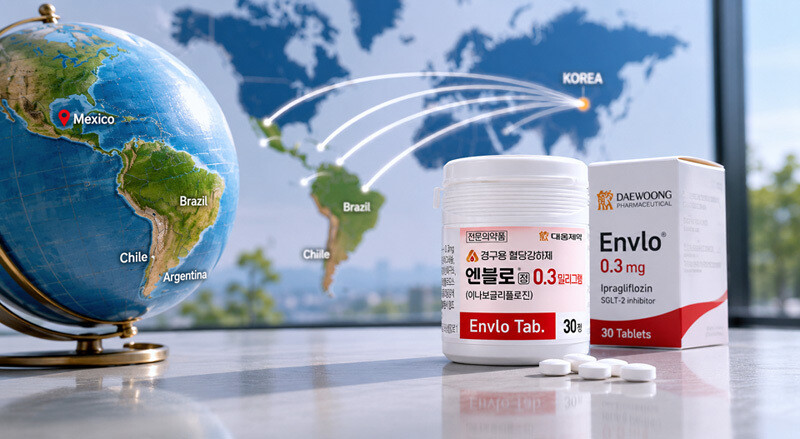
SEOUL, South Korea — Daewoong Pharmaceutical announced on June 8 that it has quantitatively verified the mechanism by which its type 2 diabetes treatment, Envlo (active ingredient: enavogliflozin), translates internal drug action into actual blood glucose reduction.
At the European 2026 PAGE (Population Approach Group Europe) conference held from June 2 to 5, the South Korean pharmaceutical giant presented a poster showcasing research that analyzes the correlation between Envlo's drug exposure and its efficacy in lowering blood glucose levels.
Envlo is a type 2 diabetes medication belonging to the SGLT-2 inhibitor class, developed independently by Daewoong Pharmaceutical, and is registered as the 36th novel drug developed in South Korea. The medication operates by blocking the reabsorption of glucose in the kidneys, thereby promoting its excretion through urine to lower blood sugar levels. Notably, Envlo has garnered significant medical attention for demonstrating outstanding blood glucose-lowering efficacy and safety even at a low dose of 0.3mg, while also offering therapeutic benefits in the areas of renal disease and heart failure.
The primary objective of this study was to analyze the quantitative relationship between the increase in urinary glucose excretion following Envlo administration and the subsequent reduction in glycated hemoglobin (HbA1c). The defining feature of this research is that it utilized an integrated model to connect drug exposure, urinary glucose excretion, and changes in HbA1c—metrics that had previously been verified separately across individual clinical trials.
Through this comprehensive approach, researchers simultaneously observed how Envlo is absorbed and metabolized within the human body, how this metabolism leads to an increase in urinary glucose excretion, and ultimately, how it impacts the reduction of HbA1c, which serves as a long-term indicator of blood glucose management.
The study utilized an integrated analysis of data pooled from 224 Korean patients across 10 distinct clinical trials, alongside Phase 3 clinical data from 151 Chinese patients diagnosed with type 2 diabetes. HbA1c is a universally recognized metric in diabetes management, reflecting a patient's average blood glucose levels over the preceding two to three months.
The findings confirmed a clear, quantitative relationship: the administration of Envlo effectively boosts urinary glucose excretion, which in turn drives a substantial reduction in HbA1c levels. Furthermore, the model predicted that Envlo’s blood glucose-lowering effects remain stable even in patients with impaired renal function, suggesting the potential for prescribing the drug to a significantly broader spectrum of patient populations.
Crucially, the comparative analysis between Korean and Chinese patients revealed no statistically significant pharmacokinetic differences. This finding provides solid scientific evidence that Envlo can be administered to Chinese patients at the same dosage as Korean patients, ensuring both optimal safety and efficacy.
"This study is highly significant as it provides a clear, quantitative explanation of Envlo's superior efficacy through advanced modeling," an official from Daewoong Pharmaceutical stated. "Moving forward, we plan to actively utilize these research findings as a foundational cornerstone for our global regulatory approval processes and indication expansion strategies in our subsequent clinical development."
[Copyright (c) Global Economic Times. All Rights Reserved.]