![[등록] 2026-09-01 15:48:31](/support/_updata/banner2/tl181982910_6749.png)


Seoul, South Korea – Consumers are facing a bitter truth as coffee prices, from instant blends to popular franchise beverages, are seeing a widespread increase across South Korea. While companies cite rising raw material costs, an underlying sentiment suggests a strategic push to adjust prices before a new government takes office, anticipating potential pressure to freeze or limit such hikes.
Dongsuh Foods Leads with Instant Coffee Price Hike
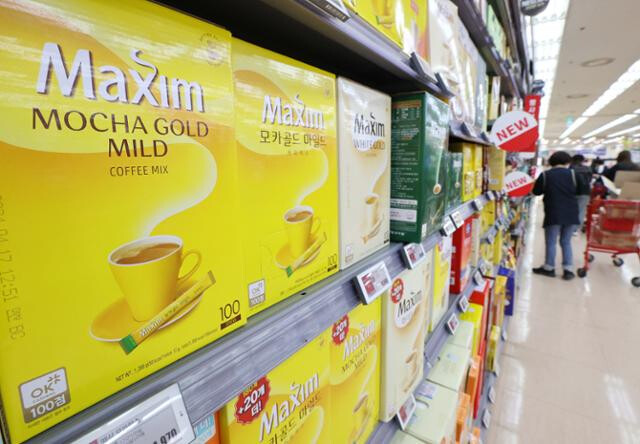
Dongsuh Foods, a dominant player in South Korea's instant coffee market, announced on May 23rd that it would raise the factorygate prices of its instant coffee, coffee mixes, and coffee beverages by an average of 7.7% effective May 30th. This translates to an approximate 9% increase for popular coffee mix products like Maxim Mocha Gold and instant ground coffee like Kanu Americano. Coffee beverages, including Maxim T.O.P. and Maxwell House RTD, will see an average 4.4% rise. Consumer prices are expected to reflect these changes sequentially starting next month, following negotiations with various distribution channels.
Bakery and Franchise Brands Join the Trend
The price surge isn't limited to instant coffee. CJ Foodville's Tous les Jours, a prominent bakery chain, will increase the recommended retail prices of 32 of its main coffee products by ₩100 to ₩300 starting May 30th. This marks their first coffee price adjustment in over three years and two months, since March 2022. A regular Americano will climb by ₩100, reaching ₩3,300 from its previous ₩3,200. Other coffee beverages like café lattes and café mochas will see a ₩200 increase, while decaffeinated options will go up by a steeper ₩500.
Lotte GRS's Angel-in-us coffee franchise will also implement price adjustments from May 29th, with coffee beverages increasing by ₩200 to ₩300. An S-sized Americano, for instance, will rise from ₩4,500 to ₩4,700 (4.4%), and an R-sized Americano from ₩5,000 to ₩5,300 (6%).
These recent announcements follow a wave of increases initiated earlier this year by other major coffee players. Starbucks Korea, Holly's, and Paul Bassett raised their prices in January. Subsequently, Pascucchi, Twosome Place, and Dunkin' followed suit. Even budget-friendly brands are not immune, with The Born Korea's Paik's Coffee increasing its hot Americano price by ₩200 to ₩1,700 starting May 22nd.
The Blame Game: Rising Costs vs. Political Timing
Companies uniformly attribute these price hikes to a significant increase in the cost of raw materials, particularly coffee beans, compounded by unfavorable exchange rates. As South Korea imports virtually all its coffee beans and other key ingredients like palm oil, a depreciating Korean Won significantly inflates import costs. Furthermore, erratic weather patterns in major coffee-producing regions have led to reduced yields, contributing to persistently high raw material prices globally.
However, industry insiders suggest there's more to the story. An anonymous official from the food industry commented, "While it's true that raw material prices have increased, there's also a tendency to rush price increases with the presidential election scheduled for early next month. When a new government takes office, it's natural that companies would feel hesitant to raise prices." This statement hints at a strategic decision to push through price adjustments now, anticipating that a new administration might exert greater pressure on businesses to curb inflation or simply make such increases politically less palatable. The perceived "window of opportunity" before a new political landscape solidifies appears to be a significant factor in the current synchronized price adjustments.
As consumers brace for higher coffee costs, the interplay between global commodity markets, currency fluctuations, and domestic political dynamics creates a complex picture of the forces shaping everyday expenditures.
[Copyright (c) Global Economic Times. All Rights Reserved.]