• 2025.12.13 (Sat)
  • All articles
  • LOGIN
  • JOIN
Global Economic Times
APEC2025KOREA가이드북
  • Synthesis
  • World
  • Business
  • Industry
  • ICT
  • Distribution Economy
  • Well+Being
  • Travel
  • Eco-News
  • Education
  • Korean Wave News
  • Opinion
  • Arts&Culture
  • Sports
  • People & Life
  • Column
    • Cho Kijo Column
    • Lee Yeon-sil Column
    • Ko Yong-chul Column
    • Cherry Garden Story
  • Photo News
  • New Book Guide
MENU
 
Home > Distribution Economy

South Korea's "Pocketbook Squeeze": Food and Public Transport Costs Surge, Burdening Households

Hwang Sujin Reporter / Updated : 2025-08-11 14:08:05
  • -
  • +
  • Print


SEOUL—In a troubling sign for household finances, South Korea is experiencing a sharp rise in the cost of essential goods and services, pushing the burden on consumers to its highest point in years. According to recent data from Statistics Korea, the price of food and non-alcoholic beverages jumped by 3.5% in July compared to the previous year, marking the steepest increase in 12 months. This surge significantly outpaces the overall consumer price index (CPI) increase of 2.1%, highlighting a growing disconnect between general economic indicators and the tangible, day-to-day financial struggles faced by ordinary citizens.

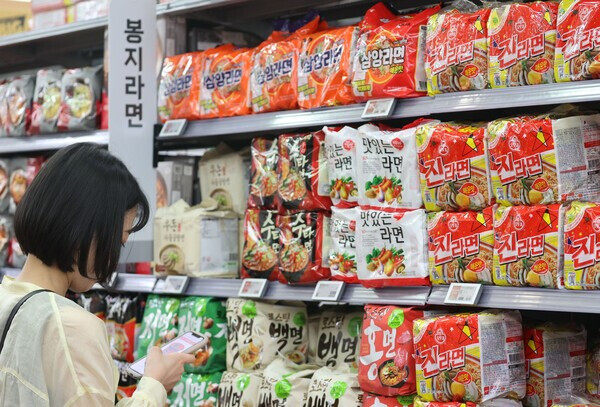
The persistent inflationary pressure on food items can be traced to a combination of internal and external factors. Unpredictable and severe weather patterns, including prolonged heatwaves and heavy rainfall, have disrupted agricultural supply chains, leading to higher prices for fresh produce and grains. Simultaneously, a wave of increases in the factory-gate prices of processed foods, from instant noodles to snacks, has been passed directly on to consumers.

The impact is most acutely felt in kitchen staples. Prices for fish and seafood have seen a dramatic 7.2% hike, the highest in two years. Popular items such as dried squid, yellow corvina, and mackerel have recorded double-digit price increases, making a simple family meal a more costly affair. Similarly, the cost of bread and grains has escalated by 6.6%, a nearly two-year high, with the price of rice alone climbing by 7.6%. This is a particularly sensitive issue, as rice is a core component of the Korean diet, and its rising cost affects virtually every household.

The inflationary landscape is not confined to the grocery store. Public service costs, another key element of household budgets, are also on the ascent. The public service inflation rate has expanded to 1.4%, largely driven by a recent 7.0% fare increase for the Seoul metropolitan subway system. This rise, which added 150 won to the base fare, may seem modest on its own, but it translates into a substantial increase in fixed monthly expenses for millions of commuters.

Economists and public policy experts are sounding the alarm. Kim Sang-bong, an economics professor at Hansung University, noted that the recent increases in essentials like food and transportation are making life "more difficult" for low- and middle-income families, who are still grappling with the aftereffects of previous inflationary periods. He emphasized the need for a comprehensive government strategy to address both internal distribution networks and global supply chain vulnerabilities that contribute to price volatility.

The situation is poised to become even more challenging in the latter half of the year. The government is currently evaluating potential price hikes for key utilities, including electricity, gas, and railway services. If these increases are approved, they would add another layer of financial pressure on households already struggling to manage their daily expenses. For many, the current economic climate feels like a relentless "pocketbook squeeze," where rising costs on multiple fronts are eroding purchasing power and deepening financial anxiety.

[Copyright (c) Global Economic Times. All Rights Reserved.]

  • #globaleconomictimes
  • #micorea
  • #mykorea
  • #Lifeplaza
  • #nammidonganews
  • #singaporenewsk
  • #Samsung
  • #Daewoo
  • #Hyosung
  • #A
Hwang Sujin Reporter

Popular articles

  • Massive Fire Engulfs E-Land Fashion Logistics Center in Cheonan, Causing Major Shipping Delays

  • Kimchi's Day Celebrated with a Glimpse into its Future

  • UNIQLO's Collaboration Strategy: Designer Fashion Meets Mass Appeal

I like it
Share
  • Facebook
  • X
  • Kakaotalk
  • LINE
  • BAND
  • NAVER
  • https://www.globaleconomictimes.kr/article/1065589613630908 Copy URL copied.
Comments >

Comments 0

Weekly Hot Issue

  • International Organizations Raise China's Growth Forecasts, Citing Stimulus and Exports
  • US-Japan Counteract Sino-Russian Drills with Joint Bomber Exercise in East Sea Airspace
  • Thailand-Cambodia Conflict Escalates: 22 Dead, Over 100 Injured as Border Clashes Spread
  • Swiss Economy Minister Guy Parmelin Poised to Lead as President in 2026
  • Russia Claims Downing Record 278 Ukrainian Drones Overnight, 40 Targeting Moscow Region
  • ZTE Faces Massive US Fine Over Alleged Foreign Bribery; Potential Settlement Could Exceed $2 Billion

Most Viewed

1
A Garden Where the City's Rhythm Stops: Dongdaemun's 'Cherry Garden', Cooking Consideration and Diversity
2
The Sudden Halt of Ayumi Hamasaki's Shanghai Concert: Unpacking the Rising Sino-Japanese Tensions
3
Choi Bun-do, Chairman of PTV Group, Assumes Presidency of the Korean Chamber of Commerce and Industry in South Central Vietnam
4
The Paradox of the 'Juvenile Offender' (Chokbeop Sonyeon): Impunity or Unfinished Rehabilitation?
5
South Korea Unveils 'K-Med': A Gigantic leap in Medical AI, Challenging Global Tech Giants
광고문의
임시1
임시3
임시2

Hot Issue

Mexico Hikes Tariffs on 'Strategic Goods' from South Korea, China, and Other Non-FTA Nations

Tech Tensions Flare: DeepSeek Allegedly Smuggles Banned NVIDIA Blackwell Chips for New AI Model

Netflix Stock Plummets 10% on Credit Downgrade Fears Following Blockbuster Warner Bros. Acquisition

LG Innotek Develops Eco-Friendly Next-Gen Smart IC Substrate, Reducing Carbon Emissions by Half

Let’s recycle the old blankets in Jeju Island’s closet instead of incinerating them.

Global Economic Times
korocamia@naver.com
CEO : LEE YEON-SIL
Publisher : KO YONG-CHUL
Registration number : Seoul, A55681
Registration Date : 2024-10-24
Youth Protection Manager: KO YONG-CHUL
Singapore Headquarters
5A Woodlands Road #11-34 The Tennery. S'677728
Korean Branch
Phone : +82(0)10 4724 5264
#304, 6 Nonhyeon-ro 111-gil, Gangnam-gu, Seoul
Copyright © Global Economic Times All Rights Reserved
  • 에이펙2025
  • APEC2025가이드북TV
  • 독도는우리땅
Search
Category
  • All articles
  • Synthesis
  • World
  • Business
  • Industry
  • ICT
  • Distribution Economy
  • Well+Being
  • Travel
  • Eco-News
  • Education
  • Korean Wave News
  • Opinion
  • Arts&Culture
  • Sports
  • People & Life
  • Column 
    • 전체
    • Cho Kijo Column
    • Lee Yeon-sil Column
    • Ko Yong-chul Column
    • Cherry Garden Story
  • Photo News
  • New Book Guide
  • Multicultural News
  • Jobs & Workers