• 2026.03.22 (Sun)
  • All articles
  • LOGIN
  • JOIN
Global Economic Times
fashionrunwayshow2026
  • Synthesis
  • World
  • Business
  • Industry
  • ICT
  • Distribution Economy
  • Well+Being
  • Travel
  • Eco-News
  • Education
  • Korean Wave News
  • Opinion
  • Arts&Culture
  • Sports
  • People & Life
    • International Student Report
    • With Ambassador
  • Column
    • Cho Kijo Column
    • Cherry Garden Story
    • Ko Yong-chul Column
    • Kim Seul-Ong Column
    • Lee Yeon-sil Column
  • Photo News
  • New Book Guide
MENU
 
Home > World

Sakhalin: A Post-Surrender Killing Ground

Graciela Maria Reporter / Updated : 2025-08-11 14:22:05
  • -
  • +
  • Print


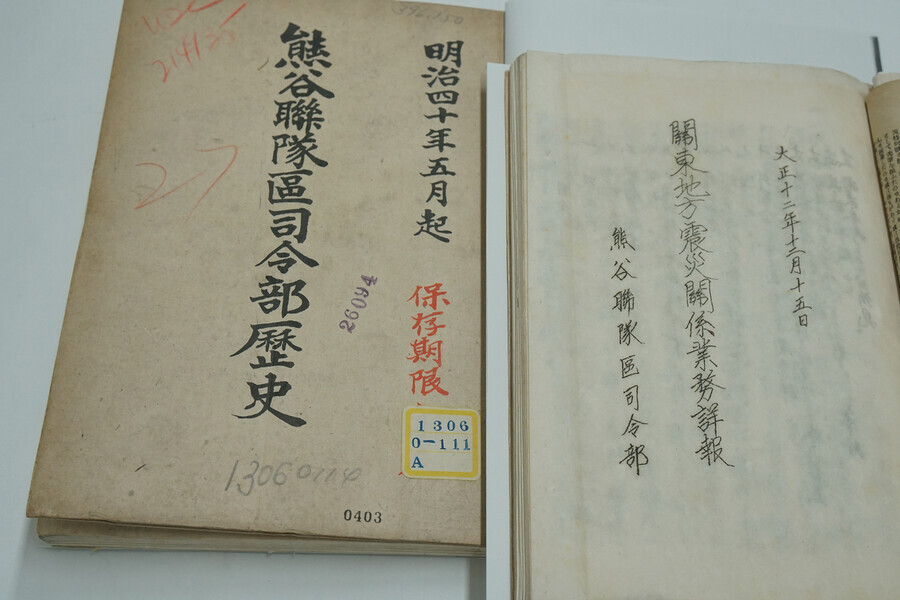
SAKHALIN - New details have emerged regarding the brutal massacres of Korean civilians by Japanese military forces in southern Sakhalin following Japan's surrender in 1945. Documents recently uncovered from Russian government archives, and highlighted in a new research paper, reveal that these atrocities continued well into September, weeks after the official end of World War II.

For years, accounts of post-surrender violence against Koreans in Sakhalin have been largely confined to a few well-documented events. The Kamishisuka and Mizuho incidents, which occurred in the days immediately following the surrender, have been the most widely known cases, with dozens of Koreans killed under various pretexts. However, the newly released documents suggest a more widespread and prolonged campaign of violence.

The discovery began in 2019 when a researcher at the Sakhalin Regional Museum made a formal request to the Russian government for historical records. The response, received in 2021, included detailed investigative files on several unreported cases. A subsequent paper published in 2024 brought these new findings to the public.

The newly revealed incidents paint a grim picture of a military in a state of chaos and paranoia. One report describes the execution of a Korean man on August 15, the very day of the surrender, in the northwestern part of southern Sakhalin. The man was accused of being a Soviet spy after an airstrike. After being shot, his body was desecrated, used for bayonet practice by 27 Japanese soldiers—a detail that underscores the extreme brutality and dehumanization inflicted upon the Korean population.

Another case from the same day recounts the summary execution of a Korean man serving in a Japanese-led volunteer corps in the northeastern region, also based on suspicion. The violence continued into early September, with another Korean man killed for allegedly planning to expose a hidden weapons cache to the advancing Soviet army. These accounts suggest that as Japan's control over the region dissolved, and Soviet forces moved in, Japanese military elements turned their aggression on the most vulnerable population in their midst—the Korean laborers who had been forcibly conscripted to work in Sakhalin.

Koichi Inoue, an honorary professor at Hokkaido University and a respected historian on the matter, suggests that the Japanese military's shift in aggression toward Koreans was a direct result of the impending ground war with the Soviet Union. He stated that in their desperation, "Japan's militarism likely turned its spearhead of attack toward Koreans," perceiving them as a potential fifth column.

While acknowledging the significance of these new documents, Professor Inoue also provides a critical perspective, noting that the records were produced from a Soviet viewpoint. He cautions that they may lack the full context from the Japanese or Korean perspectives, highlighting the ongoing need for a comprehensive, multi-faceted investigation into these tragic events. The discovery of these documents, however, is a crucial step toward a more complete understanding of the atrocities committed in Sakhalin during this tumultuous period.

The following video is relevant as it provides historical context on the post-liberation tragedies faced by Koreans in Sakhalin, including details about the Mizuho incident.

[Copyright (c) Global Economic Times. All Rights Reserved.]

  • #globaleconomictimes
  • #micorea
  • #mykorea
  • #Lifeplaza
  • #nammidonganews
  • #singaporenewsk
  • #Samsung
  • #Daewoo
  • #Hyosung
  • #A
Graciela Maria Reporter

Popular articles

  • EU Commission Chief Vows to Honor €90 billion Ukraine Loan Despite Hungarian Veto

  • Fatal Firefight Off Cuban Coast: U.S. Citizens Involved in Stolen Boat Incursion

  • Victorian Surgeon Under Police Investigation for Alleged "Unnecessary" Hysterectomies

I like it
Share
  • Facebook
  • X
  • Kakaotalk
  • LINE
  • BAND
  • NAVER
  • https://www.globaleconomictimes.kr/article/1065590501123284 Copy URL copied.
Comments >

Comments 0

Weekly Hot Issue

  • Coway Clinches Top Honor at "Water Taste Awards" for 7th Consecutive Year
  • HP Targets Korea as Strategic Hub for 'Edge AI' Expansion, Seeking Startup Partnerships
  • Pearl Abyss’s 'Crimson Desert' Shatters Records with 2 Million Copies Sold on Day One
  • "BTS Over Books?" Indian Academies Issue Emergency Notices as Students Plot Mass Absences for Comeback Live
  • Naver to Shut Down Men's Fashion Service 'MR.' to Launch Expanded AI-Driven Fashion Platform
  • JBNU and SKKU Researchers Achieve Breakthrough in "Dream Material" MXene, Setting New World Records in Performance

Most Viewed

1
An Open Letter to BTS On the Eve of a Historic Performance
2
From Industrial Capital to Tourism Mecca... Ulsan Makes a Bold Move with ‘Experiential Content’ in 2026
3
Ko Sang-goo, President of World Federation of Korean Associations, Elected as First Private Sector Chair of World Korean Community Leaders Convention
4
It is Time for BTS’s Fandom, ARMY, to Step Forward
5
Korean Stock Market Plunges: Circuit Breaker and Sidecar Triggered Amid Geopolitical Crisis
광고문의
임시1
임시3
임시2

Hot Issue

Vishay Unveils Ultra-Compact 0404 RGB LED with Independent Chip Control for Enhanced Color Precision

Coway Clinches Top Honor at "Water Taste Awards" for 7th Consecutive Year

AI Medical Ecosystem in Focus: KIMES 2026 Opens in Seoul as Global Healthcare Hub

Netanyahu Declares Decisive Blow to Iran’s Nuclear and Missile Programs, Signals Early End to War

Let’s recycle the old blankets in Jeju Island’s closet instead of incinerating them.

Global Economic Times
korocamia@naver.com
CEO : LEE YEON-SIL
Publisher : KO YONG-CHUL
Registration number : Seoul, A55681
Registration Date : 2024-10-24
Youth Protection Manager: KO YONG-CHUL
Singapore Headquarters
5A Woodlands Road #11-34 The Tennery. S'677728
Korean Branch
Phone : +82(0)10 4724 5264
#304, 6 Nonhyeon-ro 111-gil, Gangnam-gu, Seoul
Copyright © Global Economic Times All Rights Reserved
  • 에이펙2025
  • APEC2025가이드북TV
  • 독도는우리땅
Search
Category
  • All articles
  • Synthesis
  • World
  • Business
  • Industry
  • ICT
  • Distribution Economy
  • Well+Being
  • Travel
  • Eco-News
  • Education
  • Korean Wave News
  • Opinion
  • Arts&Culture
  • Sports
  • People & Life 
    • 전체
    • International Student Report
    • With Ambassador
  • Column 
    • 전체
    • Cho Kijo Column
    • Cherry Garden Story
    • Ko Yong-chul Column
    • Kim Seul-Ong Column
    • Lee Yeon-sil Column
  • Photo News
  • New Book Guide
  • Multicultural News
  • Jobs & Workers