![[등록] 2026-09-01 15:48:31](/support/_updata/banner2/tl181982910_6749.png)


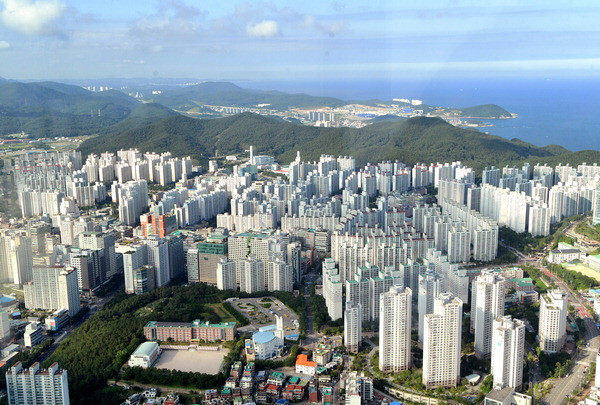
Busan Metropolitan City has announced the commencement of a large-scale redevelopment project aimed at improving the residential environment of its aging planned cities. Specifically, Haeundae Green City and the Hwamyeong-Geumgok District in Buk-gu are set to play a leading role in the revitalization of Busan's aging planned cities. This initiative is regarded as a significant project that goes beyond simple housing reconstruction to innovatively transform the entire spatial structure of the city.
Pilot District Selection and Project Overview
On July 9, Busan City announced that it would conduct an open call for pilot districts for the redevelopment of aging planned cities in the Hwamyeong-Geumgok and Haeundae 1 & 2 districts. Through this public offering, redevelopment projects will be pursued for apartment complexes totaling 2,500 units in the Hwamyeong-Geumgok District and 3,200 units in the Haeundae 1 & 2 districts. Busan City, in cooperation with the Ministry of Land, Infrastructure and Transport, finalized these figures after thoroughly analyzing the demand for relocation and housing supply in the areas surrounding the designated zones.
The redevelopment of aging planned cities is on a different level from typical reconstruction. The target area is much larger, and it's a project that goes beyond simply rebuilding old apartment complexes; it comprehensively remodels the spatial structure of densely populated older apartment areas. The goal is to enhance the overall competitiveness of the city by reorganizing urban functions, improving transportation infrastructure, and expanding green spaces. A Busan City official stated, "We will ensure thorough management of housing supply and demand to provide stable relocation support during the redevelopment process."
Hwamyeong-Geumgok District: A Humane City Embraced by Forests and Rivers
The Hwamyeong-Geumgok District (area 2.71㎢), developed between 1995 and 2002, will be reborn under the slogan "Hwamyeong-Geumgok: A Humane City Embraced by Forests and Rivers." The main redevelopment goals are 'fostering regional specialized hubs,' 'realizing a 15-minute city,' 'establishing a green-blue network,' and 'implementing a future green transportation city.'
Notably, the standard floor area ratio (FAR) has been raised to an average of 350%. This is significantly higher than the current average FAR of 234%, demonstrating Busan City's strong commitment to ensuring project feasibility. The increase in FAR is expected to secure momentum for the project and enable more efficient space utilization. Additionally, the plan includes various initiatives to improve residents' quality of life, such as expanding parks and green spaces within the complex, creating pedestrian-friendly safe streets, and strengthening public transport connectivity.
Haeundae 1 & 2 Districts: A Leap Towards a New Future City
The Haeundae 1 & 2 districts (area 3.05㎢), completed in 1997 through a residential land development method, will undergo redevelopment under the theme "Haeundae Green City: Opening a New Future City with Residents." The standard FAR here is set at 360%, higher than the current average FAR of 250%, thus securing project feasibility.
The spatial structure improvement plan for Haeundae 1 & 2 districts includes concepts such as a 'sustainable convergence city' and a 'smart mobility city.' Haeundae Green City, one of Busan's representative new towns, is expected to solidify its status as a marine tourism hub and transform into an eco-friendly smart city incorporating advanced technology through this redevelopment. Various innovative attempts are anticipated, including the introduction of future-oriented transportation systems, the construction of smart buildings that enhance energy efficiency, and the creation of new urban functions utilizing marine resources.
Proactive Master Plan Establishment and Future Promotion Plans
Following the enforcement of the 'Special Act on the Redevelopment and Support of Aging Planned Cities' in April, Busan City selected Haeundae 1 & 2, Hwamyeong-Geumgok, Dadae area, Mandeok, and Mora as redevelopment targets. Among these, Busan City proactively established master plan proposals for the Phase 1 target areas, Haeundae 1 & 2 districts and Hwamyeong-Geumgok District, after consulting with relevant organizations such as the Ministry of Land, Infrastructure and Transport and the Korea Research Institute for Human Settlements. This marks the first instance of a metropolitan city announcing a master plan proposal, demonstrating Busan City's strong drive for the redevelopment of aging planned cities.
Busan City plans to select the final pilot districts in December this year after a public review process. The selection criteria will comprehensively consider factors such as resident participation (consent rate), urgency of redevelopment, and the ripple effect of project implementation.
Furthermore, Busan City plans to commence the establishment of master plan proposals for the Phase 2 aging planned city redevelopment targets, including the Dadae, Mandeok, Mora, Gaegum, and Danggam districts, this month. Busan City will operate an advisory group composed of experts in various fields to enhance the professionalism and objectivity of the master plan establishment process and will operate a 'Visiting Future City Support Center' to actively gather residents' opinions.
Busan Mayor Park Heong-joon expressed his ambition, stating, "We will build new development models that consider Busan's natural environment, including rivers, mountains, and the sea, along with new city functions," and that this aging planned city redevelopment project will enable Busan to develop into a sustainable future-oriented city. This project is expected to be a significant turning point in strengthening Busan's urban competitiveness and dramatically improving citizens' residential environment.
[Copyright (c) Global Economic Times. All Rights Reserved.]