• 2026.03.22 (Sun)
  • All articles
  • LOGIN
  • JOIN
Global Economic Times
fashionrunwayshow2026
  • Synthesis
  • World
  • Business
  • Industry
  • ICT
  • Distribution Economy
  • Well+Being
  • Travel
  • Eco-News
  • Education
  • Korean Wave News
  • Opinion
  • Arts&Culture
  • Sports
  • People & Life
    • International Student Report
    • With Ambassador
  • Column
    • Cho Kijo Column
    • Cherry Garden Story
    • Ko Yong-chul Column
    • Kim Seul-Ong Column
    • Lee Yeon-sil Column
  • Photo News
  • New Book Guide
MENU
 
Home > World

Only Seven Countries Meet WHO Air Quality Guidelines, Global Study Finds

Ana Fernanda Reporter / Updated : 2025-03-12 14:27:56
  • -
  • +
  • Print

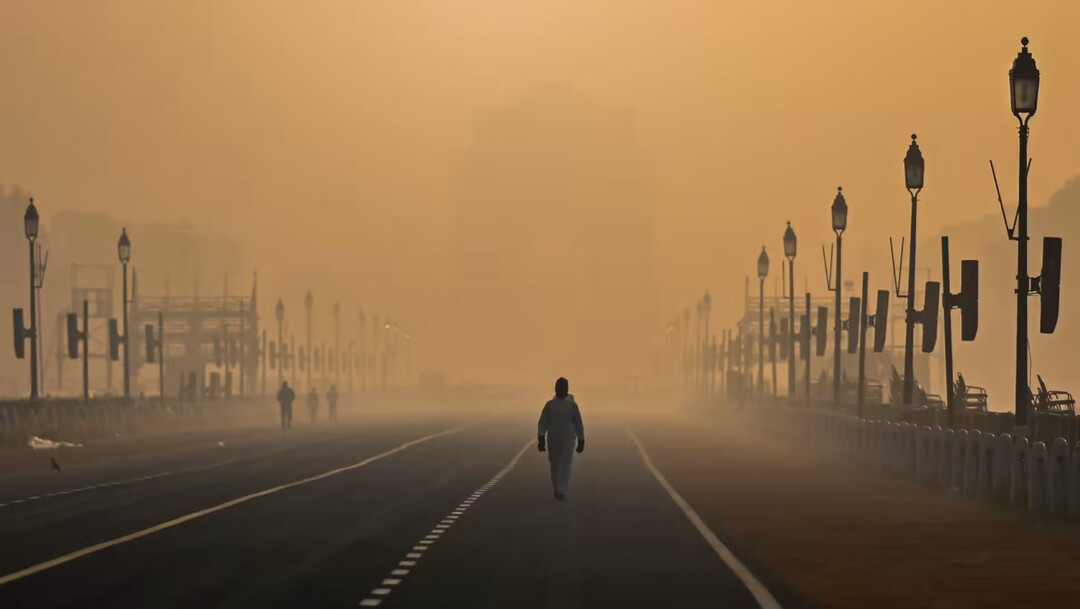
Global air pollution remains a critical health crisis, with a new study revealing that only a handful of nations meet the World Health Organization's (WHO) stringent air quality standards. The research, conducted by Swiss technology company IQAir, paints a stark picture of widespread pollution, highlighting the urgent need for global action.   

IQAir's comprehensive analysis, which examined data from more than 40,000 air quality monitoring stations across 138 countries, found that only seven nations comply with the WHO's annual guideline for PM2.5 particulate matter. This guideline stipulates that annual average PM2.5 levels should not exceed 5 micrograms per cubic meter (µg/m3). PM2.5 particles, which are incredibly small, can penetrate deep into the lungs and bloodstream, posing serious health risks.   

The countries that meet the WHO standards are Australia, New Zealand, Bahamas, Barbados, Grenada, Iceland, and Estonia. Conversely, nations in Central and South Asia, and Africa, are experiencing dangerous levels of air pollution.   

Chad has the most polluted air in the world, with PM2.5 levels 18 times higher than the WHO guideline. Other countries with extremely high pollution levels include Bangladesh, Pakistan, the Democratic Republic of Congo, and India. India, in particular, has 11 of the world’s 20 most polluted cities. Although India has had a 7% reduction in PM 2.5 levels from 2023 to 2024, it still has very high levels of air pollution. Byrnihat and New Delhi are among the most polluted cities in the world.   

The study also highlighted the disparity of air quality data. Many low income countries do not have the resources to properly monitor air quality. This creates data gaps, and makes it harder to understand the global impact of air pollution. Oceania was named as the cleanest region, with 57% of it's cities meeting WHO air quality standards. Mayagüez, Puerto Rico was labeled as the cleanest metropolitan area, with a annual PM 2.5 average of 1.1 µg/m3.   

This research underscores the urgent need for governments and organizations worldwide to implement effective strategies to reduce air pollution and protect public health.

[Copyright (c) Global Economic Times. All Rights Reserved.]

  • #globaleconomictimes
  • #글로벌이코노믹타임즈
  • #한국
  • #중기청
  • #재외동포청
  • #외교부
  • #micorea
  • #mykorea
  • #newsk
  • #nammidonganews
  • #singaporenewsk
Ana Fernanda Reporter

Popular articles

  • Tehran on the Brink: Scenarios of a U.S. Strike and the Looming Global Fallout

  • Google Unveils ‘Nano Banana 2’: Pro-Level Image AI Now Free for All

  • Samsung Display Resumes Development of Next-Gen 'QNED' Technology

I like it
Share
  • Facebook
  • X
  • Kakaotalk
  • LINE
  • BAND
  • NAVER
  • https://www.globaleconomictimes.kr/article/1065590821647028 Copy URL copied.
Comments >

Comments 0

Weekly Hot Issue

  • Coway Clinches Top Honor at "Water Taste Awards" for 7th Consecutive Year
  • HP Targets Korea as Strategic Hub for 'Edge AI' Expansion, Seeking Startup Partnerships
  • Pearl Abyss’s 'Crimson Desert' Shatters Records with 2 Million Copies Sold on Day One
  • "BTS Over Books?" Indian Academies Issue Emergency Notices as Students Plot Mass Absences for Comeback Live
  • Naver to Shut Down Men's Fashion Service 'MR.' to Launch Expanded AI-Driven Fashion Platform
  • JBNU and SKKU Researchers Achieve Breakthrough in "Dream Material" MXene, Setting New World Records in Performance

Most Viewed

1
An Open Letter to BTS On the Eve of a Historic Performance
2
From Industrial Capital to Tourism Mecca... Ulsan Makes a Bold Move with ‘Experiential Content’ in 2026
3
Ko Sang-goo, President of World Federation of Korean Associations, Elected as First Private Sector Chair of World Korean Community Leaders Convention
4
It is Time for BTS’s Fandom, ARMY, to Step Forward
5
Korean Stock Market Plunges: Circuit Breaker and Sidecar Triggered Amid Geopolitical Crisis
광고문의
임시1
임시3
임시2

Hot Issue

Vishay Unveils Ultra-Compact 0404 RGB LED with Independent Chip Control for Enhanced Color Precision

Coway Clinches Top Honor at "Water Taste Awards" for 7th Consecutive Year

AI Medical Ecosystem in Focus: KIMES 2026 Opens in Seoul as Global Healthcare Hub

Netanyahu Declares Decisive Blow to Iran’s Nuclear and Missile Programs, Signals Early End to War

Let’s recycle the old blankets in Jeju Island’s closet instead of incinerating them.

Global Economic Times
korocamia@naver.com
CEO : LEE YEON-SIL
Publisher : KO YONG-CHUL
Registration number : Seoul, A55681
Registration Date : 2024-10-24
Youth Protection Manager: KO YONG-CHUL
Singapore Headquarters
5A Woodlands Road #11-34 The Tennery. S'677728
Korean Branch
Phone : +82(0)10 4724 5264
#304, 6 Nonhyeon-ro 111-gil, Gangnam-gu, Seoul
Copyright © Global Economic Times All Rights Reserved
  • 에이펙2025
  • APEC2025가이드북TV
  • 독도는우리땅
Search
Category
  • All articles
  • Synthesis
  • World
  • Business
  • Industry
  • ICT
  • Distribution Economy
  • Well+Being
  • Travel
  • Eco-News
  • Education
  • Korean Wave News
  • Opinion
  • Arts&Culture
  • Sports
  • People & Life 
    • 전체
    • International Student Report
    • With Ambassador
  • Column 
    • 전체
    • Cho Kijo Column
    • Cherry Garden Story
    • Ko Yong-chul Column
    • Kim Seul-Ong Column
    • Lee Yeon-sil Column
  • Photo News
  • New Book Guide
  • Multicultural News
  • Jobs & Workers