• 2025.12.11 (Thu)
  • All articles
  • LOGIN
  • JOIN
Global Economic Times
APEC2025KOREA가이드북
  • Synthesis
  • World
  • Business
  • Industry
  • ICT
  • Distribution Economy
  • Well+Being
  • Travel
  • Eco-News
  • Education
  • Korean Wave News
  • Opinion
  • Arts&Culture
  • Sports
  • People & Life
  • Column
    • Cho Kijo Column
    • Lee Yeon-sil Column
    • Ko Yong-chul Column
    • Cherry Garden Story
  • Photo News
  • New Book Guide
MENU
 
Home > Arts&Culture

Ancient Wisdom: The Science Behind Korea's Winter Solstice Custom

Hwang Sujin Reporter / Updated : 2024-12-18 14:47:42
  • -
  • +
  • Print


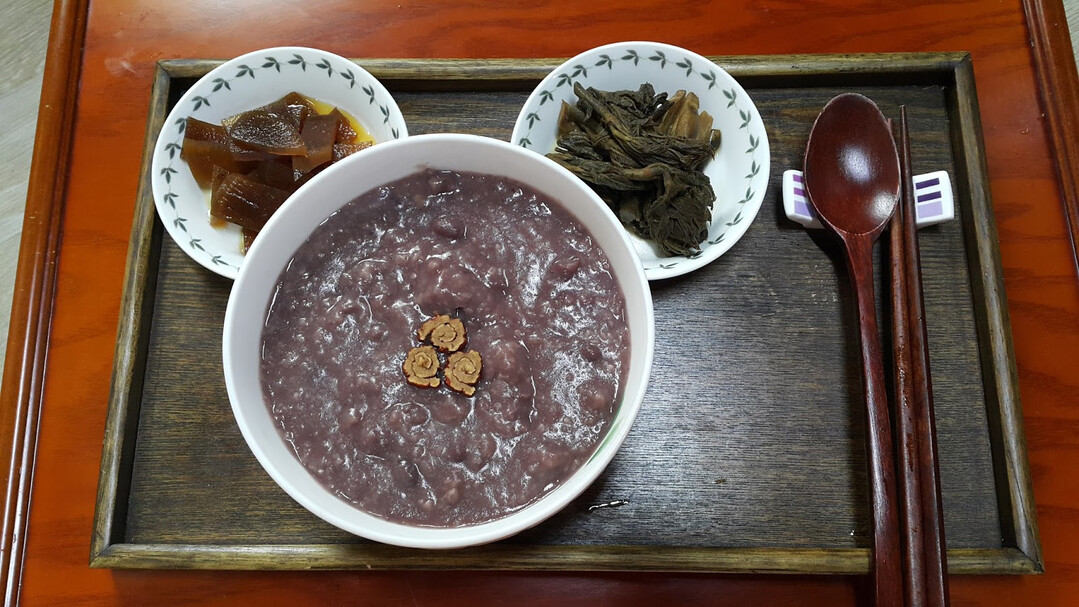
Seoul, South Korea – The winter solstice, the longest night of the year, is a time for traditions and customs around the world. In Korea, one such tradition is the consumption of red bean porridge, or patjuk. But why red beans, and why on this particular day?

The roots of this custom can be traced back centuries. According to the Joseon Wangjo Sillok (Annals of the Joseon Dynasty), the practice was initially adopted as a preventive measure against infectious diseases. The annals record a treatment method involving soaking red beans in a new cloth bag and placing it in a well. After three days, the beans would be retrieved and distributed among family members.

Later, folklore emerged involving a mythical figure named Gonggong, who was said to have a son who turned into an evil spirit that caused plagues. As Gonggong’s son had disliked red beans, people began to eat red bean porridge to ward off this evil spirit.

Confucian scholar Yi I, in his Seongho Jeonjip (Collected Works of Seongho), also mentioned the custom, describing how people would offer red bean porridge to their ancestors and smear it on their doors to ward off evil spirits.

The Science Behind the Tradition

The red bean, or pat, is believed to possess unique properties that make it a suitable food for the winter solstice. Harvested in the late autumn, the bean is said to draw in the warmth of the sun, helping to counteract the cold of winter. Traditional Korean medicine emphasized the importance of maintaining a warm body to ward off illness, and the red bean, with its warm properties, was seen as a way to boost the body's yang energy.

Modern science offers some support for these ancient beliefs. Studies have shown that maintaining a stable body temperature is crucial for immune function. When our body temperature drops, our immune system becomes less effective at fighting off pathogens. The warm, nourishing properties of red bean porridge may have helped our ancestors stay healthier during the cold winter months.

Beyond its warming properties, red beans are also known for their diuretic effects, which can help reduce swelling. In fact, the Joseon Dynasty's King Sukjong was said to have used red beans as a treatment for edema.

A Symbol of Hope and Renewal

The custom of eating red bean porridge on the winter solstice is more than just a culinary tradition. It is a deeply rooted belief in the power of food to heal and protect. By consuming red bean porridge, Koreans were not only nourishing their bodies but also expressing their hope for a healthy and prosperous new year.

The act of smearing red bean paste on doors and offering it to ancestors was symbolic of warding off evil spirits and seeking blessings for the coming year. It was a way of connecting with the past and looking forward to the future.

[Copyright (c) Global Economic Times. All Rights Reserved.]
  • #globaleconomictimes
  • #koyongchul
  • #cherrylee
  • #seoulkorea
  • #periodicoeconomico
  • #글로벌이코노믹타임즈
  • #GET
  • #GETtv
  • #liderdel
Hwang Sujin Reporter

Popular articles

  • Massive Fire Engulfs E-Land Fashion Logistics Center in Cheonan, Causing Major Shipping Delays

  • Kimchi's Day Celebrated with a Glimpse into its Future

  • UNIQLO's Collaboration Strategy: Designer Fashion Meets Mass Appeal

I like it
Share
  • Facebook
  • X
  • Kakaotalk
  • LINE
  • BAND
  • NAVER
  • https://www.globaleconomictimes.kr/article/1065591975129383 Copy URL copied.
Comments >

Comments 0

Weekly Hot Issue

  • ZTE Faces Massive US Fine Over Alleged Foreign Bribery; Potential Settlement Could Exceed $2 Billion
  • Mexico Hikes Tariffs on 'Strategic Goods' from South Korea, China, and Other Non-FTA Nations
  • From Air to Plastic: A Female Scientist's Carbon Neutral Revolution
  • Rising Resentment: Uncensored Voices Expose China's Surveillance State
  • US Proposes Mandatory Social Media Disclosure for ESTA and Visa Applicants, Citing Enhanced Security
  • Concert Halls Struggle to Silence 'Phone Nuisance' Amidst Growing Concerns Over Performance Etiquette

Most Viewed

1
Korean War Ally, Reborn as an 'Economic Alliance' Across 70 Years: Chuncheon's 'Path of Reciprocity,' a Strategic
2
A Garden Where the City's Rhythm Stops: Dongdaemun's 'Cherry Garden', Cooking Consideration and Diversity
3
The Sudden Halt of Ayumi Hamasaki's Shanghai Concert: Unpacking the Rising Sino-Japanese Tensions
4
Alliance in a Dilemma: The Fallout of Trump's Advice to Takaichi Not to 'Provoke Taiwan' 
5
The Paradox of the 'Juvenile Offender' (Chokbeop Sonyeon): Impunity or Unfinished Rehabilitation?
광고문의
임시1
임시3
임시2

Hot Issue

Mexico Hikes Tariffs on 'Strategic Goods' from South Korea, China, and Other Non-FTA Nations

Tech Tensions Flare: DeepSeek Allegedly Smuggles Banned NVIDIA Blackwell Chips for New AI Model

Netflix Stock Plummets 10% on Credit Downgrade Fears Following Blockbuster Warner Bros. Acquisition

LG Innotek Develops Eco-Friendly Next-Gen Smart IC Substrate, Reducing Carbon Emissions by Half

Let’s recycle the old blankets in Jeju Island’s closet instead of incinerating them.

Global Economic Times
korocamia@naver.com
CEO : LEE YEON-SIL
Publisher : KO YONG-CHUL
Registration number : Seoul, A55681
Registration Date : 2024-10-24
Youth Protection Manager: KO YONG-CHUL
Singapore Headquarters
5A Woodlands Road #11-34 The Tennery. S'677728
Korean Branch
Phone : +82(0)10 4724 5264
#304, 6 Nonhyeon-ro 111-gil, Gangnam-gu, Seoul
Copyright © Global Economic Times All Rights Reserved
  • 에이펙2025
  • APEC2025가이드북TV
  • 독도는우리땅
Search
Category
  • All articles
  • Synthesis
  • World
  • Business
  • Industry
  • ICT
  • Distribution Economy
  • Well+Being
  • Travel
  • Eco-News
  • Education
  • Korean Wave News
  • Opinion
  • Arts&Culture
  • Sports
  • People & Life
  • Column 
    • 전체
    • Cho Kijo Column
    • Lee Yeon-sil Column
    • Ko Yong-chul Column
    • Cherry Garden Story
  • Photo News
  • New Book Guide
  • Multicultural News
  • Jobs & Workers