![[등록] 2026-09-01 15:48:31](/support/_updata/banner2/tl181982910_6749.png)


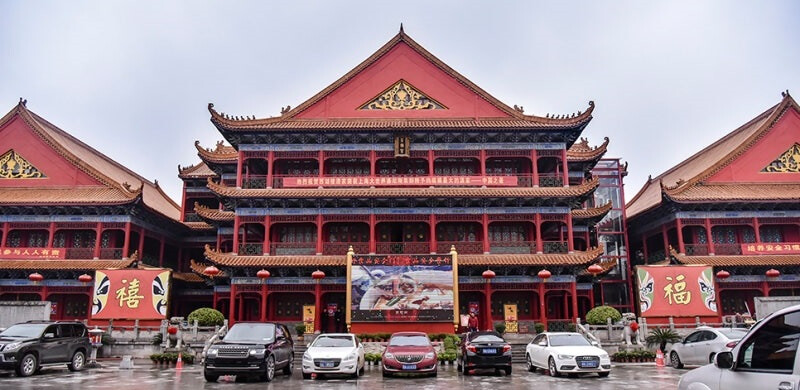
In China, there's a saying, "The people regard food as their heaven" (民以食爲天), indicating that eating is not just about sustenance but a crucial element symbolizing social status and economic power. Especially since the opening up, with economic development, high-end restaurants have become a core stage for business for various reasons, including building business trust, emphasizing face (체면), and symbolizing important appointments. At one point, it was difficult to even book a room in a famous restaurant without "guanxi" (關係, connections). However, recent testimonies from those who have traveled to China indicate that about half of the high-end restaurants in major cities like Beijing and Shanghai are closing down, leading to a wave of closures. This serves as an important window into China's economic situation.
Dual Hardship: Oversupply and Consumption Contraction
The massive collapse of high-end restaurants is primarily attributed to a decline in consumption due to the economic downturn. As China's economic growth slows and uncertainty grows, consumers are reducing their dining out, with a sharp decrease in visits to high-end restaurants in particular. According to a statement by the National Bureau of Statistics of China in May 2024, the total retail sales of consumer goods in April increased by only 2.3% year-on-year, significantly lower than the expected 3.8%, indicating continued weak consumption.
In addition, the increasing burden of fixed costs such as rent, labor costs, and material costs further exacerbates the profitability of high-end restaurants. The sharp rise in labor costs, in particular, has worsened management difficulties, causing even Michelin-starred restaurants, famous franchises, and traditional brand restaurants to face closures. This has created a paradoxical situation where "they die if they lower prices, and they die if they don't."
Furthermore, the sharp decline in foreign tourists has dealt a fatal blow to high-end restaurant sales. China's strict lockdown policies after the COVID-19 pandemic left a negative impression on the international community, and the deepening U.S.-China trade tensions, the implementation of the Anti-Espionage Law, and widespread facial recognition data collection have led to a drastic reduction in foreign visits to China. According to data from the Chinese Ministry of Culture and Tourism, the number of foreign tourists visiting China in the first half of 2023 was 840,000, significantly lower than the 12 million in the first half of 2019, before the pandemic. The decrease in foreign tourists has eliminated peak season sales for high-end restaurants, becoming a major factor in deteriorating profitability.
Reflection of Policy Changes and Structural Economic Problems
The collapse of high-end restaurants is widely analyzed as a result of structural economic problems that go beyond simple consumption contraction. One of the most direct causes is the government's anti-corruption policy. The anti-corruption campaign, which began after President Xi Jinping took power in 2012, strictly controlled the lavish entertainment culture of public officials, introducing regulations such as a prior approval system for entering high-end restaurants. This led to a sharp drop in the consumption of high-end liquors like Maotai, significantly impacting high-end restaurant sales. Now, it's rare to find expensive food or alcohol at dining tables where Chinese public officials are present.
Moreover, the deteriorating profitability of Chinese companies has also contributed to the decline in high-end restaurant sales. Due to the slowdown in economic growth, companies have significantly reduced the scope and limits of what can be paid with company cards, which has curtailed the business demand that was a primary customer base for high-end restaurants.
Amidst these changes, Chinese local governments and state-owned enterprises are converting some of their in-house cafeterias to entertain external guests. The menus at these dining facilities are modest and inexpensive, and alcohol is not served at the table except in special cases. Furthermore, as the general public prefers affordable restaurants with good value for money, a significant number of high-end restaurants are attempting to transform into mid-to-low-priced establishments with drastically reduced prices, directly reflecting the current social and economic situation in China.
In conclusion, the collapse of China's high-end restaurants is more than just a crisis in the catering industry; it is a clear manifestation of structural economic problems in China, including the real estate market slump, depressed consumer sentiment, the crisis of the middle class, and youth unemployment. Given the increasing uncertainty with high inflation, economic recession, and weak consumer sentiment, the exodus of high-end restaurants in China is expected to continue for the foreseeable future. This can be interpreted as another indicator suggesting the possibility of a hard landing for the Chinese economy.
[Copyright (c) Global Economic Times. All Rights Reserved.]