![[등록] 2026-09-01 15:48:31](/support/_updata/banner2/tl181982910_6749.png)


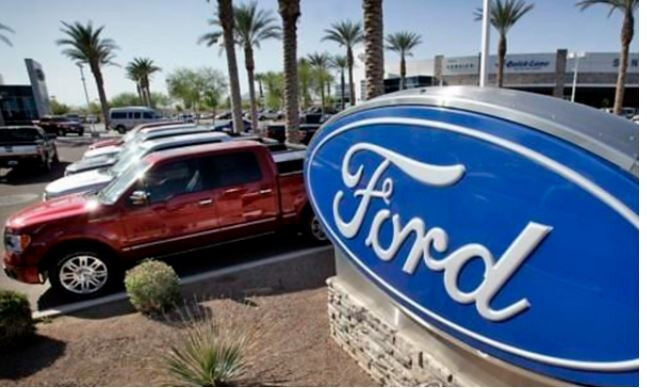
U.S. automaker Ford has increased prices on key models produced in Mexico due to the impact of the import tariff policy imposed by the former U.S. President. This concrete action comes just over a month after the Trump administration levied a 25% tariff on imported vehicles. As Ford, which has a high proportion of domestic production and relatively low import reliance, preemptively raised prices, it is expected to significantly influence the pricing policies of other automakers. In particular, Ford's decision is amplifying concerns that the realization of tariff barriers could trigger a chain reaction across the automotive market, including rising new car prices and even fluctuations in used car prices.
According to a Reuters report on the 7th (local time), citing multiple sources, Ford recently officially notified U.S. dealers of its plan to increase prices on three major models produced at its Mexican plant: the Mustang Mach-E electric SUV, the Maverick pickup truck, and the Bronco Sport. The report indicates that the price increase could be up to $2,000 (approximately 2.8 million Korean Won), and will apply to vehicles produced after May 2nd. These vehicles are expected to begin arriving in the U.S. market in late June.
Ford explained that this price adjustment reflects the usual annual price changes, as well as some of the increased cost burden resulting from the import tariffs that took effect on May 3rd. A Ford representative told Reuters, "It is true that some tariff burden has been reflected in the price, but we have not passed on the entire cost to consumers." However, this price increase can be interpreted as a direct example of how the U.S. government's intensified protectionist stance is leading to higher consumer prices, raising concerns in the market.
Of particular note is the localization rate of parts for the three models whose prices are being increased. According to data from the National Highway Traffic Safety Administration (NHTSA), the proportion of Mexican-made parts used in these vehicles all exceeds 60%. This suggests that Ford is feeling a significant cost burden from the tariffs, even though the United States-Mexico-Canada Agreement (USMCA) stipulates that the 25% auto tariff can only be imposed on non-U.S. content. Previously, Ford stated during its first-quarter earnings call that it anticipates approximately $2.5 billion in additional costs this year due to various tariffs. This indicates that Ford has made the unavoidable choice of raising prices to defend against a short-term decline in profitability.
Ford's decision to raise prices is even more significant when contrasted with the actions of its competitors. Currently, most automakers in the U.S. are focusing on clearing existing inventory and are largely refraining from raising prices. This is interpreted as a strategy to avoid weakening consumer sentiment amid the uncertainty of tariff impositions. In this situation, Ford, which has a domestic production share of over 80% and is relatively less reliant on imports compared to its competitors, is the first to signal a price increase. This increases the likelihood that other major automakers such as General Motors (GM) and Stellantis will also be forced to deliberate on the timing and extent of future price increases. Industry experts predict that Ford's decision will act as a crucial variable in the pricing decisions of other companies, and warn that a domino effect of new car price increases could soon emerge across the U.S. automotive market.
Meanwhile, as signs emerge that the tariff-induced headwind of new car price increases is becoming a reality, the U.S. used car market is also showing signs of instability. The Manheim Used Vehicle Value Index, calculated by Cox Automotive, a leading U.S. automotive market research firm, based on the results of used car auctions, rose by 4.9% year-on-year and 2.7% month-on-month in April. This is interpreted as a result of used car dealers preemptively raising wholesale prices in anticipation of increased demand for used cars due to rising new car prices and the subsequent increase in retail prices. Generally, used car prices tend to lag behind changes in new car prices, but this unusual phenomenon of wholesale used car prices rising before new car price increases indicates the instability of the automotive market due to tariffs.
Experts warn that if the import tariff policy of the former President persists in the long term, it could have serious negative impacts not only on the U.S. automotive market but also on the global automotive industry as a whole. Rising new car prices could increase the financial burden on consumers, leading to a decrease in car sales, which in turn could lead to a decline in the profitability of automakers and a recession in related industries. Furthermore, rising used car prices could raise the barrier to vehicle ownership for low-income individuals, exacerbating social inequality. Moreover, if other countries, including Mexico, retaliate with their own tariffs against the U.S. tariffs, the global trade order could be undermined, and disruptions could occur in the automotive industry's supply chain.
In conclusion, Ford's price increase on vehicles produced in Mexico is a significant event that visualizes the direct impact of the former President's import tariff policy on the U.S. automotive market. This could be just the beginning, and its impact is noteworthy as it could trigger price policy changes by other automakers and further price increases in the used car market. The future direction of the U.S. government's trade policy, the response strategies of the automotive industry, and consumer reactions will significantly influence the future landscape of the automotive market.
[Copyright (c) Global Economic Times. All Rights Reserved.]