• 2026.11.27 (Fri)
  • All articles
  • LOGIN
  • JOIN
Global Economic Times
한인동포뉴스(상단)
  • Synthesis
  • World
  • Business
  • Industry
  • ICT
  • Distribution Economy
  • Well+Being
    • Pet Life
    • Halal Horizon
  • Travel
  • Eco-News
  • Education
  • Korean Wave News
  • Opinion
  • Arts&Culture
  • Sports
  • People & Life
    • International Student Report
    • With Ambassador
  • Column
    • Cho Kijo Column
    • Cherry Garden Story
    • Ko Yong-chul Column
    • Kim Bong-seon's Photo Column
    • Kim Seul-Ong Column
    • Lee Yeon-sil Column
    • Professor Lee Soo-young’s Life Essays
  • Photo News
  • New Book Guide
MENU
 
Home > World

XPeng CEO Flags Major Hurdles for Humanoid Robots Ahead of 2026 Mass Production

Hee Chan Kim Reporter / Updated : 2026-11-27 15:03:05
  • -
  • +
  • Print

GUANGZHOU, China — Despite rapid advancements in China’s robotics sector, humanoid robots remain years away from widespread deployment in homes and factories, according to He Xiaopeng, CEO of Chinese electric vehicle and tech company XPeng.

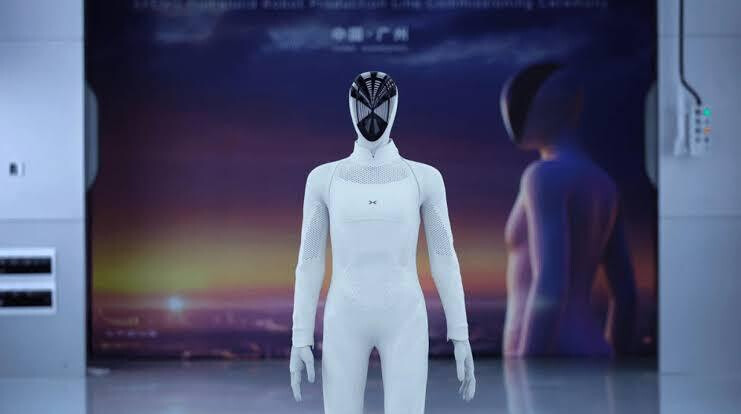
Speaking to reporters following XPeng’s AI Day event at South China University of Technology on November 25, He offered a candid assessment of the industry's current technological bottlenecks. While XPeng plans to begin hardware mass production for its next-generation humanoid robot, "IRON," in January, the executive noted that the technology is still in its infancy.

"Right now, it is still at the stage of walking and talking," He said, explaining that while engineers have built numerous standalone capabilities, integrating them into a seamless, autonomous workflow remains a major hurdle.

The Economics of Deployment

For humanoids to transition from showroom novelties to commercial staples, He emphasized that return on investment (ROI) and cost reduction are paramount. Drawing from his transition from software to automotive manufacturing, he pointed out that cutting production costs by 20 to 30 percent is far more critical for mass adoption than incremental feature upgrades.

"If you buy one robot, and it requires several people to manage it, and there aren't many tasks the robot can do, the ROI doesn't add up," He stated.

To make IRON viable for real-world environments like retail stores, offices, and lobbies, XPeng significantly simplified the robot's exterior design over the past year—moving away from the pronounced, human-like curves seen in earlier prototypes to prioritize manufacturability and future hardware upgrades.

20 Times Harder Than Cars

Industry reports indicate that several Chinese manufacturers have recently scaled back factory deployment targets due to high unit costs and durability issues, particularly with intricate components like robotic hands.

He echoed these challenges, estimating that developing a general-purpose humanoid is "20 times harder than developing cars." Unlike vehicles that operate within strict road rules, humanoids must navigate unpredictable environments and manipulate a vast array of tools. XPeng aims to tackle this starting in the first quarter of next year by pairing its mass-produced hardware with upgraded AI software to unify the robot's functions.

Safety First, Mass Adoption by 2029

Comparing the current state of robotics to the 2007 debut of the first iPhone, He noted that mainstream adoption will require multiple generational leaps. He projected that humanoids will not broadly enter workplaces and households until 2029 or later.

Residential deployment faces the strictest barriers due to safety concerns around children and the elderly. To improve social acceptance, XPeng equipped IRON with soft-touch skin and calibrated its movements to be deliberately slow and non-threatening. Even so, He expects early home models to handle only basic chores rather than complex tasks like cooking or caregiving, following a gradual rollout from commercial spaces to factories, and finally into homes.

Despite near-term growing pains, He remains bullish on the sector's long-term trajectory. "There is no doubt that the robotics industry will become a massive industry surpassing automobiles," he said. "If we can build them properly, enormous demand will arise."

[Copyright (c) Global Economic Times. All Rights Reserved.]

  • #Cherry Garden
  • #HalalFood
  • #Halal
  • #Petlife
  • #Cats
  • #Dogs
  • #Halalhorizone
  • #Hormuz Impasse
  • #Joseon
  • #globaleconomicti
Hee Chan Kim Reporter

Popular articles

  • Andong Launches Inaugural Heritage Film Festival to Blend Local Culture with CinemaA nine-day celebration kicks off on November 7, featuring independent films, cultural exhibitions, and policy forums.

  • How about a World Heritage Kimchi-making trip this weekend? The Pyeongchang Alpine Kimchi Festival runs until November 16.

  • Busan City to Host Industrial Site Investment Briefing for Global Investors Participating in the "2026 Invest Korea Summit"

I like it
Share
  • Facebook
  • X
  • Kakaotalk
  • LINE
  • BAND
  • NAVER
  • https://www.globaleconomictimes.kr/article/1065592932063866 Copy URL copied.
Comments >

Comments 0

Weekly Hot Issue

  • Beijing Rolls Out 2030 Blueprint to Expand National Defense Education Across Society
  • Dan Carney, Co-Founder Who Turned a $600 Loan into Pizza Hut Empire, Dies at 95
  • New York City Lawmakers Propose Ban on Boiling Live Lobsters, Sparking Industry Pushback
  • The Shifting Tide of Beauty Education: How K-Beauty is Reshaping Japan’s Classrooms
  • Soaring Costs Reshape American Thanksgiving Traditions as Families Downsize Holiday Feasts
  • Washington and Nvidia Tighten the Screws on China’s Overseas AI Compute Loopholes

Most Viewed

1
Exercise Beats Diet in Extending Lifespan, Major Review Finds
2
South Korean Burger Chain Lotteria Expands Singapore Footprint with Halal Certification and New Teriyaki Lineup
3
AI Semiconductor Stocks Plummet: Philadelphia Index Drops 5.28% and Micron Plunges 7.59% Amid Executive Shakeup and Export Restrictions
4
"Stay Out, Get Paid, or Have Police Stay With You": Shenzhen Imposes Strict Security Ahead of APEC Summit
5
Taiwan Bans Short-Selling Below Previous Close Starting Nov. 23, Raises Margin Ratio to 150%
체리가든 스토리
nutri huevos
로타리
동포저널

Hot Issue

Washington and Nvidia Tighten the Screws on China’s Overseas AI Compute Loopholes

Soaring Costs Reshape American Thanksgiving Traditions as Families Downsize Holiday Feasts

Hyundai Unveils Mercury-Inspired 'Mercury Concept' in World Premiere

Fashion Runway Show 2026

Let’s recycle the old blankets in Jeju Island’s closet instead of incinerating them.

Global Economic Times
korocamia@naver.com
CEO : LEE YEON-SIL
Publisher & Editor : KO YONG-CHUL
Registration number : Seoul, A55681
Registration Date : 2024-10-24
Youth Protection Manager: KO YONG-CHUL
Singapore Headquarters
5A Woodlands Road #11-34 The Tennery. S'677728
Korean Branch
Phone : +82(0)10 4724 5264
#304, 6 Nonhyeon-ro 111-gil, Gangnam-gu, Seoul
Copyright © Global Economic Times All Rights Reserved
  • News K
  • 반달곰 프로젝트
  • 광고문의
Search
Category
  • All articles
  • Synthesis
  • World
  • Business
  • Industry
  • ICT
  • Distribution Economy
  • Well+Being 
    • 전체
    • Pet Life
    • Halal Horizon
  • Travel
  • Eco-News
  • Education
  • Korean Wave News
  • Opinion
  • Arts&Culture
  • Sports
  • People & Life 
    • 전체
    • International Student Report
    • With Ambassador
  • Column 
    • 전체
    • Cho Kijo Column
    • Cherry Garden Story
    • Ko Yong-chul Column
    • Kim Bong-seon's Photo Column
    • Kim Seul-Ong Column
    • Lee Yeon-sil Column
    • Professor Lee Soo-young’s Life Essays
  • Photo News
  • New Book Guide
  • Overseas Koreans
  • Multicultural News