• 2026.11.27 (Fri)
  • All articles
  • LOGIN
  • JOIN
Global Economic Times
한인동포뉴스(상단)
  • Synthesis
  • World
  • Business
  • Industry
  • ICT
  • Distribution Economy
  • Well+Being
    • Pet Life
    • Halal Horizon
  • Travel
  • Eco-News
  • Education
  • Korean Wave News
  • Opinion
  • Arts&Culture
  • Sports
  • People & Life
    • International Student Report
    • With Ambassador
  • Column
    • Cho Kijo Column
    • Cherry Garden Story
    • Ko Yong-chul Column
    • Kim Bong-seon's Photo Column
    • Kim Seul-Ong Column
    • Lee Yeon-sil Column
    • Professor Lee Soo-young’s Life Essays
  • Photo News
  • New Book Guide
MENU
 
Home > World

Washington and Nvidia Tighten the Screws on China’s Overseas AI Compute Loopholes

Ana Fernanda Reporter / Updated : 2026-11-27 14:51:40
  • -
  • +
  • Print


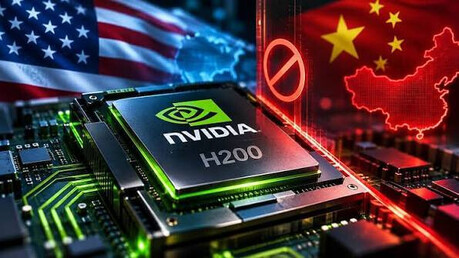
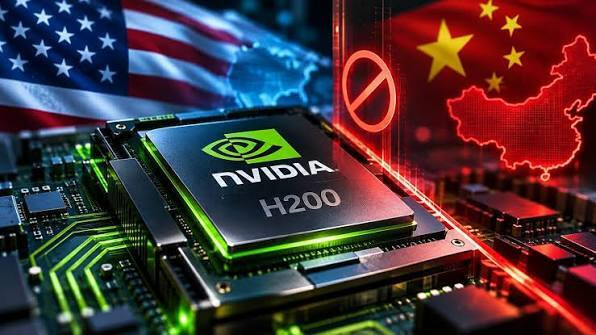
New U.S. export rules and aggressive supply chain crackdowns by Nvidia distributors are rapidly shutting down the offshore cloud workarounds that have fueled China’s artificial intelligence development.

For months, Chinese tech firms have bypassed Washington’s direct chip embargoes by renting computing capacity from data centers abroad. According to recent findings by the Institute for Progress (IFP), roughly 24% of China’s total AI compute relies on remote access to Nvidia hardware hosted outside the country—a figure nearly matching the estimated 22% derived from illicit chip smuggling. Combined, these gray-market channels have supplied almost half of China's AI processing power.

That window is now closing on two fronts. New U.S. Department of Commerce regulations, which took effect on the 19th, require foreign data center operators to secure federal licenses before leasing significant Nvidia-powered compute to Chinese clients. Existing providers have been given a strict deadline until February next year to either obtain official authorization or sever ties with restricted Chinese firms.

Industry enforcement is moving even faster than federal mandates. Nvidia chip distributors have reportedly implemented a zero-tolerance policy, warning specialized AI cloud operators that leasing even a fraction of their capacity to Chinese companies will result in an immediate cutoff of hardware supplies. This marks a sharp escalation from Nvidia’s previous threshold, which only penalized partners allocating more than half of their GPU capacity to Chinese entities. Simultaneously, Nvidia has directed key server manufacturers, including Dell and Super Micro Computer (SMCI), to freeze shipments to Malaysia, Singapore, Thailand, and Indonesia.

The market impact has been swift. Within 24 hours of the Commerce Department's rule taking effect, Dubai-based data center developer DAMAC—a known compute provider for Alibaba—walked away from a $49 million land acquisition in Malaysia, forfeiting its deposit. Meanwhile, chip distributors are scrambling to offload excess GPU inventory originally earmarked for China-linked offshore facilities.

The sudden squeeze threatens to stall China’s AI product roadmap. Industry sources indicate that Zhipu AI’s upcoming flagship model, GLM-5.5, faces delays past the first quarter of next year. Rival startup Moonshot AI has similarly warned internally that a total severance from foreign compute could stretch its major model release cycles from six months to more than a year.

As Chinese firms are priced and regulated out of Southeast Asian and Middle Eastern data centers, analysts expect American tech giants to absorb the freed-up capacity. Observers note that only U.S. hyperscalers possess the capital and demand to fill the void left by Chinese buyers. With U.S. AI models currently estimated to hold a six-month lead over Chinese counterparts, trade experts suggest that even moderate enforcement of these new restrictions could decisively widen the technological divide.

[Copyright (c) Global Economic Times. All Rights Reserved.]

  • #Cherry Garden
  • #HalalFood
  • #Halal
  • #Petlife
  • #Cats
  • #Dogs
  • #Halalhorizone
  • #Hormuz Impasse
  • #Joseon
  • #globaleconomicti
Ana Fernanda Reporter

Popular articles

  • US Army Conducts Rare Temporary Burial Drills to Prepare for Worst-Case Large-Scale War Scenarios

  • "Stay Out, Get Paid, or Have Police Stay With You": Shenzhen Imposes Strict Security Ahead of APEC Summit

  • US Midterm Elections Complicate Trade Calculus... Persistent Uncertainty Over Tariffs and Investment

I like it
Share
  • Facebook
  • X
  • Kakaotalk
  • LINE
  • BAND
  • NAVER
  • https://www.globaleconomictimes.kr/article/1065592257847721 Copy URL copied.
Comments >

Comments 0

Weekly Hot Issue

  • Beijing Rolls Out 2030 Blueprint to Expand National Defense Education Across Society
  • Dan Carney, Co-Founder Who Turned a $600 Loan into Pizza Hut Empire, Dies at 95
  • XPeng CEO Flags Major Hurdles for Humanoid Robots Ahead of 2026 Mass Production
  • New York City Lawmakers Propose Ban on Boiling Live Lobsters, Sparking Industry Pushback
  • The Shifting Tide of Beauty Education: How K-Beauty is Reshaping Japan’s Classrooms
  • Soaring Costs Reshape American Thanksgiving Traditions as Families Downsize Holiday Feasts

Most Viewed

1
Exercise Beats Diet in Extending Lifespan, Major Review Finds
2
South Korean Burger Chain Lotteria Expands Singapore Footprint with Halal Certification and New Teriyaki Lineup
3
AI Semiconductor Stocks Plummet: Philadelphia Index Drops 5.28% and Micron Plunges 7.59% Amid Executive Shakeup and Export Restrictions
4
"Stay Out, Get Paid, or Have Police Stay With You": Shenzhen Imposes Strict Security Ahead of APEC Summit
5
Taiwan Bans Short-Selling Below Previous Close Starting Nov. 23, Raises Margin Ratio to 150%
체리가든 스토리
nutri huevos
로타리
동포저널

Hot Issue

Washington and Nvidia Tighten the Screws on China’s Overseas AI Compute Loopholes

Soaring Costs Reshape American Thanksgiving Traditions as Families Downsize Holiday Feasts

Hyundai Unveils Mercury-Inspired 'Mercury Concept' in World Premiere

Fashion Runway Show 2026

Let’s recycle the old blankets in Jeju Island’s closet instead of incinerating them.

Global Economic Times
korocamia@naver.com
CEO : LEE YEON-SIL
Publisher & Editor : KO YONG-CHUL
Registration number : Seoul, A55681
Registration Date : 2024-10-24
Youth Protection Manager: KO YONG-CHUL
Singapore Headquarters
5A Woodlands Road #11-34 The Tennery. S'677728
Korean Branch
Phone : +82(0)10 4724 5264
#304, 6 Nonhyeon-ro 111-gil, Gangnam-gu, Seoul
Copyright © Global Economic Times All Rights Reserved
  • News K
  • 반달곰 프로젝트
  • 광고문의
Search
Category
  • All articles
  • Synthesis
  • World
  • Business
  • Industry
  • ICT
  • Distribution Economy
  • Well+Being 
    • 전체
    • Pet Life
    • Halal Horizon
  • Travel
  • Eco-News
  • Education
  • Korean Wave News
  • Opinion
  • Arts&Culture
  • Sports
  • People & Life 
    • 전체
    • International Student Report
    • With Ambassador
  • Column 
    • 전체
    • Cho Kijo Column
    • Cherry Garden Story
    • Ko Yong-chul Column
    • Kim Bong-seon's Photo Column
    • Kim Seul-Ong Column
    • Lee Yeon-sil Column
    • Professor Lee Soo-young’s Life Essays
  • Photo News
  • New Book Guide
  • Overseas Koreans
  • Multicultural News