![[등록] 2026-09-01 15:48:31](/support/_updata/banner2/tl181982910_6749.png)


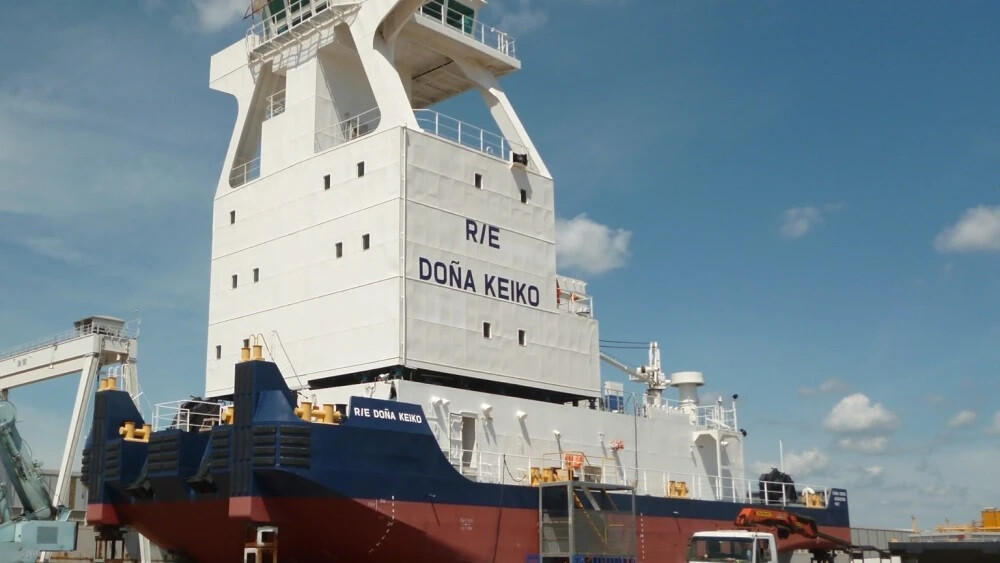
A Paraguayan government delegation recently met with executives from Tsuneishi, a leading Japanese shipyard, as part of their Asia tour to discuss the possibility of the company's re-entry into Paraguay. The Tsuneishi Group once built barges in Paraguay for a decade, and it is reported that they expressed their intention to return to Paraguay during this meeting.
The Tsuneishi Group's connection with South America dates back to 1956, when Japan was undergoing post-war reconstruction. In Paraguay, the company operated a barge manufacturing business for approximately 10 years, from 2011 to 2021, but suspended its local operations in 2021. Javier Giménez, the Minister of Industry and Commerce, stated in an interview with Última Hora (ÚH) that the government delegation met with Japanese business leaders during their visit to Asia, and during this meeting, Tsuneishi executives expressed interest in returning to Paraguay.
Minister Giménez added, "The return of the Tsuneishi Group, a company specializing in barge manufacturing, aligns with the current government's policy of promoting the utilization of waterways. Discussions are currently underway regarding the return of this company to build the barges that will be needed in Paraguay's waterways in the future."
Future Outlook for Paraguay's Naval Industry
The potential of Paraguay's naval industry is significant and is expected to have a substantial ripple effect on the national economy. According to a study jointly conducted by the Economic Research Center (CEE) under the Paraguayan Industrial Union (UIP) and the Paraguayan Naval Industry Chamber (CINAVAL), the multiplier effect of the naval industry could generate an economic impact of over $793 million in total over the next 20 years. This report highlights the sector's importance to the Paraguayan economy.
Furthermore, the report points out that Paraguay needs to add approximately 268 barges annually to meet anticipated demand and replace aging barges. This means increasing the current barge inventory by 2,500 units by 2041. The report emphasizes that while the currently installed production capacity of Paraguay's metal industry is substantial, and despite having over 50% idle capacity today, new production investments are still needed to meet this demand.
Data indicates that the construction of 200 barges can create over 2,000 direct and indirect jobs, and if annual barge production reaches 350 units, the total economic impact could exceed $1 billion. This is considered a significant driving force for the economic revitalization of landlocked Paraguay.
Paraguay's Formidable Waterway Transportation Capacity
Paraguay possesses the third-largest fleet in South America. Approximately 2,800 vessels flying the Paraguayan flag and operating on its waterways are a vital pillar of the local economy. The Paraguayan Shipowners and Maritime Center (Cafym) estimates that over 73% of Paraguay's economic activity is related to imports and exports through the Paraguay-Paraná Waterway (Hidrovía Paraguay-Paraná). This waterway handles 80% of Paraguay's exports and imports, playing an essential role in the nation's access to global markets.
The Paraguayan fleet employs approximately 7,000 crew members, with around 3,000 people engaged in related work. Cafym estimates that about 50,000 people are employed in professions related to Paraguay's shipping logistics industry. Additionally, private sector data indicates that industrial investments in various parts of the logistics chain amount to approximately $3 billion.
Despite recent conflicts with the Argentine and Paraguayan governments regarding toll charges on the Paraguay-Paraná Waterway, it remains a strategically important means of trade for Paraguay. The efficient operation and investment in this waterway will be key for Paraguay to overcome its geographical limitations as a landlocked country and sustain economic growth. The return of major shipyards like Tsuneishi is expected to inject new vitality into the development of this maritime industry.
[Copyright (c) Global Economic Times. All Rights Reserved.]