![[등록] 2026-09-01 15:48:31](/support/_updata/banner2/tl181982910_6749.png)


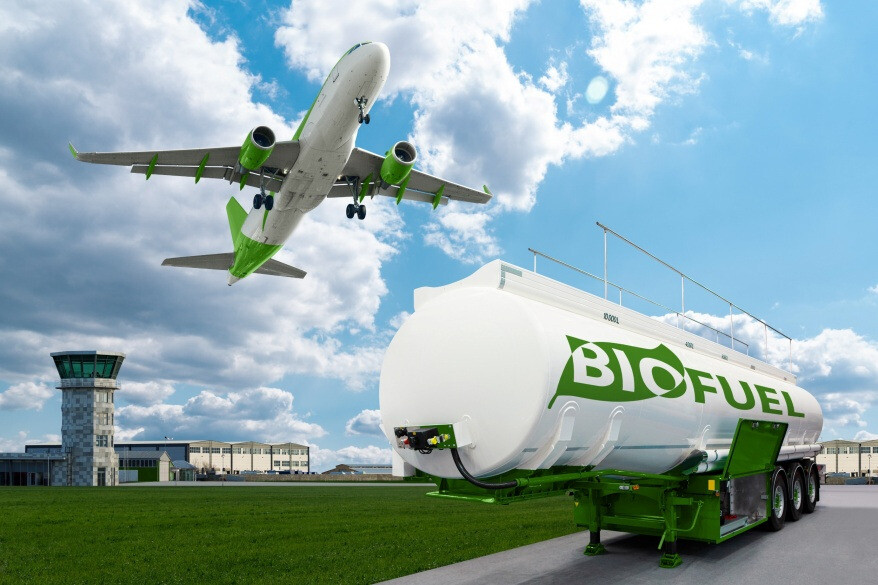
The global aviation industry, a vital artery of modern connectivity facilitating approximately 4 billion passenger journeys annually with projections indicating a doubling by 2050, faces mounting pressure to address its significant environmental footprint. South Korea, a powerhouse in global air transport ranking ninth worldwide and operating 15 civil airports anchored by the Northeast Asian hub of Incheon International Airport, stands at a critical juncture to leverage its aviation prowess in the burgeoning sustainable aviation fuel (SAF) market.
Concerns regarding the environmental impact of aviation are escalating, with conventional jet fuel accounting for approximately 2.5% of global carbon dioxide emissions. The impact is further amplified by the high altitudes at which aircraft operate, resulting in a greenhouse effect estimated to be six times greater than ground-level emissions. This has spurred the exploration of alternative propulsion technologies such as electric and hydrogen-electric aircraft. However, current limitations hinder their widespread adoption, with electric aircraft constrained by battery weight affecting long-haul flights and hydrogen-electric technology still in its nascent stages, primarily suited for very short distances due to underdeveloped hydrogen refueling infrastructure.
To illustrate the scale of fuel consumption, a Boeing B777-300ER, a long-range wide-body airliner with a maximum takeoff weight of 397 tons, can carry around 216,000 liters of jet fuel – equivalent to the fuel capacity of 3,000 mid-sized (2000cc) cars – enabling it to fly up to 13,000 kilometers. These international flights typically cruise at altitudes of 10 to 12 kilometers where the ambient temperature hovers around -40°C. This high cruising altitude is preferred to minimize the impact of weather disturbances and reduce air resistance, thereby enhancing fuel efficiency. Jet fuel used at these altitudes must possess specific properties, including electrical conductivity to dissipate static charges and additives like icing inhibitors to prevent the formation of ice from trace amounts of water at sub-zero temperatures, ensuring operational safety and efficiency.
The aviation fuel landscape is broadly divided into aviation gasoline (avgas) for piston-engine aircraft, primarily smaller planes operating at lower altitudes, and aviation turbine fuel (jet fuel), predominantly kerosene-based, used by large aircraft for intercontinental travel.
In response to growing environmental imperatives and the urgent need to mitigate greenhouse gas emissions, the International Civil Aviation Organization (ICAO) will mandate the Carbon Offsetting and Reduction Scheme for International Aviation (CORSIA) for its 193 member states starting in 2027. CORSIA aims to freeze international aviation emissions at 2019 levels, requiring airlines to offset any emissions exceeding this baseline by purchasing carbon credits. South Korea has voluntarily participated in CORSIA and has further solidified its commitment by enacting the ‘International Aviation Carbon Act’ in February 2024 to prepare for the mandatory phase. This legislation designates airlines operating aircraft with a maximum takeoff weight exceeding 5.7 tons and generating over 10,000 tons of carbon emissions from international flights as ‘implementation obligated parties.’ Currently, eight South Korean airlines, including Korean Air and Asiana Airlines, fall under this category.
The most pragmatic near-term solution for the aviation industry to curtail its carbon footprint lies in the production and adoption of sustainable aviation fuels (SAF). A significant advantage of SAF is its compatibility with existing aircraft engines and fuel infrastructure, allowing for blending with conventional jet fuel without requiring substantial modifications to storage and distribution networks.
SAF is derived from sustainable sources such as used cooking oil, animal fats, microalgae, and forestry residues. While the combustion of SAF still releases CO2, these feedstocks absorb CO2 during their growth cycle, resulting in a net reduction of greenhouse gas emissions on a lifecycle basis, a crucial factor in emissions accounting and sustainability certifications.
Recognizing the urgency of transitioning to cleaner fuels, several regions and nations are implementing ambitious SAF mandates. The European Union (EU) will require all departing flights from European airports to use a minimum of 2% SAF starting in 2025, with progressively increasing targets: 6% by 2030, 20% by 2035, and a substantial 70% by 2050. Japan and the United Kingdom have set a target of 10% SAF adoption by 2030, while Singapore’s Changi Airport will mandate 1% SAF blending from 2026. The United States has outlined an ambitious goal to produce 3 billion gallons of SAF annually by 2030 and 35 billion gallons by 2050, aiming to fully replace conventional jet fuel with SAF to meet domestic aviation demand.
South Korea has already taken significant steps in this direction. A collaborative effort involving domestic airlines and refineries successfully conducted SAF blending (2-4%) trials on Incheon-Los Angeles routes, demonstrating the operational safety and viability of SAF in real-world flight conditions. Building upon this success, the finalization of legal and regulatory frameworks to support the widespread adoption of SAF domestically will position South Korea to become a global leader in the SAF market, leveraging its existing status as a major exporter of conventional jet fuel.
The transition to SAF in the aviation sector presents a significant opportunity for South Korea to not only meet its national greenhouse gas reduction targets but also to foster the growth of a new and strategically important industry. By embracing SAF, South Korea can contribute significantly to global decarbonization efforts while simultaneously bolstering its economic competitiveness in the evolving landscape of sustainable transportation. The nation’s established aviation infrastructure, coupled with proactive government policies and industry collaboration, provides a strong foundation for South Korea to emerge as a key player in the global SAF market, paving the way for a greener and more sustainable future for air travel.
[Copyright (c) Global Economic Times. All Rights Reserved.]