

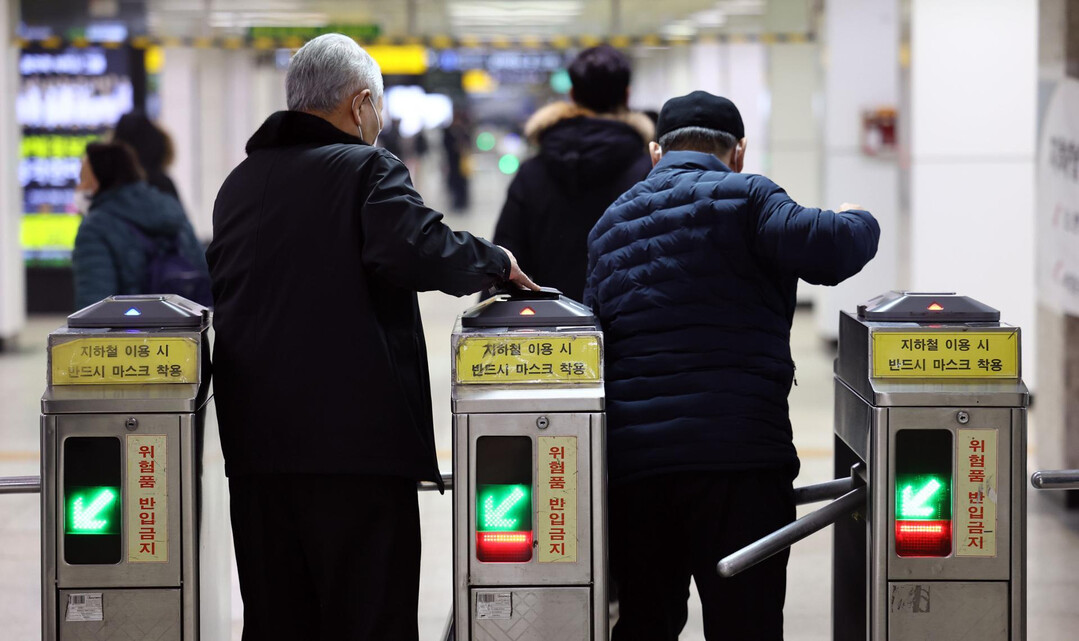
SEOUL — Roughly one-third of South Korea’s population now falls into the category of the "transportation-vulnerable," driven largely by the nation’s rapidly aging demographics, according to new government data released on Thursday.
According to the 2025 Survey on Mobility Convenience for the Transportation-Vulnerable published by the Ministry of Land, Infrastructure and Transport (MOLIT), the number of mobility-disadvantaged citizens reached 16.46 million at the end of last year. This accounts for 32.2 percent of the country's total population of 51.12 million, marking an increase of approximately 330,000 people from 16.13 million (31.6 percent) in 2024.
South Korean law defines the transportation-vulnerable as individuals who face challenges in daily mobility, including seniors aged 65 and older, people with disabilities, pregnant women, guardians accompanying infants under the age of 7, and children aged 12 and under. MOLIT conducts this sample survey annually, alternating between eight metropolitan cities and nine provinces.
Aging Population Drives the Surge
The primary driver behind the overall increase is the growing elderly population. The number of citizens aged 65 and over rose by 584,000 (5.7 percent) over the past year to reach 10.84 million. Over the same period, the number of pregnant women edged up by 16,000, while people with disabilities numbered 2.62 million. Conversely, reflecting low birthrates, the number of children and guardians with infants fell by 125,000 and 101,000, respectively.
Low-Floor Bus Adoption Grows, Regional Gaps Remain
Infrastructure improvements have shown steady progress, particularly in public transit. The nationwide adoption rate of low-floor buses—designed for easier boarding by seniors and wheelchair users—climbed 7.4 percentage points from 44.4 percent in 2024 to 51.8 percent in 2025.
However, significant regional disparities persist:
Highest adoption rates: Seoul led the nation at 73.7 percent, followed by Sejong (70.4 percent), South Gyeongsang Province (58 percent), Gangwon Province (56 percent), and North Chungcheong Province (54.6 percent).
Lowest adoption rates: Ulsan recorded the lowest figure at 29.8 percent, trailed by South Jeolla Province (34.5 percent) and South Chungcheong Province (38.7 percent).
Mixed Compliance Across Transit Modes and Facilities
Compliance rates for mandatory accessibility features—such as electronic destination displays, wheelchair lifts, and priority seating—exceeded 95 percent for ground transit, including regular trains (99.5 percent), urban and regional subways (97.2 percent), and buses (95.3 percent). In contrast, compliance lagged considerably in other sectors, standing at 75.2 percent for aircraft, 72.3 percent for passenger ferries, and 60.7 percent for cable cars and track-based vehicles.
Passenger terminals and stations also showed room for improvement when evaluated across 23 accessibility criteria, including elevators, accessible restrooms, tactile paving, and ticket counters. While airport terminals achieved a 94.1 percent compliance rate, regular train stations (88.5 percent), subway stations (88.4 percent), intercity bus terminals (80.6 percent), and local bus stops (64 percent) fell short.
"We will actively push forward with the introduction of intercity low-floor buses and establish a five-year master plan to further enhance mobility convenience for the transportation-vulnerable," said Jang Gu-jung, Director General for Comprehensive Transport Policy at MOLIT.
[Copyright (c) Global Economic Times. All Rights Reserved.]