![[등록] 2026-09-01 15:48:31](/support/_updata/banner2/tl181982910_6749.png)


(C) Nautical Voice
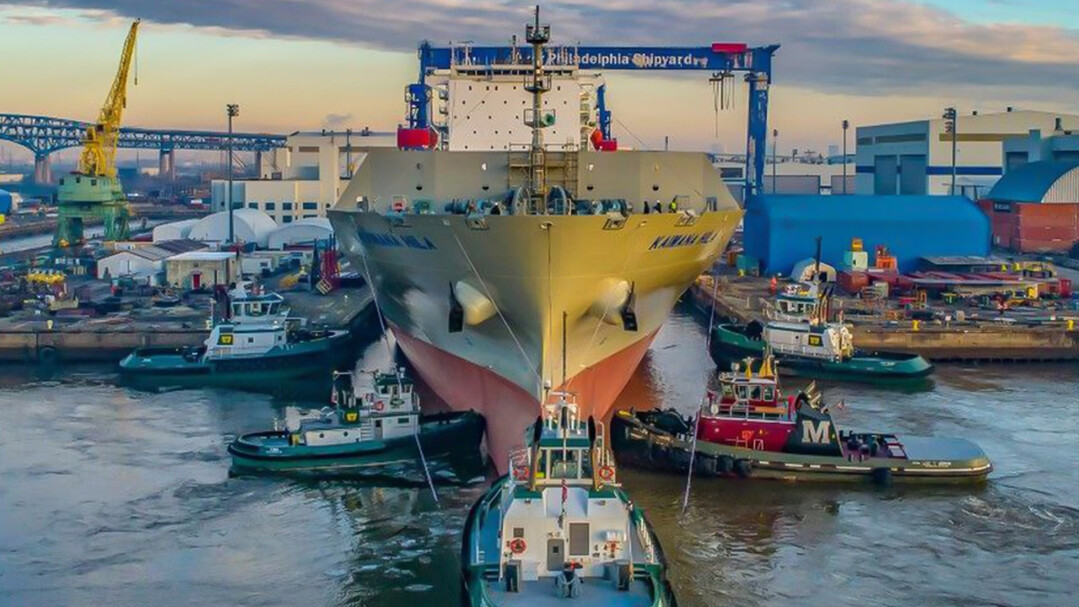
NEW YORK – Hanwha Group, a key player in the Maritime Asset Security and Government Alliance (MASGA) symbolizing U.S.-Korea shipbuilding cooperation, is moving to acquire additional shipyards in the United States. This strategic pivot comes as the group determines that Philly Shipyard, acquired just over a year ago, lacks the capacity to accommodate the skyrocketing demand for both commercial vessels and naval warships.
Michael Coulter, the newly appointed CEO of Hanwha Defense USA, confirmed in an interview with the Wall Street Journal (WSJ) on January 8 (local time) that the group is in active consultations with the U.S. Department of Defense regarding contracts for surface ships, submarines, and unmanned vessels. "We need more space," Coulter stated, adding that Hanwha is "seriously considering the acquisition of other U.S. shipyards within the next few years."
The Capacity Gap at Philly Shipyard
The drive for further expansion stems from the current limitations of Philly Shipyard, which Hanwha acquired in December 2024. Despite its strategic location, the facility operates with only two docks. While a South Korean shipyard might produce nearly ten vessels per year per dock, Philly’s outdated infrastructure limits its output to a mere 1 to 1.5 vessels annually.
To bridge this gap, Hanwha plans to invest $5 billion (approximately 7 trillion won) into modernizing the facility, aiming to eventually boost its annual production capacity to 20 vessels. While this modernization is a long-term project, the group is currently negotiating with federal and state governments to utilize underused docks in the Philadelphia area or secure new sites to meet immediate demand.
Targeting a $1.5 Trillion Defense Super-Cycle
The urgency for expansion is underscored by the U.S. Navy’s massive procurement roadmap. According to the Congressional Budget Office (CBO), the Department of Defense has submitted a plan to Congress to acquire 364 vessels—including 293 combat ships and 71 support ships—by 2054. This equates to an average of more than 10 naval vessels being commissioned annually, a volume far exceeding Philly Shipyard’s current capabilities.
Industry analysts suggest that Hanwha’s expansion is specifically designed to prepare for nuclear-powered submarine construction. With the U.S. government planning to build over 40 additional nuclear submarines, and President Donald Trump previously emphasizing the possibility of South Korean-designed nuclear submarines being manufactured on U.S. soil, Hanwha is positioning itself as the primary industrial partner for this "Nuclear Submarine Dream."
Beyond Submarines: Canada and Unmanned Systems
Furthermore, the $45 billion (60 trillion won) Canadian Patrol Submarine Project (CPSP) is currently underway. Should "Team Korea" secure this bid, additional U.S.-based facilities would be essential to manage the overflow of production. An industry official noted, "Constructing nuclear submarines at the current Philly facility is technically challenging. Securing more advanced docks is not just a growth strategy; it is a necessity."
Hanwha is also diversifying into the high-growth market of unmanned surface vessels (USVs). Hanwha Defense USA has partnered with HavocAI, a specialist in unmanned vessel software, to develop a 60-meter (200-foot) USV. This initiative aligns with the U.S. Navy’s 30-year plan to build a fleet consisting of 381 manned ships and 134 unmanned surface and underwater vessels.
By aggressively expanding its physical footprint in the U.S., Hanwha is transforming from a foreign supplier into a core pillar of the American military-industrial complex, ensuring it is well-positioned for the multi-decade naval buildup spearheaded by the Trump administration.
[Copyright (c) Global Economic Times. All Rights Reserved.]