![[등록] 2026-09-01 15:48:31](/support/_updata/banner2/tl181982910_6749.png)


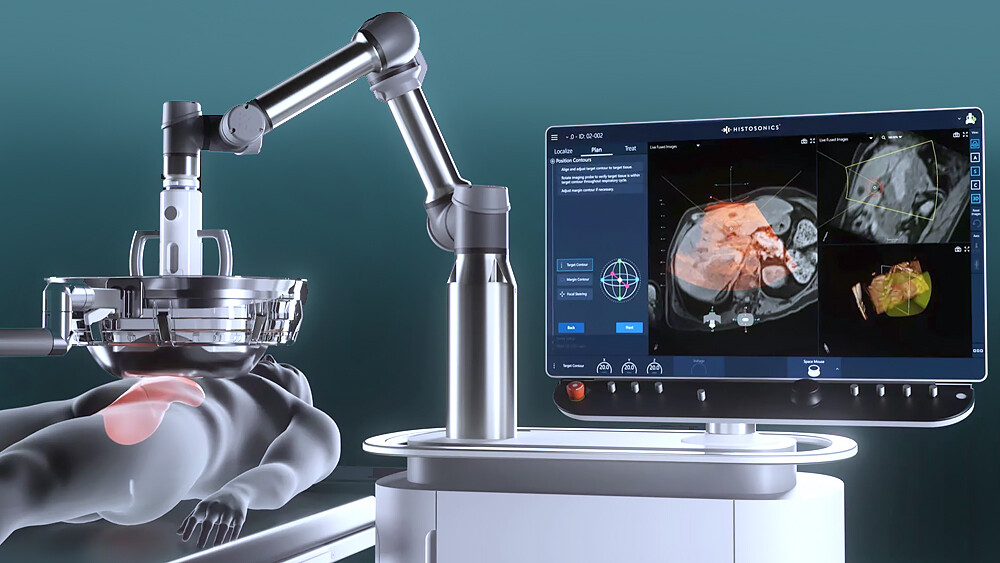
A revolutionary medical technology, histotripsy, is shifting the paradigm of cancer treatment, offering a non-invasive, non-thermal alternative to traditional surgery, chemotherapy, and radiation. This technique, which uses focused ultrasound energy to mechanically destroy tumors with sound waves, is moving rapidly from academic breakthrough to clinical application, beginning with liver cancer.
A Non-Thermal Breakthrough Discovered by Chance
The origins of histotripsy trace back to the early 2000s at the University of Michigan, where Professor Zhen Xu and her team made a serendipitous discovery. While experimenting with ultrasound to ablate diseased tissue, an attempt to reduce noise by increasing the pulse frequency and shortening the pulse length to microseconds resulted in an astonishing outcome: a hole was instantly created in a piece of pig heart tissue. This led to the development of a completely new method of tissue destruction.
Unlike High-Intensity Focused Ultrasound (HIFU), which uses intense heat to cook and destroy tissue, histotripsy is a non-thermal process. It works by sending ultra-short, high-pressure ultrasound pulses that generate microscopic bubbles within the tumor cells—a process called cavitation. These bubbles rapidly expand and collapse, physically tearing the tumor tissue apart into acellular debris. The body’s own immune system then steps in to "clean up" the residual fragments. This mechanical mechanism offers a distinct advantage over thermal methods by potentially sparing surrounding healthy tissues, such as blood vessels and bile ducts, from heat damage.
FDA Clearance and Promising Early Results
In a landmark decision in late 2023, the U.S. Food and Drug Administration (FDA) granted clearance to the HistoSonics Edison Histotripsy System for the non-invasive destruction of liver tumors. This clearance was based, in part, on data from the #HOPE4LIVER trials, an international, multi-center study that investigated the system’s safety and efficacy.
Initial clinical data is highly encouraging. In the #HOPE4LIVER trial, the procedure demonstrated a technical success rate of approximately 95% in tumor destruction, significantly surpassing performance goals. Patients experienced swift recoveries, with many being discharged the same day of the procedure. The treatment is remarkably efficient; the average ultrasound treatment time is about 34 minutes, with the entire hospital stay, including preparation and recovery, typically lasting only 1 to 3 hours. Furthermore, recent one-year data from the #HOPE4LIVER trials suggest an impressive 90% local tumor control rate across treated tumors, a rate comparable to current standard-of-care therapies.
The United Kingdom's National Health Service (NHS) also recognized the potential, piloting the technology in 2025 as the first in Europe. In Asia, early adoption is taking place, with Hong Kong's Gleneagles Hospital offering the treatment and major institutions in Hong Kong, Singapore, and Japan announcing plans to introduce it.
Expanding Applications and Synergistic Therapies
While histotripsy is currently FDA-cleared for liver tumors, clinical trials are underway to expand its use to other difficult-to-treat cancers, including pancreatic and renal (kidney) tumors.
Beyond tumor destruction, researchers are also exploring synergistic approaches. Canadian researchers, for example, are investigating how focused ultrasound can temporarily and reversibly open the blood-brain barrier, allowing chemotherapy drugs to reach brain tumors more effectively. Other studies suggest histotripsy could amplify the effectiveness of radiation or immunotherapy, potentially allowing for lower drug or radiation doses and reducing debilitating side effects. The process of physically breaking down the tumor may also release antigens, effectively turning an immunologically "cold" tumor "hot" and enabling the body’s immune system to mount a stronger, systemic anti-cancer response.
Challenges and the Need for Long-Term Data
Despite its promise, the technology is not without limitations. The effectiveness of ultrasound waves is severely hindered by bone and gas, making its application difficult for tumors in the lungs and bones.
A critical challenge remains the need for long-term clinical data. While early results are favorable, recurrence rates and overall survival data over five years are necessary to fully assess histotripsy's role relative to established treatments. Additionally, a theoretical concern—that mechanically fragmenting a tumor could risk spreading cancer cells to other parts of the body—has been raised by some researchers. However, current animal studies and initial human clinical trials have yet to support this hypothesis, underscoring the necessity of continued, long-term patient follow-up.
As Professor Xu aptly stated, “Cancer is awful. What makes it even more painful is the treatment process. While ultrasound isn't a miracle cure, it can relieve patients of unnecessary suffering.” Histotripsy, as a non-invasive, non-toxic, and precise tumor ablation tool, is poised to become a vital complement to the oncologist's toolkit, heralding a new era of less invasive cancer care.
[Copyright (c) Global Economic Times. All Rights Reserved.]