![[등록] 2026-09-01 15:48:31](/support/_updata/banner2/tl181982910_6749.png)


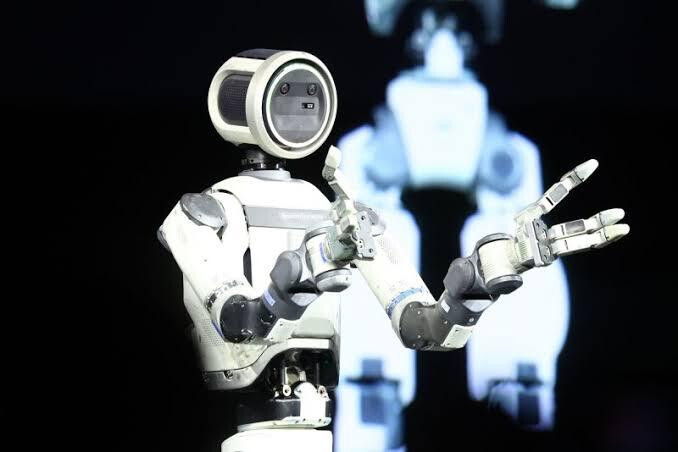
SEOUL & WASHINGTON — Boston Dynamics, a key robotics subsidiary of Hyundai Motor Group, is playing a pivotal legislative role in steering the creation of a comprehensive national robotics strategy within the United States Congress. Concurrently, South Korea's own ambitious plans to foster Physical Artificial Intelligence (AI) and next-generation humanoid robotics are running into severe headwinds at home. Domestic implementation remains stalled due to intense friction with organized labor, particularly the powerful Hyundai Motor Workers' Union, which continues to resist automated deployments without explicit union consent.
Industry experts and policy analysts are raising red flags, emphasizing that the South Korean National Assembly must proactively establish robust legal frameworks to safeguard the stable development of Physical AI. Experts warn that bowing to labor's resistance against advanced robotics risks crippling South Korea's core manufacturing competitiveness at a historic turning point in global industrial transformation.
Congressional Testimony and the National Robotics Commission Act
According to industry sources on July 28, Jason Fiorillo, Chief Legal Officer (CLO) of Boston Dynamics, recently testified before a hearing of the Energy and Commerce Committee in the U.S. House of Representatives. In his testimony, Fiorillo expressed strong support for the bipartisan enactment of the proposed National Robotics Commission and Robotics Act.
The centerpiece of this landmark U.S. bill is the establishment of a dedicated "National Robotics Commission." Designed to serve as a high-level strategic advisory council, the commission will systematically analyze the entire U.S. robotics ecosystem—encompassing national competitiveness, research and development (R&D), domestic manufacturing foundations, supply chain resilience, workforce training programs, and federal government procurement strategies. The commission will directly deliver comprehensive policy recommendations to the President of the United States and the U.S. Congress.
"To ensure that advanced mobile robots designed and manufactured within the United States can compete on an equitable playing field against foreign-made substitutes, proactive and structured federal government intervention is imperative," Fiorillo emphasized during his testimony.
Fiorillo advocated for a multifaceted federal strategy. Key recommendations presented to lawmakers included expanding public procurement of domestic robotic systems, implementing strategic tax incentives, enabling accelerated depreciation schedules for robotics hardware investments, and building resilient, localized supply chains for critical hardware components—such as advanced vision sensors, high-performance computing processors, electro-mechanical actuators, and high-precision ball screws. He stressed that initial public-sector demand creation by the U.S. government is critical for scaling market readiness.
US-China Tech Hegemony and Hyundai's Commercial Advantage
The accelerated legislative drive in Washington is primarily propelled by the escalating strategic and technological rivalry between the United States and China. Following semiconductors and generative AI, humanoid robotics and autonomous industrial manipulators have emerged as the paramount battleground determining the future of industrial supremacy. A consensus has rapidly solidified across bipartisan leadership in Washington that national security and economic resilience require an overarching legislative framework.
This legislative movement represents a significant tailwind for Hyundai Motor Group's long-term global robotics roadmap. Since acquiring a controlling stake in Boston Dynamics in 2021 for approximately $1.1 billion, Hyundai Motor Group has spearheaded the transition from laboratory research to industrial commercialization, highlighted by the debut of the fully electric commercial model of the 'Atlas' humanoid robot early this year at CES.
Should the U.S. federal government enact targeted procurement initiatives and industrial manufacturing incentives, Boston Dynamics and its parent group stand positioned as primary beneficiaries. The company is actively building out humanoid production lines in the U.S., preparing to integrate Atlas into high-precision, dangerous, and repetitive manufacturing workflows.
Macroeconomic Drivers: Labor Shortages and 'MASGA' Cooperation
Industry analysts view the proposed U.S. bill as the foundation of an enduring American robotics strategy. With U.S. manufacturing competitiveness constrained by high labor costs and demographic shifts, industrial automation is no longer optional. While U.S. hourly labor productivity ranks near the top among OECD nations, a prolonged structural shift toward financial services and information technology has led to a steady annual decline in the blue-collar workforce across foundational sectors like shipbuilding, heavy manufacturing, and automotive production.
This acute shortage of skilled industrial labor explains why Washington has actively solicited defense and naval shipbuilding partnerships with South Korea under initiatives such as 'MASGA' (Make American Shipbuilding Great Again). However, long-term U.S. industrial policy relies on bridging this deficit through advanced physical AI and humanoid automation.
South Korea's Policy Bottleneck: Labor Opposition & Legislative Inertia
In response to global shifts, the South Korean government recently unveiled plans to cultivate Physical AI as a premier national growth engine under the Presidential National AI Committee, announcing targeted investments such as establishing a Physical AI hub in the Yeongnam region and forming the 'K-Humanoid Alliance'. However, compared to the U.S. approach of building statutory foundations through Congress, South Korea's strategy remains heavily reliant on executive decrees and piecemeal amendments to existing laws.
Crucially, physical deployment on factory floors faces massive structural resistance. The Hyundai Motor Workers' Union has maintained a firm stance opposing the introduction of humanoid robots without explicit prior labor-management agreement. Furthermore, the implementation of the revised Trade Union and Labor Relations Adjustment Act (commonly known as the Yellow Envelope Law) has intensified industry anxieties. Expanding the scope of bargaining to subcontracted workers has created significant legal ambiguity, making major capital allocation for factory automation a high-risk endeavor for manufacturing executives.
Although political leaders recognize these structural hurdles, political pressures from labor groups have largely limited legislative action to cosmetic regulatory adjustments rather than comprehensive reform. Industry stakeholders stress that cross-party legislative commitment is urgently needed to establish predictable, long-term policies that outlast shifting political administrations.
[Copyright (c) Global Economic Times. All Rights Reserved.]