![[등록] 2026-09-01 15:48:31](/support/_updata/banner2/tl181982910_6749.png)


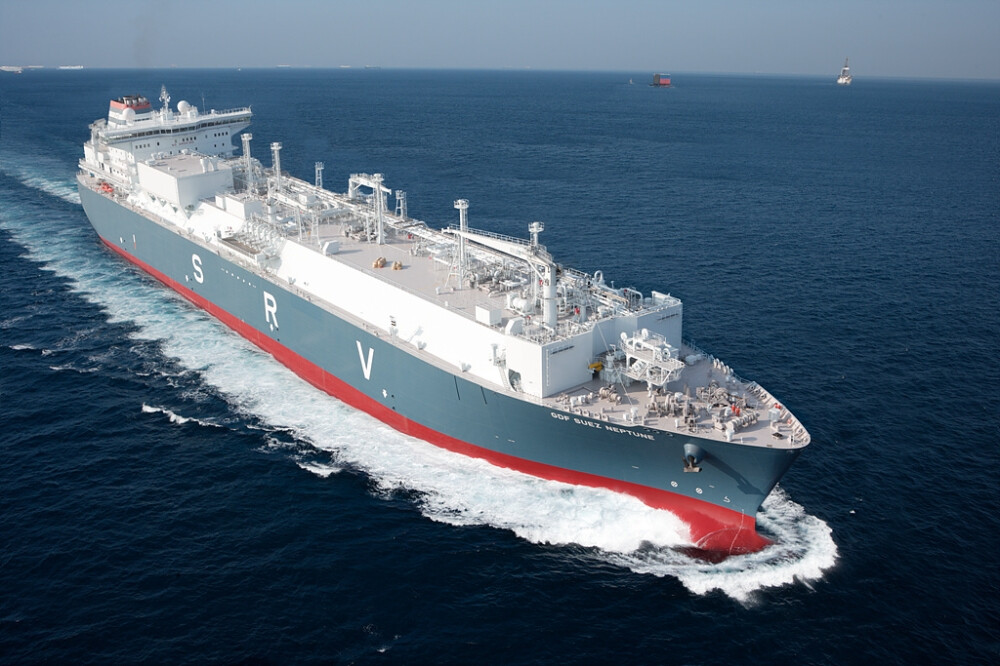
SEOUL — The South Korean government is pushing a bold plan to mandate that domestic shipping companies handle 70% or more of the nation's imported Liquefied Natural Gas (LNG) transport, a significant increase from the current rate of just 38.2%. This move, spearheaded by the Ministry of Oceans and Fisheries (MOF), is a strategic initiative to fortify national energy security and stabilize the supply chain against global disruptions, fulfilling a key campaign promise of President Jae-myung Lee.
The policy aims to uplift the national flag carrier utilization rate (known locally as jeokchiyul) for 'core energy' resources, including LNG, crude oil, coal, and iron ore. While domestic transport rates for coal and iron ore are relatively high at 93% and 66.7% respectively, the rate for LNG—a critical energy source—lags far behind, a situation largely attributed to the procurement practices of the state-owned Korea Gas Corporation (KOGAS).
KOGAS, which oversees about 80% of the nation's LNG imports, has historically favored 'Delivered Ex Ship' (DES) contracts. Under the DES model, the seller is responsible for shipping, a method that minimizes visible transport costs and positively influences KOGAS's public enterprise management evaluation. This preference has led to a heavy reliance on foreign vessels.
To successfully raise the domestic shipping mandate, the government is exploring dual-pronged legislative and financial solutions. On the legislative front, the MOF is considering revising the Maritime Law to legally enforce a minimum national carrier utilization ratio for major bulk cargo, thereby establishing a legal duty for cargo owners to ensure stable supply management.
On the financial side, the government is debating an indirect subsidy mechanism. This would involve compensating KOGAS for the price difference if the corporation shifts from DES to 'Free On Board' (FOB) contracts—where the buyer handles shipping—allowing domestic shippers to secure the contracts. MOF officials suggest that shippers might agree to a reduced profit margin in exchange for long-term contract stability, thereby mitigating the financial burden on the state.
Crucially, industry data indicates that South Korea possesses the capacity to meet the target. To transport 70% of LNG imports, an estimated 55 LNG carriers are required, yet South Korean companies already own a fleet of 72 vessels, suggesting ample reserve capacity.
Private Equity and Industry Restructuring
The policy is also seen as a catalyst for restructuring within the domestic shipping industry. A substantial portion of the nation's LNG fleet is currently controlled by Private Equity Funds (PEFs). Notably, Hahn & Company owns SK Shipping and H-Line Shipping, while IMM Private Equity holds Hyundai LNG Shipping. These firms collectively operate 41 LNG carriers, over half the national fleet. A guaranteed 70% transport rate translates directly into a stable and secure revenue stream, sharply increasing the valuation of these companies.
This stability is expected to facilitate the PEFs’ exit strategies, particularly their ability to sell to domestic buyers. With the government reportedly opposing the sale of major shipping assets to foreign entities, the enhanced value creates a favorable environment for domestic mergers and acquisitions. However, a prevailing concern is that the policy’s primary beneficiaries might be the PEFs, sparking debate about equitable distribution of the economic benefits derived from the national security initiative. The MOF has pledged a careful review to prevent any "unreasonable outcomes."
[Copyright (c) Global Economic Times. All Rights Reserved.]