![[등록] 2026-09-01 15:48:31](/support/_updata/banner2/tl181982910_6749.png)


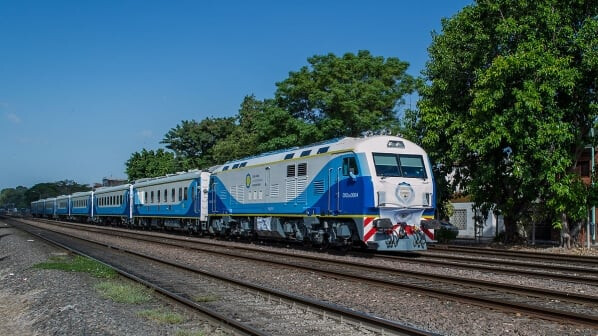
Argentina's Ministry of Economy, through its Secretariat of Transport, has announced a sweeping change in the top management of the state-owned passenger rail operator, 'Argentinian Train Operations' (SOFSE), and the infrastructure manager, 'Argentinian Trains Infrastructure' (ADIF). This move marks the Argentine government's entry into the next phase of its 'Railway Emergency Programme,' drawing significant attention to the future landscape of Argentina's railway industry.
New Leaders and Expectations
According to the Argentine Ministry of Economy's announcement, Gerardo Boschin has been appointed as the new president of Argentinian Train Operations. He previously served as the manager of administration and financial management at the state-owned Argentine satellite solutions company (Arsat) and brings over 20 years of experience in the private sector. Boschin succeeds Matías Galparsoro, who was appointed in July 2024.
Leonardo Fabián Comperatore, a lawyer by profession, has been named the new president of Argentinian Trains Infrastructure. Comperatore also worked as the institutional relations manager at Arsat and boasts over 30 years of public service experience. He replaces Marcelo Krajzelman, who was appointed in April 2024.
Achievements and Limitations of 'Railway Emergency Programme' Phase 1
The previous presidents, Galparsoro and Krajzelman, oversaw Phase 1 of the 'Railway Emergency Programme.' This phase focused on improving operational safety and converting Argentinian Train Operations and Argentinian Trains Infrastructure into wholly state-owned public companies. This was widely interpreted as a prelude to the future privatization of Argentinian Train Operations.
For decades, Argentina's railway infrastructure has been plagued by aging facilities, declining operational efficiency, and chronic financial deficits. Safety issues have been a persistent concern, with a major train derailment near Floresta Station in Buenos Aires in 2012 starkly highlighting the urgent need for railway system reform. The 'Railway Emergency Programme' was the government's attempt to address these problems. The operational safety improvements and conversion to public companies in Phase 1 were seen as establishing a minimal institutional foundation. However, the daunting challenges of vast financial deficits and inefficient resource allocation still remain.
A New Chapter: Financial Efficiency and Resource Optimization
The Ministry of Economy stated that these appointments signify the beginning of a new phase focused on reducing public expenditure on railways and optimizing resource allocation to meet the network's most pressing needs. This indicates the current government's top priority is securing the financial health of the railway system. Argentina is grappling with severe inflation and a significant fiscal deficit, and the government is strongly committed to cutting public sector spending. The railway sector is no exception to these austerity measures.
Notably, neither of the new presidents, Boschin and Comperatore, has direct railway-specific experience. Their backgrounds primarily in administration, finance, and institutional relations suggest that the current government is prioritizing financial viability and efficient public resource management over operational expertise in the railway sector. While the Ministry of Economy stated that the former presidents would continue to work at both companies, sharing their knowledge and experience, the change in top decision-makers clearly signals a shift in direction.
Rekindled Privatization Debates and Political Context
These appointments are expected to reignite the debate surrounding the privatization of Argentina's railways. President Javier Milei has consistently emphasized securing fiscal stability through the privatization of state-owned enterprises since taking office. Railways, in particular, have been singled out as a highly inefficient public sector that relies heavily on subsidies. The previous conversion to public companies was largely seen as a preparatory step for privatization, and these new management appointments could accelerate that process.
Argentina's railway privatization was also extensively pursued in the 1990s under President Carlos Menem. At that time, many lines were sold to private entities or their operating rights were transferred. However, this led to various negative consequences, including a decline in service quality, safety issues, and the closure of some lines, sparking continuous controversy. Subsequently, many lines were renationalized or brought back under state control. This historical experience could fuel public concern and opposition to renewed privatization efforts.
Furthermore, local media have pointed out that both Boschin and Comperatore are from Mendoza, the same province as Luis Perrini, the Minister of Transport, who was appointed in May. This could lead to criticisms of cronyism or the appointment of individuals based on political connections, a common occurrence in Argentine politics. If concerns are raised about political considerations taking precedence over expertise in critical public sector management changes, it could raise doubts about the new management's leadership and policy-making capabilities.
Challenges and Outlook
Significant challenges lie ahead for the newly appointed presidents, Boschin and Comperatore.
First, securing financial viability. Argentina's railways heavily rely on substantial government subsidies each year. They must undertake the difficult task of reducing these subsidies while maintaining or improving service quality. Cuts in expenditure could lead to service deterioration, potentially causing public discontent. Efficient resource allocation and the exploration of new revenue streams are essential.
Second, maintaining and improving safety. One of the core objectives of the 'Railway Emergency Programme' was to enhance safety. It remains to be seen how the new management, lacking direct experience, will address this critical issue. If investments in safety are neglected due to a lack of technical expertise, there is a risk of tragic accidents recurring.
Third, managing relations with labor unions. Argentine railway unions have traditionally wielded strong influence and have consistently opposed privatization or restructuring efforts. Resistance from unions is expected in response to the government's austerity measures and privatization attempts. Successfully mediating and building cooperative relationships with the unions will be a crucial task for the new management.
Fourth, infrastructure modernization. Argentina's railway infrastructure is severely outdated, leading to speed restrictions, frequent breakdowns, and reduced transport capacity. Concrete plans are required to secure and efficiently execute essential infrastructure investments while simultaneously reducing public spending. From a long-term perspective, sustainable railway operations are impossible without improvements to aging infrastructure.
The specific policies the Argentine government will introduce in Phase 2 of the 'Railway Emergency Programme' remain uncertain. However, this management change is a clear signal that fundamental shifts in the railway system are on the horizon. Amidst the current government's focus on enhancing financial efficiency and pursuing privatization, it remains to be seen whether Argentina's railways can find a path to sustainable development. This is a crucial juncture requiring a balanced strategy that cuts costs, fulfills its role as public transportation, and contributes to Argentina's economic development.
[Copyright (c) Global Economic Times. All Rights Reserved.]