![[등록] 2026-09-01 15:48:31](/support/_updata/banner2/tl181982910_6749.png)


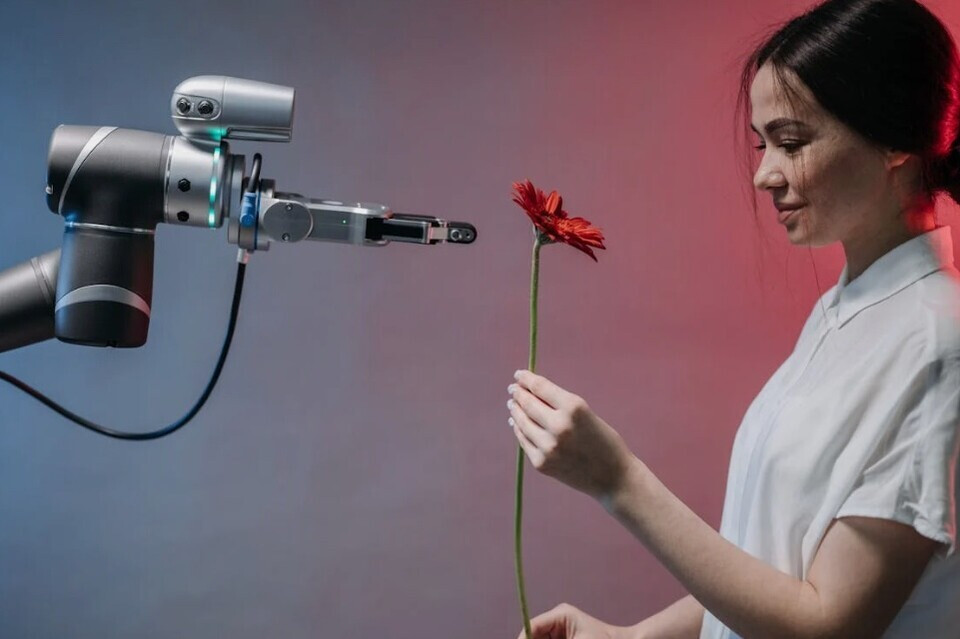
Munmul (文物: Culture and Material Wealth) is a word I use often but wanted to reflect upon once more. "Mun" (文: Letters/Culture) and "Mul" (物: Matter/Objects) are often compared to software and hardware, respectively; just as the mind and body form a person, they constitute and explain our society.
If we add the character "Ri" (理: Principle/Logic), which means to govern or reason, to these terms, we get Munri (文理: Literary and Philosophical Reason) and Mulli (物理: Physical Laws/Physics). According to the dictionary, Munri refers to the power to understand the meaning of a text and the ability to perceive the reason of things. Mulli represents the principles of all matter, and Physics is the study of understanding or judging those objects. The combination of liberal arts and sciences is also called "Munrigwa," as seen in the Colleges of Liberal Arts and Sciences. Generally, the humanities (Mun-gwa) handle human and social studies, while the sciences (I-gwa) deal with natural sciences.
The Humanities (人文: Inmun) explore fields like thought, culture, history, language, and art centered on humans, aiming to understand humanity, values, and self-expression. This field develops to form culture. Historically, natural sciences like astronomy (天門) and hydrology (水文) were closely related to geography (地理). The reason these fields branched out and developed in detail was due to language and writing. Accurate writing allows knowledge to be transmitted, inherited, and advanced.
Let’s reconsider Munmul. "Mun" can be explained through literature and culture, while "Mul" can be explained through matter and civilization. Culture refers to the spiritual activities of humans seeking truth—such as academia, art, religion, and morality—and the resulting spiritual and material achievements. Civilization refers to a state where human intelligence has developed, making life abundant and convenient. Often contrasted with spiritual culture, it mainly refers to material culture—social systems, technologies, tools, and infrastructure like smartphones or AI, which are "conveniences of civilization." Even civilization, in a broad sense, falls within the category of culture.
In most cases, when science and technology advance first, side effects or problems arise, and society systematically supplements them. Computers and internet networks created by humans have brought the digital age into full bloom. The smartphone is a prime example, and with it, we treat AI like a servant. As more powerful AI and memory emerge, one might wonder if AI will become smarter than humans. The point where AI's ability to think and judge for itself reaches the human level is called the Singularity. No one knows exactly when that will be, but many believe that if current progress continues with moderate acceleration, it will be within 20 years. What if AI surpasses human intelligence? What if it tries to exploit humans? Experts are already researching safety measures for such issues.
I had three precious meetings with university students learning Korean in Ho Chi Minh City. I started my talk with Munmul. Though software and hardware are different, they cannot exist separately. Just as a world cannot function with only conductors or insulators, the existence of semiconductors—which possess intermediate properties—has allowed digital spaces to expand within our analog world.
We analog humans cannot live on electricity. Since what we perceive, input, and ingest is done in an analog way, I told the students that even if the Singularity arrives or we receive help from AI, we must still learn through analog methods to acquire knowledge, supply nutrients, and move our bodies to live healthily. I emphasized that the originality developed through this process is our competitiveness.
How many days can a person last without eating or sleeping? Does food taste good without movement? How can knowledge increase without reading? How can one attain Munri? I told them to read a book a hundred times (Dokseo Baekbyeon Ui-ja-hyeon). Then, the realization comes naturally. As you read a hundred books, you discover meaning and joy. I encouraged them to write down what they read and felt. Writing reveals how much you truly know. Teaching others also reveals the depth of your understanding. We must stubbornly read, write, and search for what we are curious about.
Are you without curiosity or a desire to know? When a flower blooms, its petals consist of 80–95% water. Leaves and roots are 70–90%, and stems are 60–80%. This moisture maintains the flower's physiological function and freshness, allowing it to bear fruit. Touching it tells you it is a real flower. When filled with curiosity, people are as beautiful as flowers. With knowledge gained from reading a hundred times, we should look toward a new and different world.
[Copyright (c) Global Economic Times. All Rights Reserved.]